How To Use Suspended Triads To Make Simple Chords Sound Better
by Simon Candy
 A lot of guitar players know a few suspended chords.
You might play a Dsus4 here, an Asus2 there, or add one of those little movements into an open chord progression to make it sound more interesting.
And that is a great place to start. But suspended chords can do much more than add a bit of colour.
When you begin using suspended triads on guitar, all over the neck, they can completely change the mood of your playing. They can make a simple chord progression sound more flowing, more melodic, and more complete.
You have heard this sound in songs like Comfortably Numb by Pink Floyd, Free Fallin’ by Tom Petty, and Roxanne by The Police.
The idea is simple.
Instead of only playing a plain major or minor triad, you temporarily remove one note and replace it with another. That small change creates movement, tension, and release.
And once you can see these suspended triads clearly on the fretboard, you can use them for rhythm parts, riffs, and even solo lines.
Watch the video below to learn more:
What Are Suspended Triads On Guitar?
A basic major or minor triad has three notes.
One of those notes is called the third.
You do not need to get too caught up in the theory of that. The important thing to understand is this:
The third is the note that gives a chord its major or minor sound.
When you play a suspended triad, you remove that third and replace it with either the second or the fourth.
That gives you two common sounds:
- Sus2 triad
- Sus4 triad
The sound is neither major nor minor in the usual sense. It is more open. It feels like it wants to move somewhere.
That is why suspended chords can be so useful.
They create a sense of movement without changing the whole chord progression.
How Sus2 And Sus4 Work
A practical way to begin is to take a major triad shape you already know and find the third inside it.
For example, you might take an E major triad shape higher up the neck:
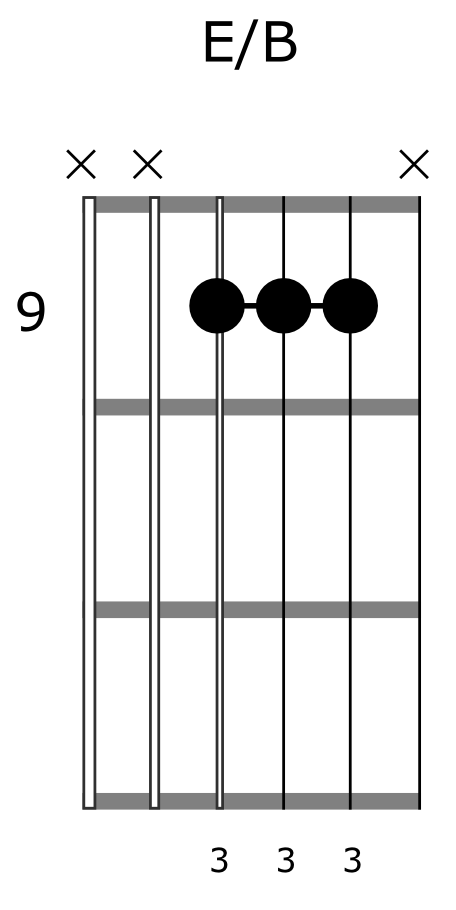
Once you know where the third is, you can move that note.
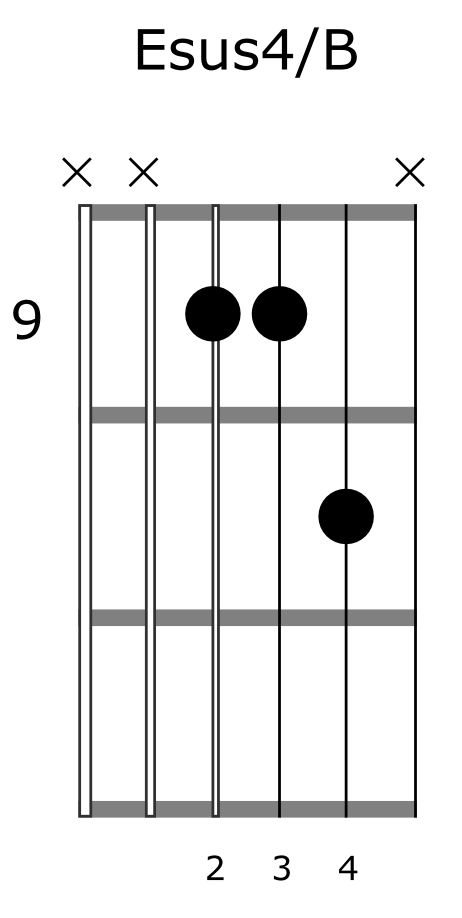
For example, move it up to create a Sus4 sound:
Or, move it down to create a Sus2 sound:
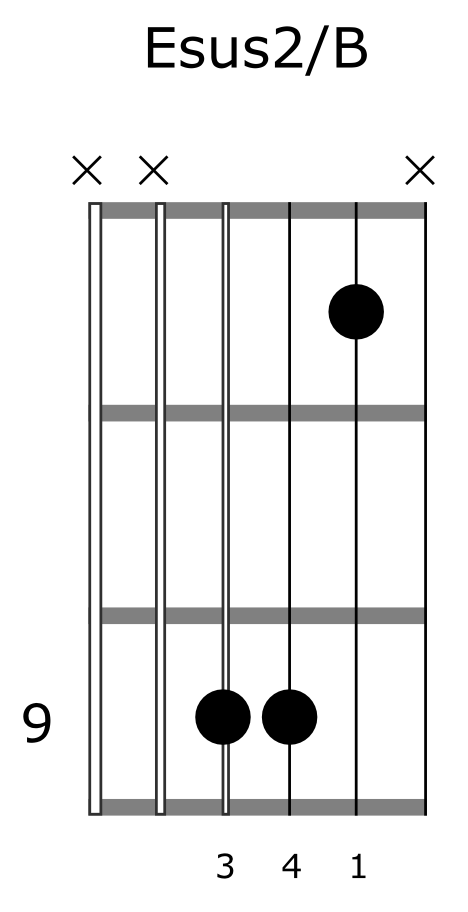
The other two notes stay the same.
That is the basic idea.
You are not learning a completely new chord from scratch. You are taking a shape you already know and adjusting one note.
This is what makes sus2 sus4 guitar sounds so useful. Once you can see where that one note is, the whole thing opens up.
Find The Note That Needs To Move
One thing to be aware of is that the third will not always be on the top string of the shape.
Sometimes it will be the highest note.
Sometimes it will be in the middle.
Sometimes it will be the lowest note.
This depends on the triad shape you are using.
That is why it is worth spending a little time with each triad shape and asking:
“Where is the note I need to move?”
Once you find it, you can create the Sus2 and Sus4 versions of that same triad.
This gives you instant movement inside the shape.
It is still centred around the same chord, but now it has life in it.
That little movement can make a simple part sound much more expressive.
How To Use Sus Chords Without Changing The Progression
One of the best ways to use suspended triads is to create movement while the harmony stays still.
Imagine another guitarist, pianist, or backing track is sitting on an E chord.
You do not have to simply play an E chord along with them.
You can play around that E triad by moving in and out of the suspended sounds:

This creates a part that feels melodic without becoming busy.
It gives the chord a sense of motion.
That is the kind of thing you hear in a lot of great rhythm guitar parts. The chord itself may be simple, but the way it is played makes it sound much more interesting.
This is also a great way to avoid simply strumming the same shape over and over.
You are still supporting the chord, but you are adding something musical on top.
The Comfortably Numb Suspended Chord Sound
A great example of this idea is the kind of movement you hear in Comfortably Numb by Pink Floyd.
There is a suspended sound moving in and out of the main triad:


You can think of it as taking a D major triad and removing the third to create a Dsus2 sound, then bringing the third back in.
That movement between the suspended sound and the major sound is what gives the part its character.
It is not complicated.
But it is very effective.
Instead of the chord just sitting there, it breathes a little. It has a gentle push and pull.
That is the real value of this idea.
The Free Fallin’ Suspended Chord Sound
Another great example is Free Fallin’ by Tom Petty.
The progression itself is very simple, but the suspended movement gives it that recognisable sound.
You hear the chord moving from E into a suspended sound, then resolving back again:

That little shift creates the hook.
And that is an important point.
Suspended triads are not only for adding decoration.
Sometimes they become the actual identity of the part.
Without that suspended movement, the progression would still work, but it would not have the same lift.
This is why these shapes are so useful. They can turn a very simple chord idea into something memorable.
Suspended Chords Can Stand On Their Own
Suspended triads do not always need to resolve back to major or minor.
Sometimes the suspended sound itself is the feature.
A good example is the kind of sound you hear in Roxanne by The Police, where those suspended shapes have a very distinctive colour:

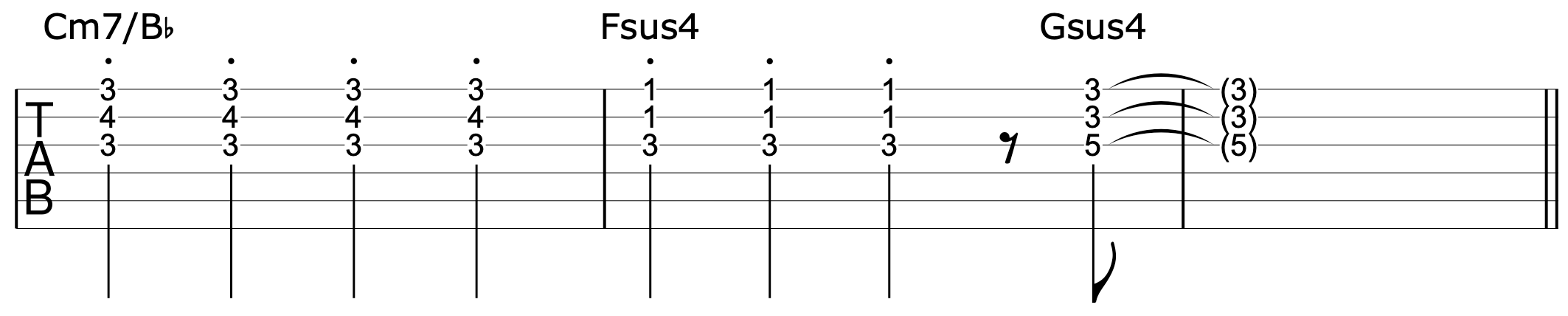
You are not always moving from major to suspended and back again.
Sometimes you might simply move one suspended triad shape to another.
That gives you a more open, slightly unresolved sound.
It can feel tense, spacious, or dramatic depending on the context.
This is useful when you want something that does not sound too plain or predictable.
You still have a simple shape under your fingers, but the sound has more character.
Using Sus Chords In Solos
Suspended triads are not only for rhythm guitar.
They can also help your lead playing.
One of the challenges with soloing from triads is that you can sometimes feel trapped inside the shape.
You play the three notes of the triad, but then it starts to sound like you are just running up and down a chord.
Adding the Sus2 and Sus4 gives you a few extra notes to work with.
Not too many.
Just enough.
Here is an example of a phrase that makes use of this idea:

This is important because it keeps your solo connected to the chord, but gives you more freedom to phrase.
You can still hear the triad clearly, but now you have little notes around it that help you move more naturally.
Instead of thinking about a whole scale, you can simply think:
Here is the triad.
Here is the Sus2.
Here is the Sus4.
That can be enough to create much better phrasing.
So when using sus chords solos, the aim is not to add lots of extra information. It is simply to give yourself a few more notes to add around the triad.
Make Simple Chords Sound More Complete
The real value of suspended triads is not that they are complicated.
It is the opposite.
They are small, simple shapes that create a lot of musical movement.
You can use them to make a chord progression sound more interesting.
You can use them to create a hook.
You can use them to build a second guitar part.
You can use them to add extra notes to your solos without losing the sound of the chord.
And you can do all of this without needing to learn a completely new system.
You are simply taking triads you already know and giving them more life.
Frequently Asked Questions
What are suspended triads on guitar?
Suspended triads are three-note chord shapes where the third has been replaced by either the second or the fourth. This creates a more open sound that is neither clearly major nor minor.
What is the difference between Sus2 and Sus4 on guitar?
A Sus2 chord replaces the third with the second. A Sus4 chord replaces the third with the fourth. You do not need to overthink the theory at first. Just listen to how each one changes the mood of the chord.
How do I use sus chords in songs?
Start with a normal triad, find the third, then move that note to create a Sus2 or Sus4 sound. You can use this movement inside a chord progression to create riffs, fills, or more interesting rhythm parts.
Can suspended triads be used for solos?
Yes. Suspended triads can give you a few extra notes around a triad shape, which helps you create more natural phrases without having to think about a full scale.
Do suspended chords always need to resolve?
No. Suspended chords often sound good when they resolve back to major or minor, but they can also stand on their own. Sometimes the open, unresolved sound is exactly what gives the part its character.
Other Lessons You Might Like
Explore these related lessons to continue building your guitar skills:
A useful starting point if you want to see triads more clearly across the neck and use them in real music.
Learn how to open up basic triads for a wider, more spacious sound that works beautifully in arrangements and rhythm parts.
Go deeper into the shapes and sounds of suspended triads so you can use them more freely across the fretboard.
A great related lesson if you like the sound of small movements inside chords and want to use them in open position.
See how simple chord ideas can become much more musical with movement, rhythm, and small melodic details.
 Get The Free Block Chords Ebook
Learn the main block chord shapes and how to connect them across the neck for richer, more dynamic guitar parts.