How To Play Amazing Grace Using Arpeggios
by Simon Candy
 Have you ever tried to play an instrumental version of a song on guitar and found that it didn’t quite flow?
The notes might be right. The chords might be right. The melody might even be clear.
But somehow, it still doesn’t quite flow the way you want it to.
That often happens when the melody and chords are played in a very block-like way. Everything is technically correct, but the music can feel a little mechanical.
A simple way to fix this is to break the chords up using a fingerstyle arpeggio approach.
You are not changing the song. You are not using harder chords. You are not adding a complicated fingerpicking pattern.
You are simply learning how to connect the melody and chords in a smoother, more musical way.
In this Amazing Grace fingerstyle tutorial, we’ll look at how to use simple arpeggios to make the tune sound more flowing, connected, and complete.
Watch the video below to learn more:
The Missing Piece Is Fingerpicking Flow
Amazing Grace is a great tune for this because the melody is simple, familiar, and easy to hear.
You can play the melody on its own.
You can play the chords on their own.
And you can put the two together in a fairly simple way.
But if you only play the melody and chords together as solid blocks, the arrangement can sound a little plain. It works, but it may not have much movement.
The difference comes from what you do in the spaces between the melody notes.
That is where the arpeggio approach comes in.
Instead of always plucking the chord notes together, you pick through the chord one note at a time. This gives the arrangement a smoother, more flowing sound while still keeping the melody clear.
That last part is important.
The melody must still be the main thing.
The arpeggio notes are there to support it, not cover it up.
Arpeggios
Arpeggiating simply means playing the notes of a chord separately rather than all at once.
So instead of strumming a G chord, or plucking several notes together, you might pick through the notes one by one.
This creates movement.
It also helps fill the space between melody notes, which is what makes the arrangement feel more connected.
You are still using the same basic chords.
You are still playing the same melody.
But now the arrangement has a more natural sense of flow.
A good way to think about it is this:
The melody is the singer.
The chord notes underneath are the accompaniment.
The arpeggio helps the accompaniment move gently around the melody.
That is the basic idea behind making fingerpicking sound smoother. You are not trying to make the arrangement busy. You are simply giving the chords a way to move.
Know The Melody Before Adding Extra Notes
Before you start adding extra notes, make sure you know the melody clearly.
This is one of the most important parts of playing chord melody or fingerstyle arrangements.
If you don’t know where the melody is, it is very easy to get lost in the details.
You might see a line of tab with lots of notes and not really know which notes matter most. But when you can hear the melody in your head, you know what needs to stand out.
With Amazing Grace, the melody is the heart of the arrangement.
Everything else is filler.
That doesn’t mean the other notes are unimportant. They are there to support the melody. They give the arrangement body, movement, and flow.
So before putting everything together, separate the parts.
Play the melody on its own.
Then play the chords on their own.
Once both feel familiar, it becomes much easier to combine them musically.
How To Play Amazing Grace Using Arpeggios
Amazing Grace breaks naturally into four sections of four bars.
That makes it much easier to learn.
Instead of trying to memorise the whole arrangement at once, think of it as four short musical phrases.
Each phrase has:
- A melody
- A chord progression
- Space between the melody notes
- Arpeggio notes that help everything flow
This keeps the arrangement much easier to follow. You are not just learning a long line of tab. You are learning how the tune is built.
Phrase 1:
In the first four bars, the chords are:

This gives you a simple foundation to work from.
The melody sits over the top of those chords, and the spaces between the melody notes are where you can add notes from the chord.
Instead of playing everything in a block-like way, you gently pick through the chord tones around the melody, like so:

The result is a fuller, smoother sound.
The key is to keep listening for the melody.
When you arpeggiate, some notes are melody notes, and some notes are supporting notes. You want to know the difference.
If a note belongs to the melody, let it speak clearly.
If it is just a filler note from the chord, keep it softer and more supportive.
This gives the arrangement shape rather than making every note sound equally important.
Phrase 2:
The second four-bar phrase uses G for two bars, then D for two bars:

Again, the idea is the same.
Start with the melody.
Know where it sits.
Then use the chord tones to fill the space around it:

In this section, the melody mainly appears around the beginning and end of the measures. That leaves room in between for the arpeggio to create movement.
This is where the arrangement starts to feel less like a set of separate chord changes and more like one connected piece of music.
You are not just jumping from chord to chord.
You are helping each chord lead into the next.
That is one of the big benefits of this style of playing.
It helps create smooth chord transitions on guitar without needing anything complicated.
Phrase 3:
The third phrase returns to the same chord progression as the first phrase:
That makes it easier to remember.
The chords are the same, but the melody is slightly different.
This is another reason why it is so important to know the melody separately.
If you only think in terms of chord shapes, the first and third phrases might seem almost the same. But the melody gives each phrase its own character.
Once you have the melody clear, you can add the arpeggio notes around it:

Again, don’t let the extra notes distract you.
The aim is not to make the arrangement busier.
The aim is to make it flow.
A few well-placed notes from the chord can make the whole phrase sound more complete.
Phrase 4:
The final four bars introduce a new chord before moving to D with F# in the bass, followed by G for the last two bars:

This gives the ending a slightly different colour before resolving back to G.
You can arpeggiate through these chords in the same way, keeping the melody on top and filling the gaps underneath:

At the very end, you might let the G chord ring out or gently pluck through it to give the arrangement a finished sound.
This doesn’t need to be fancy.
A simple ending often works best, especially with a tune like Amazing Grace.
The beauty comes from the melody, the flow, and the way the chords support everything underneath.
Don’t Get Lost In The Details
When learning an arrangement like this, it is easy to become too focused on every single note.
But the most important thing is the bigger musical picture.
Can you hear the melody?
Do the chord changes feel smooth?
Does the arrangement have a natural flow?
Those things matter more than trying to make every note perfect straight away.
Start slowly.
Keep the melody clear.
Let the filler notes sit underneath.
And don’t rush the transitions.
The more familiar the melody and chords become, the easier it is to make the arrangement sound musical rather than mechanical.
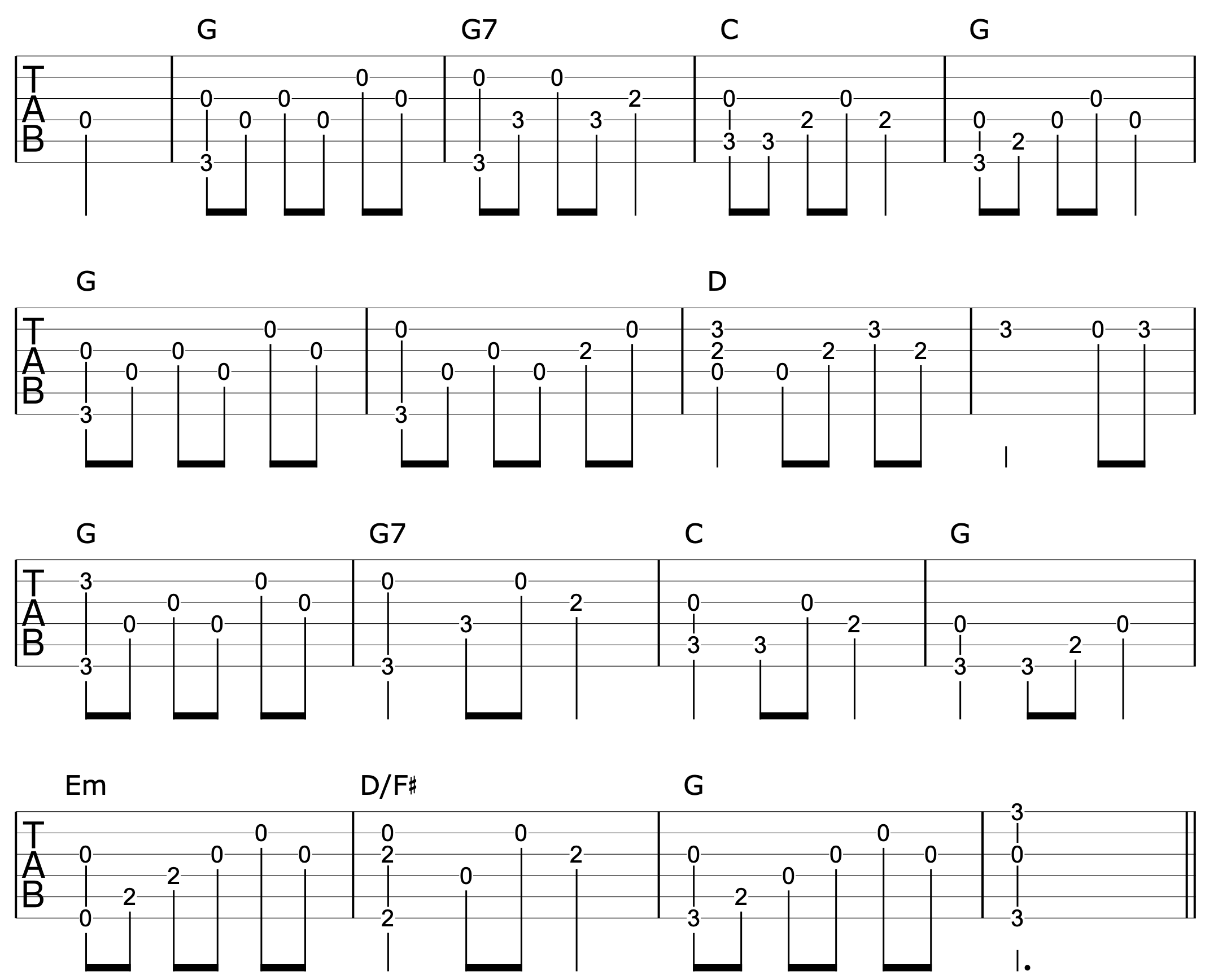
Here is the complete arrangement of Amazing Grace:
Use This Arpeggio Approach With Other Songs
Once this approach clicks, you can use it in many other songs too.
Any time you have a simple melody and a basic chord progression, you can begin experimenting with this idea.
First, learn the melody.
Then learn the chords.
Then look for the spaces between the melody notes where you can add notes from the chord.
That is the basic process.
You don’t need advanced theory.
You don’t need complicated fingerpicking patterns.
You just need a clear melody, simple chords, and a way to connect them.
This is one of the most useful ways to improve fingerpicking flow because it helps you think musically rather than mechanically.
Frequently Asked Questions
Is Amazing Grace a good song for fingerstyle guitar?
Yes. Amazing Grace works very well for fingerstyle guitar because the melody is clear, familiar, and easy to hear. This makes it a good tune for learning how to combine melody and chords without getting overwhelmed.
Do I need to know advanced fingerpicking patterns to play this?
No. The arrangement uses simple fingerstyle arpeggios rather than complicated patterns. The main goal is to keep the melody clear and use chord notes to fill the space around it.
What does arpeggiating a chord mean?
Arpeggiating a chord means playing the notes of the chord separately instead of all at once. On guitar, this creates a smoother, more flowing sound than strumming or plucking everything together.
How do I make fingerpicking sound smoother?
Start by knowing the melody clearly. Then add simple notes from the chord in the spaces between the melody notes. Keep the melody slightly stronger and let the extra notes support it underneath.
Should I learn the melody or chords first?
Ideally, learn both separately before putting them together. Play the melody on its own first, then the chords. Once both feel familiar, it becomes much easier to combine them into a musical fingerstyle arrangement.
Other Lessons You Might Like
Explore these related lessons to continue building your guitar skills:
Easy Amazing Grace Fingerstyle
A simpler starting point if you want to learn the basic melody and chord structure before adding more movement.
This will help you break songs down clearly so you can practise with more purpose and avoid getting lost in the details.
A helpful next step if you want to remember more songs and feel more confident playing complete pieces.
St James Infirmary Arrangement
A great follow-up if you enjoy solo guitar arrangements and want to explore a darker, more expressive sound.
Use these tips to remember arrangements more easily and rely less on tab as you play.
 The Ultimate Beginner Fingerpicking Guitar Course
Build solid fingerpicking technique step by step using real music, clear guidance, and practical lessons you can actually use.