How to Use Spread Triads To Make Your Chords Sound Better
by Simon Candy
 Have you ever played a chord progression that sounds perfectly fine, but somehow feels a little ordinary?
You’re playing the right chords.
There’s nothing technically wrong with what you’re doing. But then you hear somebody play exactly the same progression and it suddenly sounds bigger, more spacious and more musical.
Often, the difference isn’t the chords themselves.
It’s how the notes inside those chords are arranged.
Learning how to use spread triads on guitar gives you a simple way to start exploring these different sounds. Rather than thinking of each chord as one fixed shape, you can rearrange the same notes and move them around the fretboard.
One particularly useful way to do this is with spread triads.
Despite the slightly technical name, the practical idea is surprisingly simple.
Watch the video below to learn more:
Start With A Simple Guitar Triad
Let’s begin with a C major triad:
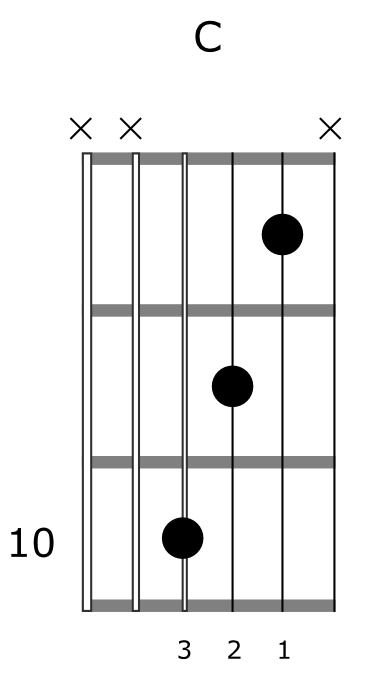
In a regular triad shape, the three notes sit relatively close together. This is sometimes called a closed voicing.
To create a more open sound, take the middle note and move it down an octave while leaving the other two notes where they are:
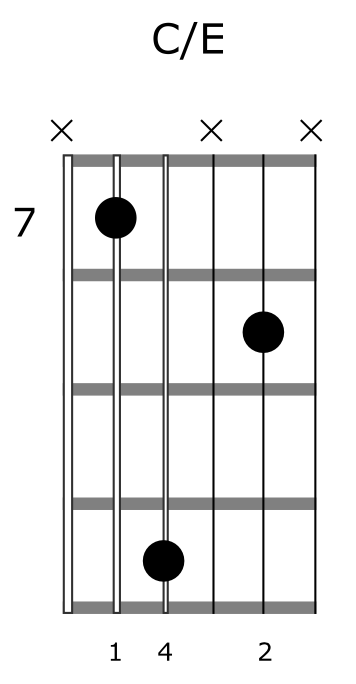
You still have the same three notes.
You still have a C major chord.
But because those notes are now spread further apart, the chord has a very different character.
It sounds wider and more spacious without actually containing any additional notes.
You can do exactly the same thing with another triad:
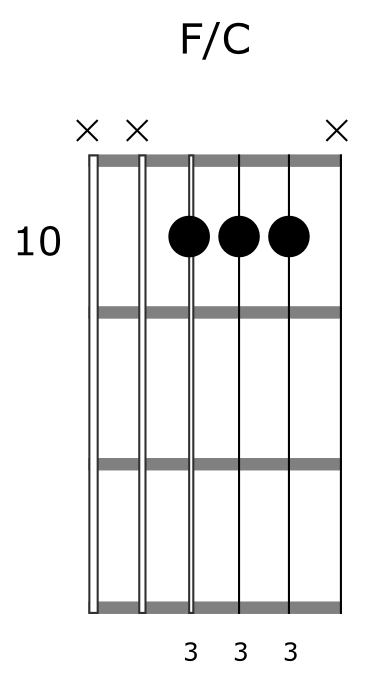
Take an F major shape, move the middle note down an octave and listen to how different it sounds compared with the original version:
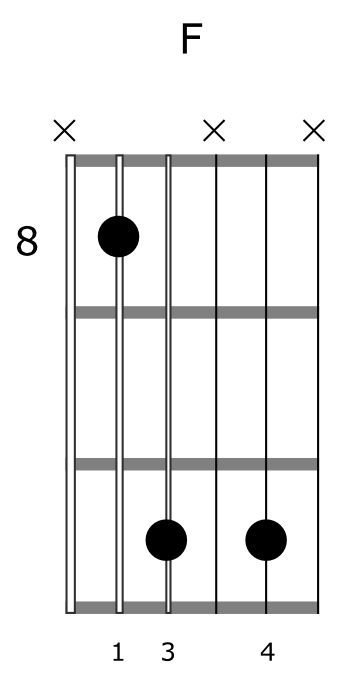
That difference is what we’re interested in.
FYI, you can also move the note up an octave to create a spread triad.
Why Different Chord Voicings Matter
It’s easy to think that once you know a C chord, an F chord or a G chord, you know that chord.
But the same chord can be arranged in many different ways across the guitar.
These different chord voicings on guitar give you choices.
You might want something compact and direct in one situation, then something more open and spacious in another.
Neither is necessarily better.
They simply create different musical effects.
This is why learning more chord shapes isn’t just about increasing the number of diagrams you know.
The real benefit comes when you start hearing how different arrangements of the same notes affect the music.
Use Triads In Simple Chord Progressions
Once you have a few shapes under your fingers, put them into music as quickly as possible.
For example, check out this simple chord progression in the key of C using spread triads:

You can also try a simple two-chord vamp, let’s say Am/E and use a variety of spread triad shapes like this to voice it out:

Because the progression itself is easy, you’re free to concentrate on the sound and movement of the chords.
Try one version.
Listen.
Move one of the chords somewhere else and listen again.
There are many ways you can approach even the simplest progression once you stop thinking of each chord as a single fixed shape.
Look for Connections Across the Fretboard
This is where triads become particularly useful.
Rather than jumping from one large chord shape to another, look at where the notes of your next chord are nearby.
You may find common notes between the chords or discover that only a small amount of movement is required.
This can make your changes sound smoother and help you create more interesting movement through a progression.
You can even create movement while the underlying chord remains the same.
This is a very different way of thinking about the fretboard.
Instead of seeing isolated chord shapes, you begin to see different ways those chords can connect.
And that gives you much more freedom when arranging or accompanying a song.
Try It With the “Hey Joe” Progression
A great progression for exploring this is the one from Jimi Hendrix’s “Hey Joe”.
You may already know how to play this using standard open or bar chord shapes.
Now try approaching the progression with spread triads.
You might play your C higher up the neck, find a nearby G, then look for the easiest and most musical route through D, A and E.
For example, something like this:
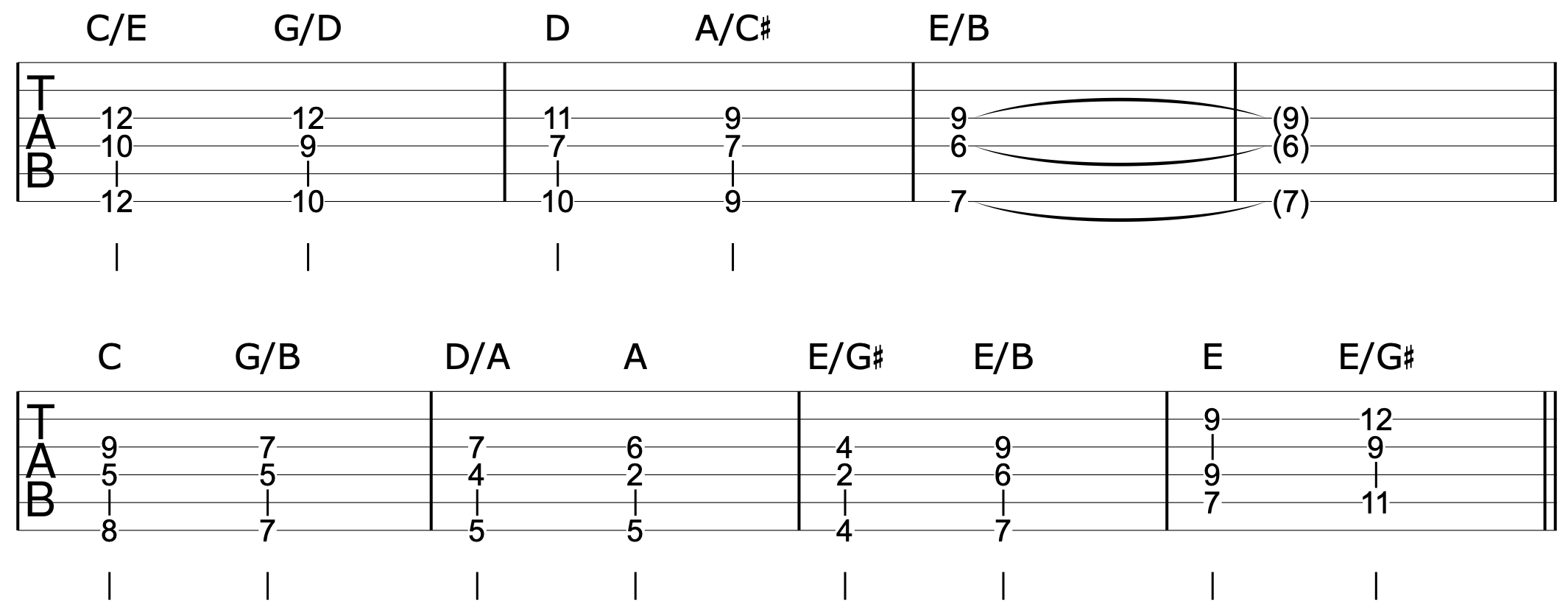
There isn’t just one correct route.
That’s the point.
Sit with the progression and explore different possibilities.
You’re using exactly the same chords, but changing where the notes sit can give the progression an entirely different sound.
This is where playing across the fretboard on guitar becomes musical rather than simply an exercise in learning more shapes.
Don’t Let Difficult Shapes Stop You
One issue you may encounter when spreading the notes of a triad is an uncomfortable stretch.
If that happens, don’t assume the shape has to be played that way.
Often, the same note is available somewhere else on the fretboard.
Move that note to another string and you may be able to create exactly the same sound with a much more comfortable fingering.
For example, this stretchy spread triad:
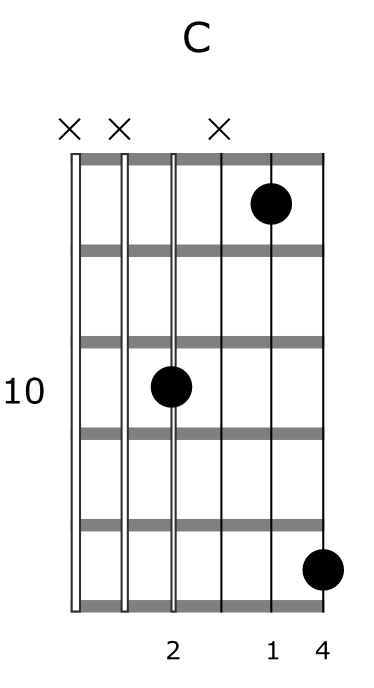
Can also be fretted like this for an identical sound:
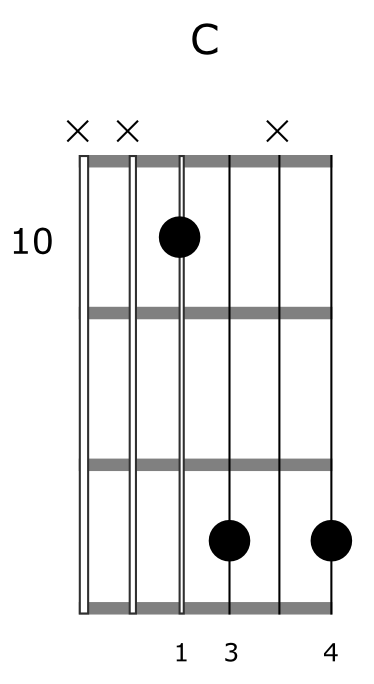
This is important because the goal isn’t to play the most impressive-looking chord shape.
It’s to make music.
Look for practical fingerings that allow you to move naturally from one chord to the next.
Turn Triads On Guitar Into Music
The most useful way to learn triads isn’t to memorise dozens of shapes in isolation.
Start with a progression you already know.
Find a different way to play the first chord.
Then look for a nearby version of the second.
Listen to how they connect and keep experimenting.
Some combinations will sound better to you than others.
That’s part of the process.
You’re developing a collection of sounds you can actually use rather than simply accumulating more guitar chord shapes.
And that’s the bigger lesson here.
You don’t always need more chords to make your playing sound more interesting.
Sometimes, you simply need a different way to play the chords you already know.
Frequently Asked Questions
What are triads on guitar?
Triads are three-note chords. Because they use fewer notes than many common open or barre chord shapes, they can be played in different positions across the fretboard and are useful for creating different chord sounds.
How do you use triads on guitar?
A simple way to use triads is to replace your usual chord shapes with smaller three-note versions of the same chords. Try them in a progression you already know and experiment with different positions to create smoother movement and different sounds.
Why should guitarists learn triads?
Triads help you see chords across more of the fretboard instead of relying only on open and barre chord shapes. They also give you more control over how your chord progressions sound and connect.
What is the difference between a regular triad and a spread triad?
In a regular closed triad, the notes sit relatively close together. A spread triad places those same notes further apart, creating a more open and spacious sound.
How can I make simple guitar chords sound more advanced?
You don’t necessarily need more complicated chords. Changing the voicing, using triads in different positions and creating smoother movement between chords can make a simple progression sound much richer and more musical.
Other Lessons You Might Like
Explore these related lessons to continue building your guitar skills:
Learn The Essential Triad Shapes
Start with the fundamental triad shapes and learn how they appear in different areas of the fretboard. This is a useful foundation before experimenting with more open voicings.
Explore Spread Triads On Guitar
Take the spread-triad idea further and explore the shapes and sounds in more detail.
Discover How To Use Open Chords Creatively
See how open strings can transform familiar chord shapes and give simple progressions a richer, more spacious sound.
How To Switch Chords Faster On Guitar
If moving smoothly between chord shapes is holding you back, these practical ideas will help make your changes easier and more reliable.
How To Create Music With Two Chords
Discover how much music you can create from a very small amount of harmonic material by focusing on how you play the chords rather than how many you know.

Free Rhythm Guitar Mini Course
Learn five practical ways to make your rhythm playing sound more polished, expressive and musical.