3 Ways to Play Walking Bass Lines on Guitar
by Simon Candy
 A lot of guitar players think walking bass lines on guitar are something only bass players do.
So they stick to strumming chords, maybe add the odd embellishment, but never quite get that full, flowing sound you hear in blues, jazz, and classic songs.
But here’s the thing…
On guitar, you can combine bass movement and chords at the same time, and it creates a rich, musical sound that feels far more complete.
And the best part?
It’s much easier to get started than you might think.
In this lesson, you’ll learn three simple approaches to walking bass lines guitar players can use straight away, without overcomplicating things.
Watch the video below to learn more:
The Progression
To keep things simple, we’ll base everything around the following 8-bar blues in the key of G:
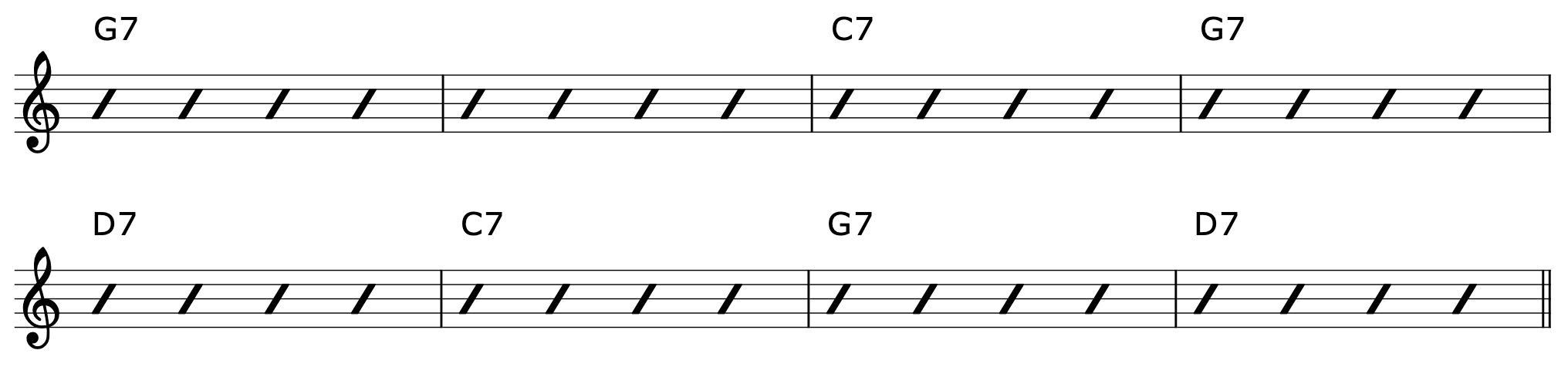
You don’t need to overthink this.
The important thing is that you’ve got a progression to apply the ideas to.
Because ultimately, that’s where this becomes musical, not just something you practise, but something you actually use.
Walking Bass Lines Guitar: Root and Fifth Approach
This is the simplest and most reliable way to start.
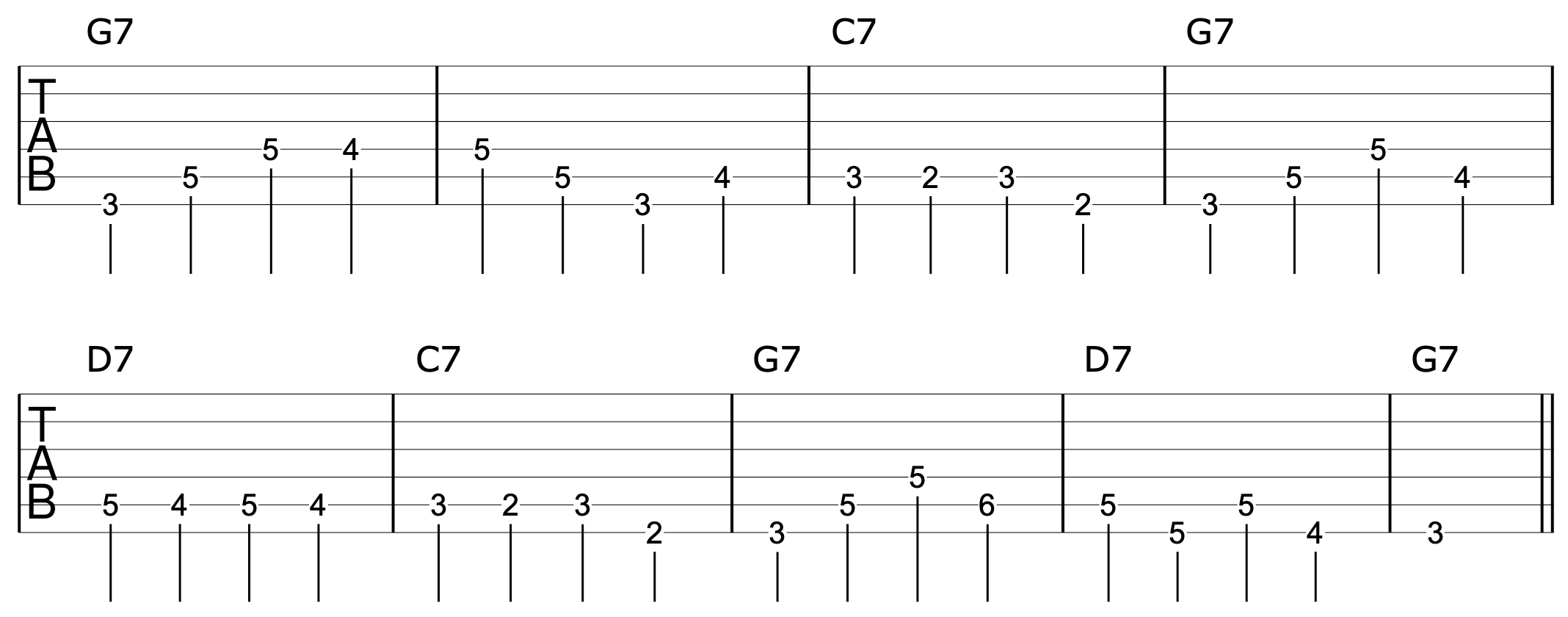
At its core, you’re doing three things:
- Playing the root note of the chord
- Moving to the fifth
- Using small chromatic steps to connect between chords
Here is this approach applied to our walking bass line:
Why This Works
This approach sounds solid because:
- The root and fifth outline the harmony clearly
- The chromatic notes create smooth movement between chords
So instead of jumping from one chord to the next, your bass line walks between them. Very similar to how you might approach linking chords with bass notes.
Adding Chords
Once you’re comfortable with the bass movement:
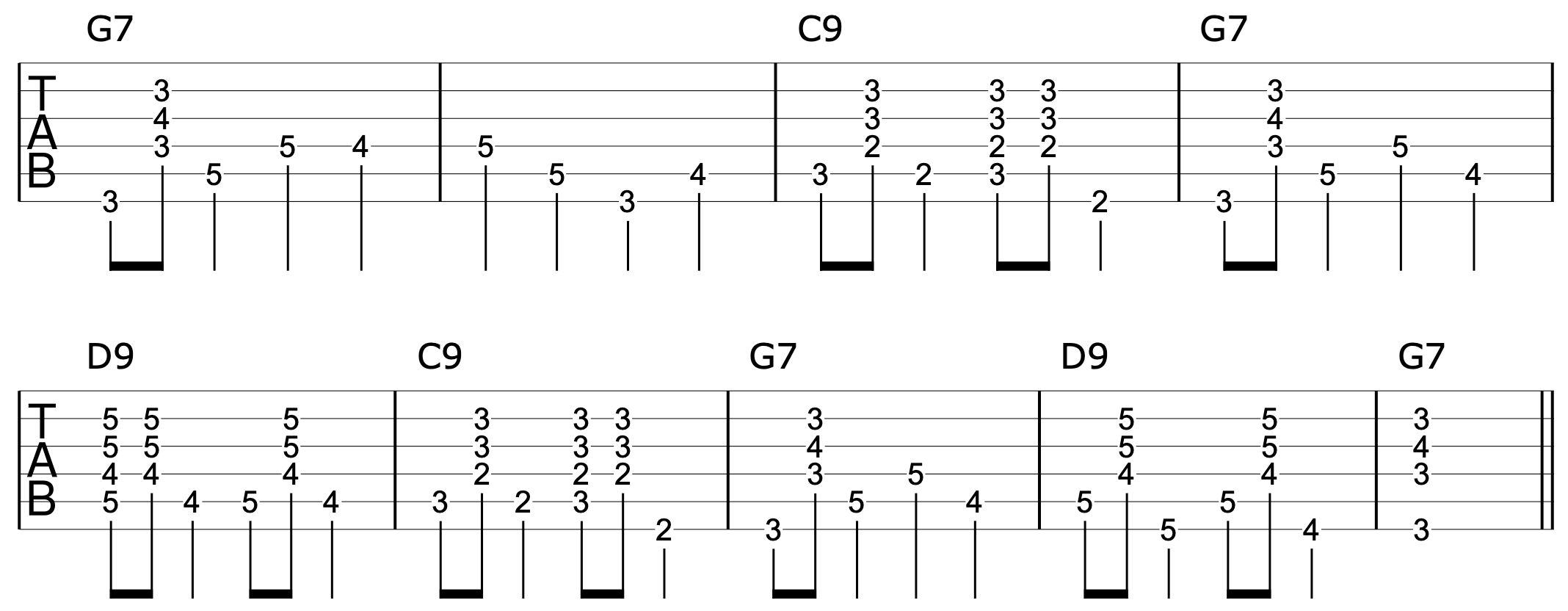
- Start by adding the chord on beat one
- Then experiment with placing chords off the beat
Here is our walking bass example, complete with syncopated chord hits:
This is where things really open up.
You’ll start to hear more groove and movement.
Using Arpeggios for Walking Bass Lines
This is where things start to sound more melodic.
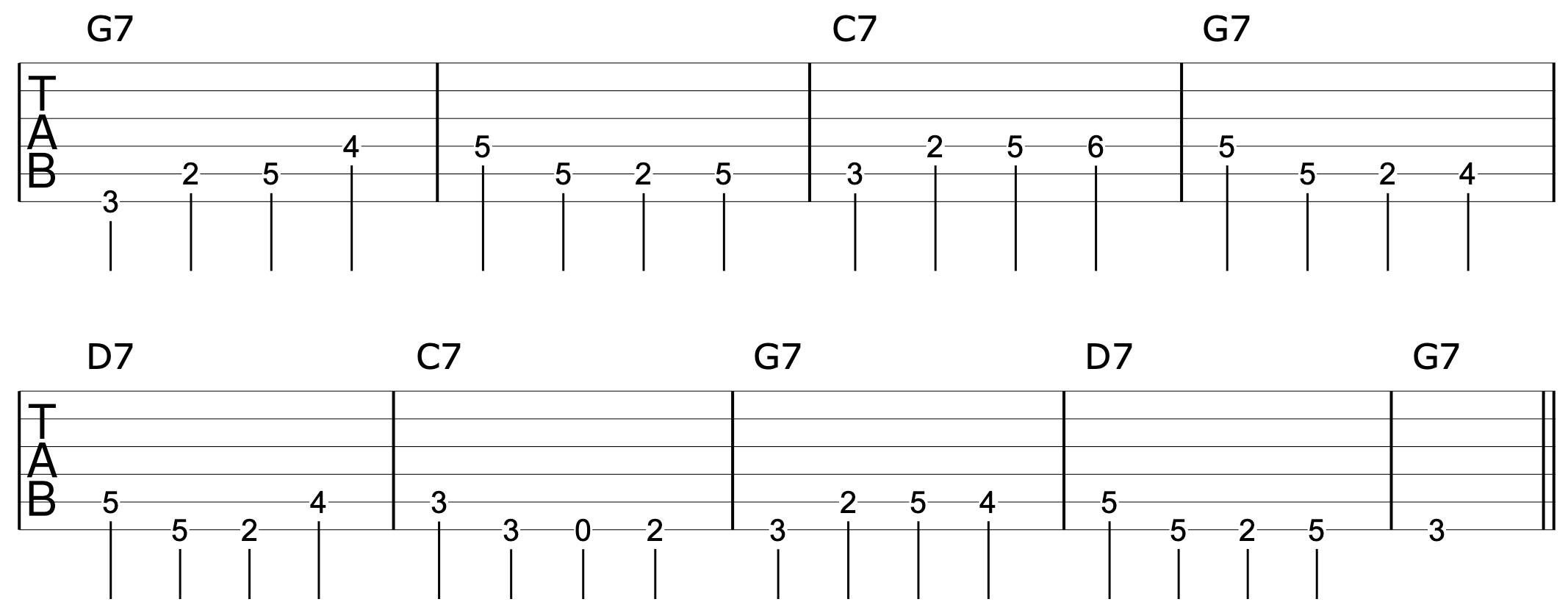
Instead of just root and fifth, you now use:
- Root
- Third
- Fifth
…which gives you a fuller outline of the chord, built from the same shapes you’d practise when working on guitar arpeggios.
What Changes Here
You’re still:
- Targeting the next chord
- Using chromatic notes to connect
But now the line has a stronger melodic shape.
Here is the arpeggio approach applied to our walking bass blues line:
Adding Chords
Same idea as before:
- Start simple (chord on beat one)
- Then loosen it up with syncopation
Here is our walking bass example, complete with syncopated chord hits:
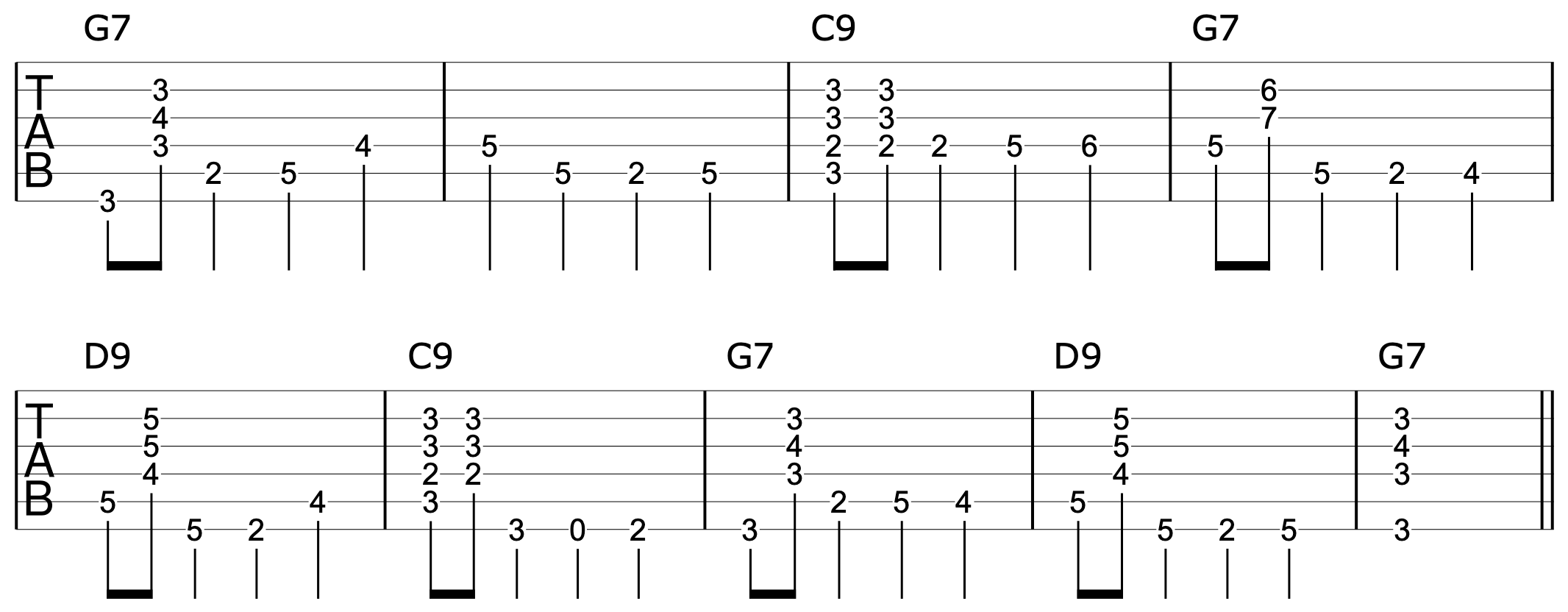
This is where your playing begins to feel more natural and less “placed”.
Scale Approach to Walking Bass Lines on Guitar
This approach gives you the smoothest sound of all.
Here, you’re:
- Moving through the scale on guitar
- Connecting chord tones naturally
- Creating a flowing line between chords
Why This Works So Well
Scale movement allows you to:
- Fill space naturally
- Avoid awkward jumps
- Create a more continuous sound
Here is the scale approach applied to our walking bass blues line:
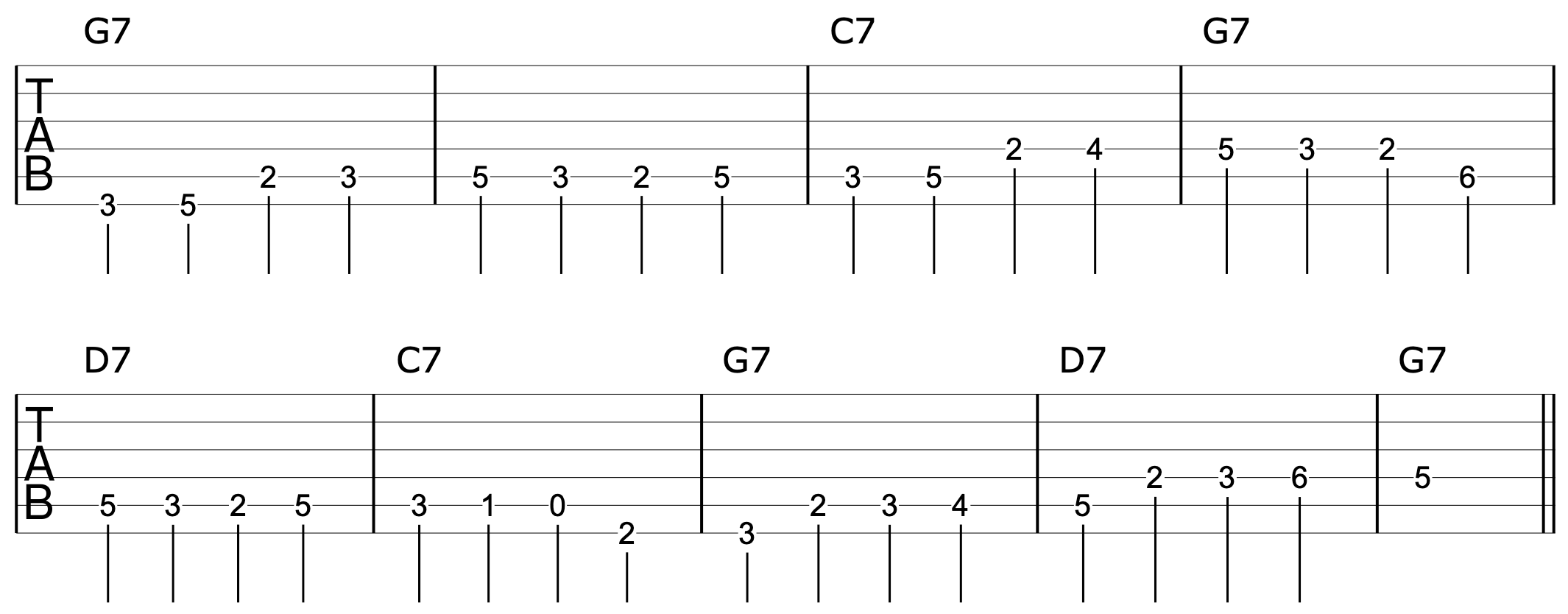
Adding Chords
Just like the other approaches:
- Start with chords on the beat
- Then explore placing them around the bass line
Here is our walking bass example, complete with syncopated chord hits:
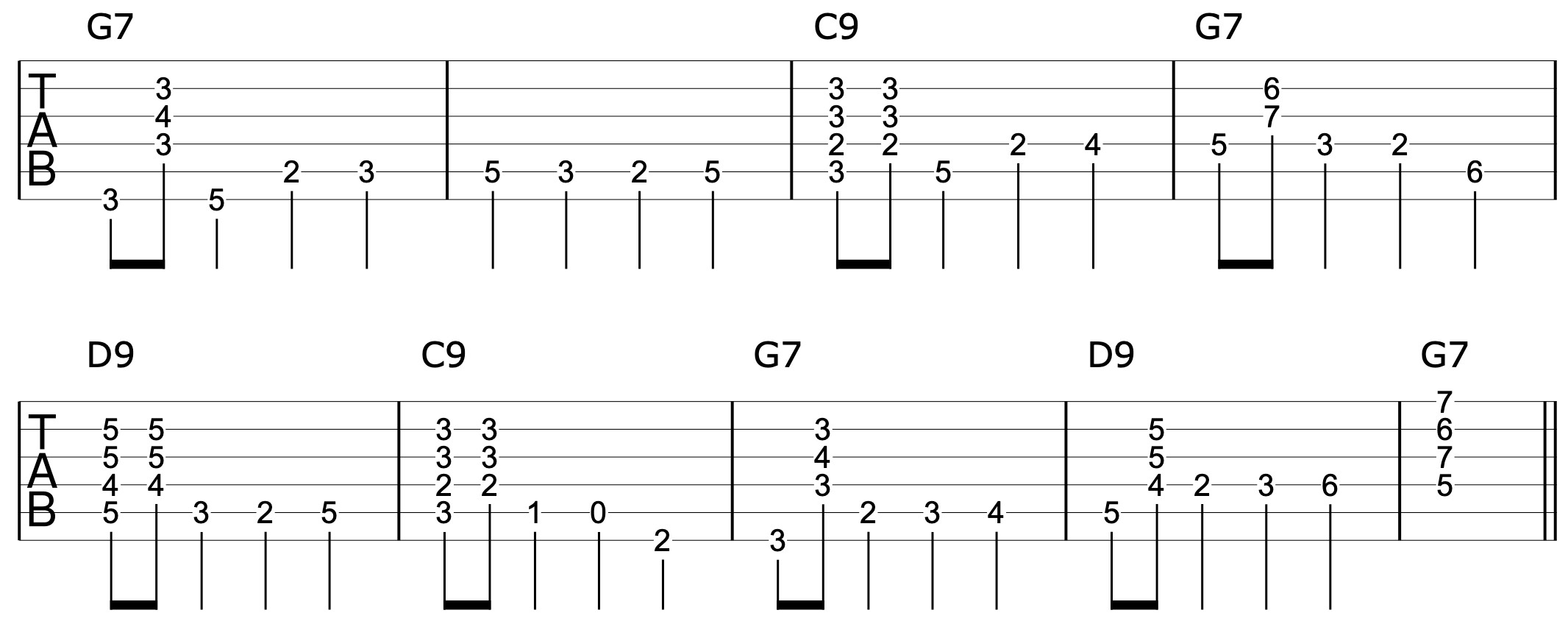
This is where groove and feel really start to develop.
Bringing It All Together
In reality, walking bass lines aren’t built from just one approach.
They’re a combination of:
- Root and fifth movement
- Arpeggios
- Scale lines
- Chromatic connections
You might:
- Start with a scale idea
- Switch to a root–fifth pattern
- Then connect with a chromatic note
For example, here is one way of combining all 3 approaches across one chorus of our blues, complete with chords:
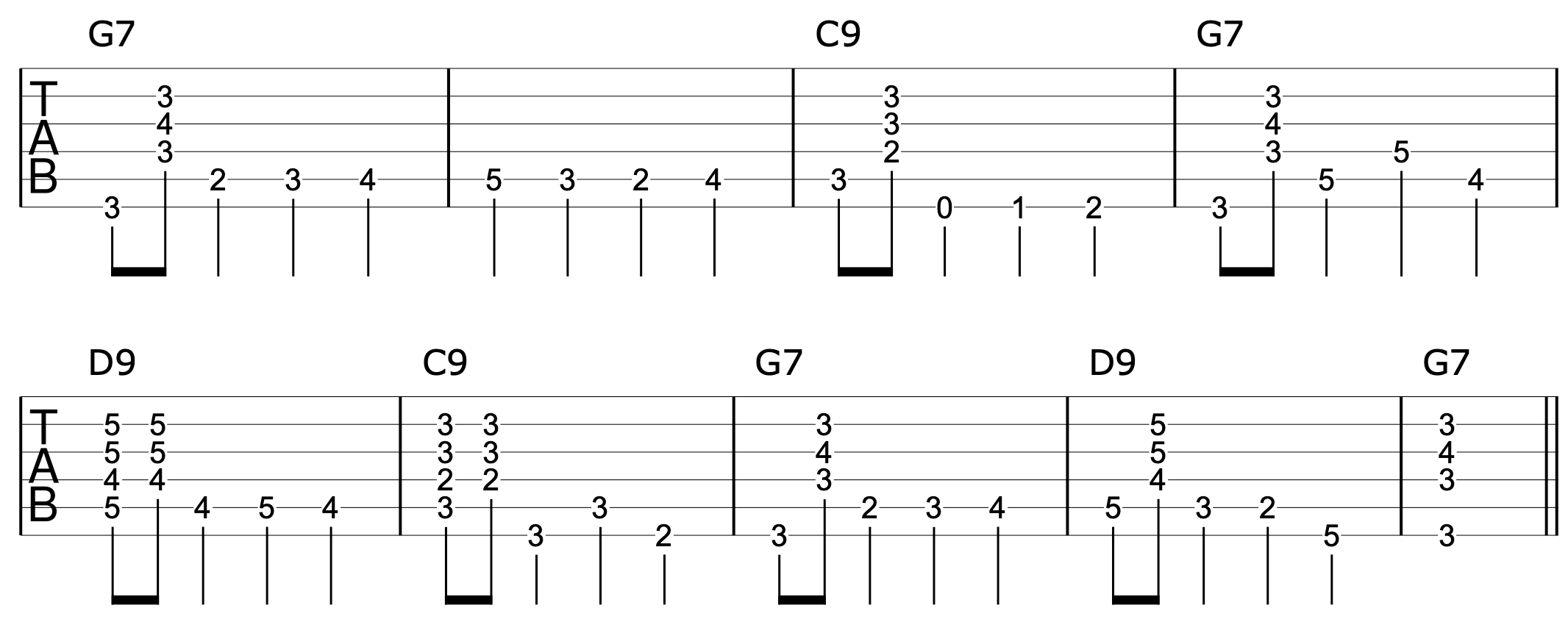
It’s this mix that makes everything sound natural rather than forced, especially when you start seeing how the bass movement fits around triad chord shapes on guitar.
Conclusion
If there’s one thing to take away from this, it’s this:
Walking bass lines aren’t about complexity; they’re about connection.
Connecting:
- one chord to the next
- one note to the next
- one idea to another
Start simple.
Work with the root and fifth.
Then gradually bring in:
- arpeggios
- scale movement
- and a bit of chromaticism
And as you do that, you’ll notice something…
Your playing starts to sound fuller, more musical, and far more engaging, even when you’re playing on your own.
Frequently Asked Questions
What are walking bass lines on guitar?
Walking bass lines on guitar are bass note patterns that move step-by-step between chords, often using scales, arpeggios, and chromatic notes to create a smooth, connected sound.
Is walking bass on guitar difficult?
It can feel challenging at first, but starting with simple root and fifth patterns makes it much easier to build confidence before adding more movement.
Can you play walking bass and chords together?
Yes. That’s what makes it so effective on guitar. You can combine bass notes with chords to create a full, rich sound as a solo player.
What’s the best way to start walking bass lines?
Start with root and fifth movement, then gradually add chromatic notes, arpeggios, and scale-based lines as you become more comfortable.
Do I need fingerpicking for walking bass guitar?
Fingerpicking helps a lot, as it allows you to separate bass and chord movement more easily, but you can start simply and build into it over time
Other Lessons You Might Like
Explore these related lessons to continue building your guitar skills:
A step-by-step progression that takes you from simple bass ideas to more advanced walking bass ideas.
See how walking bass lines show up in real music, with breakdowns of well-known songs.
Fingerstyle Guitar Arrangement
Learn how to combine bass, chords, and melody into complete arrangements.
Discover a simple way to play fingerstyle blues pieces on guitar
Discover 6 levels of fingerpicking guitar from beginner to advanced using a well-known tune. What level can you make it to?

Discover simple ways to sound great fingerpicking, even if you are just getting started. No boring drills or exercises, just music that sounds great!