6 Levels of Walking Bass on Guitar (Step-By-Step Lesson)
by Simon Candy
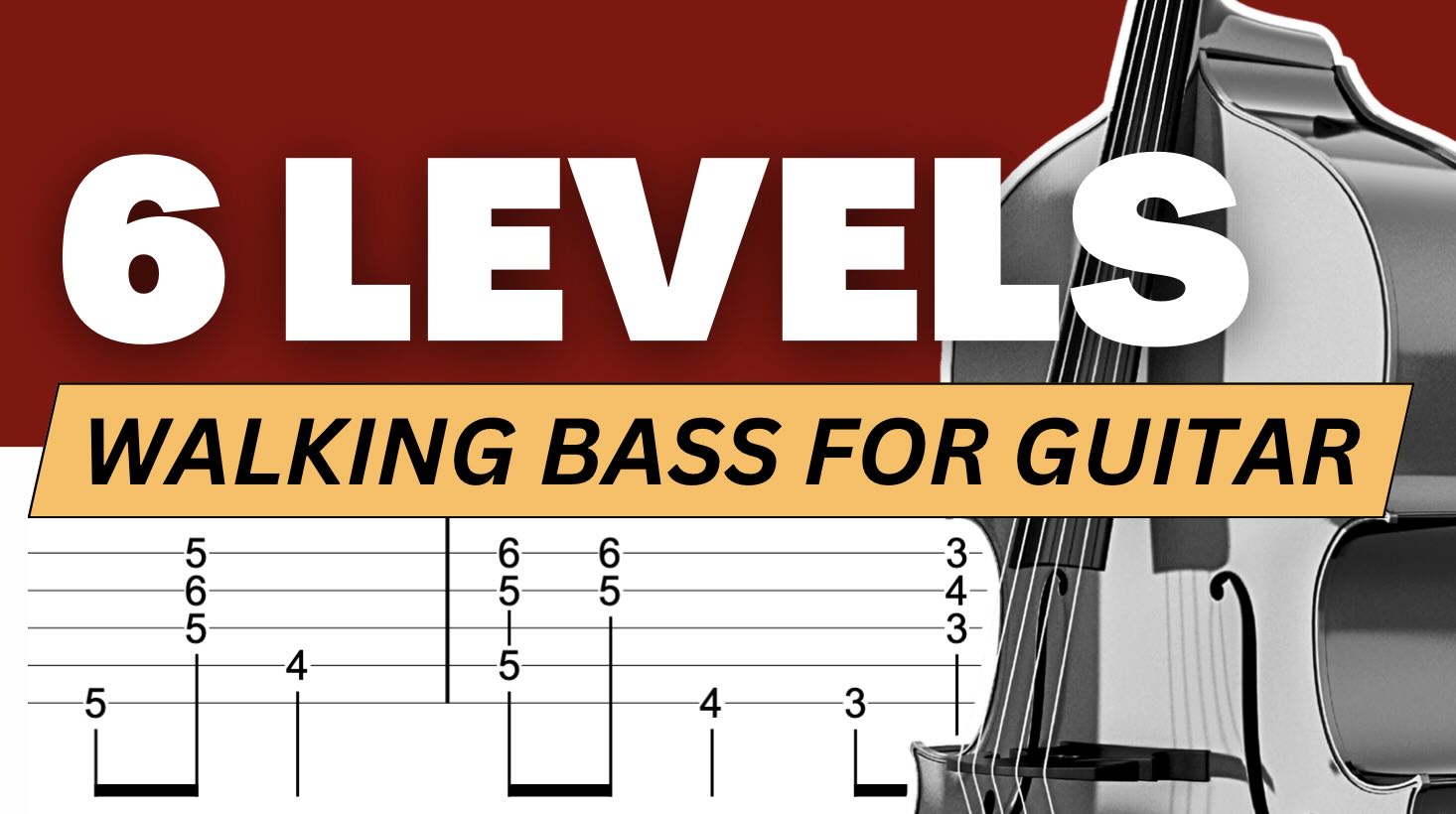 Today, you’re going to learn 6 levels of walking bass lines on guitar — starting simple and building all the way up to something that will blow people away when they hear it.
Most guitar players think walking bass guitar techniques are mysterious, jazz-only skills that are too advanced or not useful outside of jazz. But the truth is, walking bass sounds incredible on guitar because you can combine the groove of the bass with the harmony of the chords.
And it’s not just for jazz — you’ve heard this sound in songs like Eight Days a Week by The Beatles or Moondance by Van Morrison.
Once you see how a walking bass line is built step by step, you’ll realise you don’t need to be a jazz expert to make your guitar sound like a whole band. Stick around — Level 6 is where things get wild.
Watch the video below to learn how to play walking bass on guitar:
6 Levels of Walking Bass for Guitar
Below are the six levels of walking bass, each building on the one before. Follow along with the video for demonstrations and examples.
Level 1: Half Bar Walking Bass
We’ll start with the simplest way to create walking bass lines:
2 chords per bar (2 beats per chord).
This makes the movement easier and gives you less empty space to fill:

This is the easiest way to get a walking bass line going.
Roots and chromatics create motion, but it can still sound a little bare — so let’s add some harmony.
Level 2: Adding Chords to the Bass Line
Now we bring in some chord hits to add harmony on top of the bass line:

In solo guitar playing, the goal is to sound like more than one instrument.
These chord stabs make it feel like you’ve got the whole rhythm section under your fingers.
But what happens when you switch to one chord per bar? You suddenly have more space to fill.
Level 3: One Bar Walking Bass
Here we stretch the progression out so that each chord lasts for a full bar.
This is where the bass really starts to walk.
On beat 1, play the root note. On beats 2, 3, and 4, fill the bar with chord tones, scale tones, or chromatic approach notes:

Here is another way you could approach this using a combination of arpeggios and scales:

This is the classic jazz walking bass guitar sound.
If you can do this comfortably, you’re speaking the language.
But single-note lines can feel empty on guitar — so let’s bring the chords back in.
Level 4: Adding Chords (One Bar Version)
Here we mix chords into our one-bar walking bass patterns.
Here is the previous example using root notes and 5ths, complete with chords:

And here is the previous example using arpeggios and scales, complete with chords:

This approach adds bounce, syncopation, and the punchy feel you hear in solo jazz guitar.
Players like Joe Pass used this to sound like a full rhythm section.
Level 5: Chromatic Chords
Now we introduce chromatic approach chords.
This creates forward momentum and makes the harmony anticipate what’s coming next:

You’re no longer just outlining harmony — you’re driving it.
Level 6: Harmonised Walking Bass Line
This final level takes everything to the extreme:
Every bass note gets its own chord:
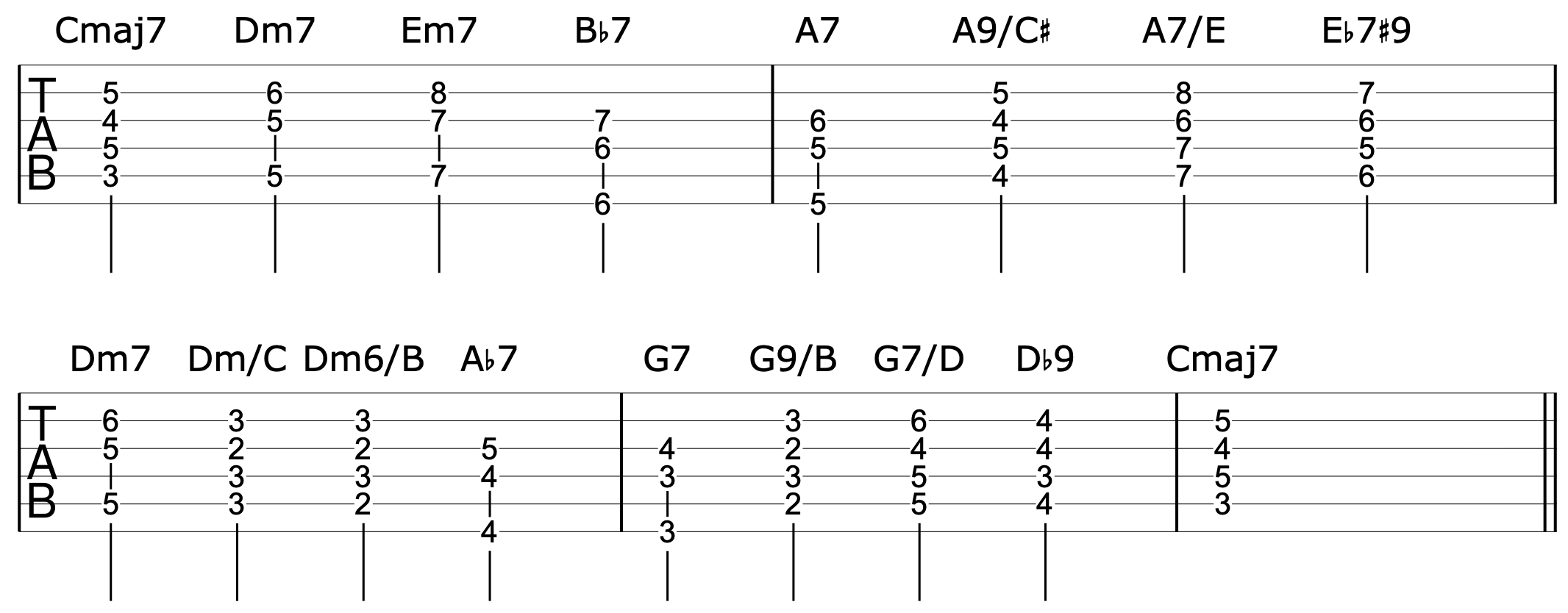
This creates rich, dense, harmonised movement you normally hear in advanced chord-melody playing.
It makes your guitar sound huge.
Summary
You’ve now seen how to play walking bass on guitar through 6 progressive levels — from the simplest root-movement lines to fully harmonised chord-bass textures.
Each level is complete on its own… but if you master Level 1, you can keep climbing all the way to Level 6.
Use these walking bass exercises to build coordination, groove, and a deeper harmonic feel on guitar.
Other Lessons You’ll Love
Explore these related lessons to continue building your guitar skills:
Famous Songs with Walking Bass Lines
Explore timeless examples of songs built on walking bass and learn how the technique enhances groove, movement, and momentum in acoustic guitar playing.
Danny Boy Walking Bass Tutorial
A step-by-step lesson showing you how to arrange “Danny Boy” using a flowing walking bass line that supports the melody beautifully.
Ways to Accompany a Singer on Guitar
Learn three versatile accompaniment styles that help you support a vocalist with confidence, sensitivity, and musicality.
 Proven Strategies for Walking Bass on Guitar
Learn systematic approaches to building walking bass lines that groove and support melody, perfect for rhythm or solo guitar playing.