How to Transform Any Song Just by Changing the Chords
by Simon Candy
 Do you ever feel like your playing sounds fine, but a bit limited?
You know your open chords. You can play barre chords. You can get through songs comfortably.
But after a while, everything starts to sound a little similar. That’s a really common place to be.
If you’ve ever wondered how to arrange songs on guitar in a way that sounds more musical, the answer often isn’t learning more songs or harder techniques.
It’s about how you use the chords you already know.
Small changes in voicing, spacing, and movement can completely transform how a song sounds, often without making anything harder to play.
In the video below, I’m joined by songwriting coach Diana de Cabarrus, and together we explore practical guitar arranging tips you can start applying straight away:
Looking Beyond Open and Barre Chords
Most players begin with open chords, and for good reason. They sound full, resonant, and musical straight away.
Then come barre chords, which give you more control and allow you to move around the fretboard.
But if that’s where things stop, you’re only using a small part of what the guitar offers.
Between those two approaches, there’s a huge range of possibilities:
- Playing fewer strings
- Changing how notes are spaced
- Mixing open strings with fretted notes
- Using smaller shapes instead of full chords
Each of these choices changes the feel of what you’re playing.
Instead of thinking “which chord do I play next,” it becomes more about:
“How do I want this to sound?”
Use Creative Chord Voicings to Change the Feel
One of the most effective ways to transform a song is through creative chord voicings.
You might:
- Play a full chord for a strong, grounded sound
- Strip it back to just a few notes for something lighter
- Move higher up the neck for a brighter tone
- Spread the notes out for a more open, spacious feel
You can also vary how many notes you play at once.
Often, fewer notes sound clearer, more focused, and more musical.
This is a big part of learning how to arrange songs on guitar: choosing the version of the chord that best fits the moment.
Bringing in Open Strings for More Depth
Open strings are one of the simplest ways to add depth and colour to your playing.
They give you:
- Natural sustain
- A slightly shimmering quality
- A fuller overall sound
If you’re playing in keys like E or A, you can make great use of open strings alongside fretted notes.
Try this B barre chord:
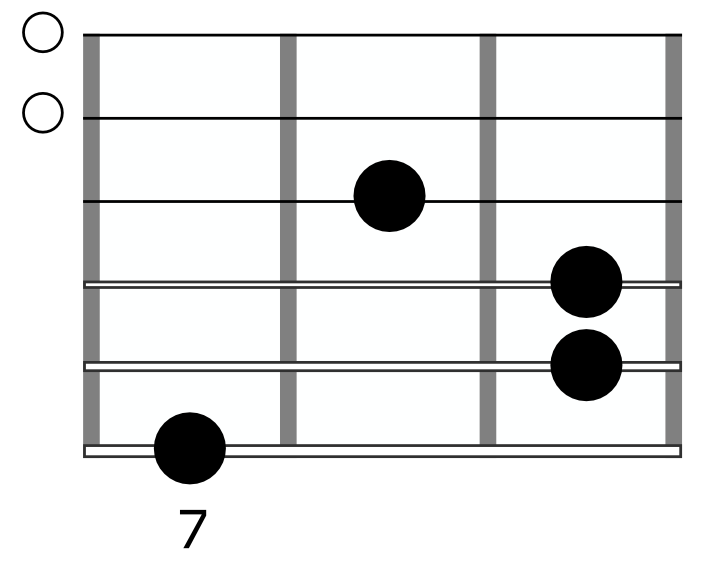
We’re holding a barre chord shape here, but not fully barring, allowing the top two open strings to ring through.
You’ll notice the sound opens up straight away, without any added complexity.
Add Movement Within a Chord (CESH)
Sometimes the most musical thing you can do is not change chords at all.
Instead, you stay on the same chord and create movement inside it.
This idea is known as CESH (Contrapuntal Elaboration of Static Harmony), but in practice, it’s very simple:
- Hold a chord shape
- Move one note inside it
- Keep everything else the same
Here’s an example of that applied to a simple progression:
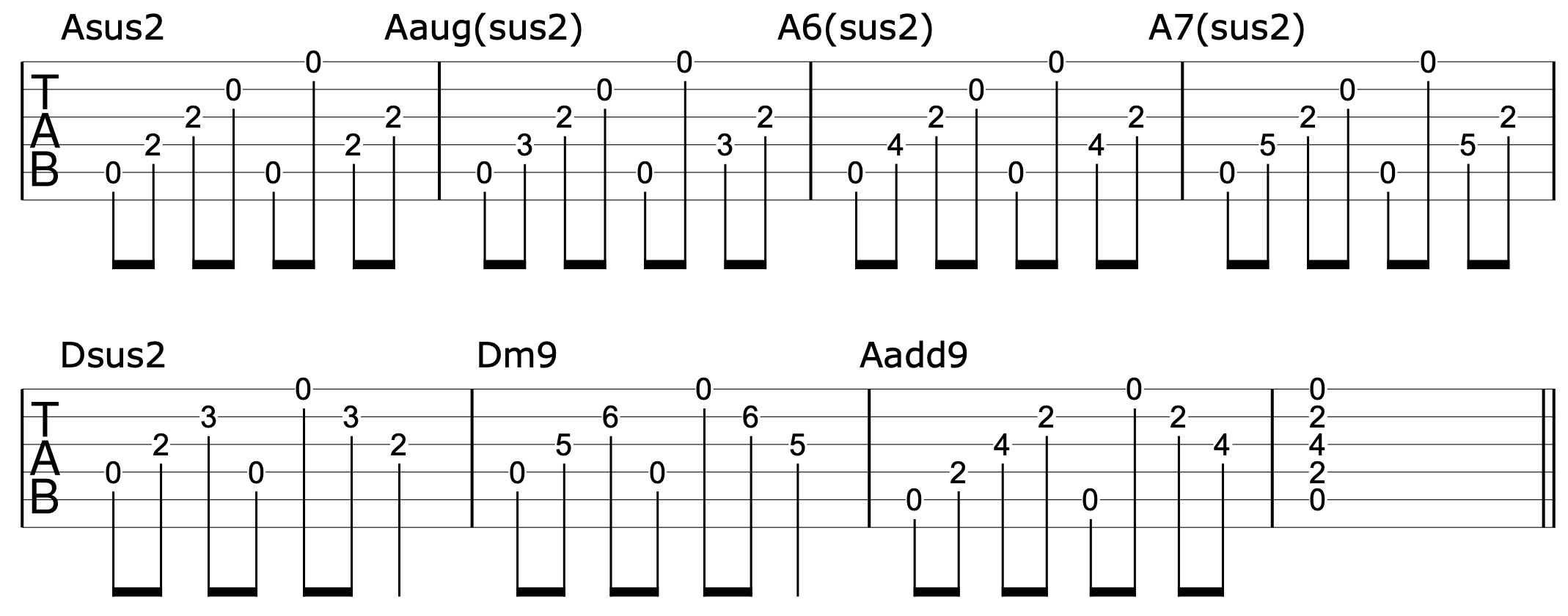
The result:
- A sense of movement without changing chords
- A more expressive, flowing sound
- Something that feels more like an arrangement than a basic progression
Use Simple Harmony Instead of Full Chords
Another powerful approach is to move away from full chords and focus on guitar harmony techniques.
Instead of strumming everything, you pick out pairs of notes that outline the chord.
A great place to start is 10th harmony on guitar, which has a wide, open sound.
Here is an example of this being applied to a simple progression:

What you’ll hear:
- A more melodic sound
- Clearer movement between chords
- A lighter, more expressive feel
This is often what makes a part sound like a complete piece of music rather than just a chord progression.
Bringing It All Together
The key idea here is simple:
You don’t need new chords to sound better; you need new ways of using them.
Start small.
Take a progression you already know and try just one idea:
- Change the voicing
- Add an open string
- Move a note inside the chord
- Use simple harmony instead of full chords
Even one small change can completely transform how a song feels.
That’s where your playing starts to open up and where it begins to sound more like music, and less like a series of chord shapes.
FAQ Section
What does it mean to arrange a song on guitar?
It means taking a song and deciding how to play it in a way that suits the guitar, using chords, melody, and rhythm to create a complete sound.
Do I need advanced theory to arrange songs?
No. Simple ideas like changing chord shapes, adding open strings, or using fewer notes can make a big difference without needing theory knowledge.
What are chord voicings on guitar?
Chord voicings are different ways of playing the same chord using different note arrangements or positions on the fretboard.
What is CESH in guitar playing?
CESH is when you stay on one chord but move a single note within it to create a sense of motion and interest.
What’s the easiest way to start arranging songs?
Start by simplifying chords or changing how many strings you play. Even small adjustments can make your playing sound more musical.
Other Lessons You Might Like
Explore these related lessons to continue building your guitar skills:
A quick way to make your chords sound more expressive with minimal effort.
Learn how to create melodic movement using simple harmony shapes.
Connect chords in a way that sounds natural and flowing.
Explore different ways to use chord shapes across the fretboard.
Create Beautiful Music with Two Chords
Discover how to make simple progressions sound complete and musical.
 How to Accompany a Singer on Guitar
Learn how to turn simple chord progressions into musical, supportive parts that work perfectly in real songs, especially when backing a singer.