Easy DADGAD Chords That Make Your Guitar Sound Amazing
by Simon Candy
 One of the great things about DADGAD tuning is how little you need to do to create a beautiful sound on your guitar.
With just a handful of easy DADGAD chords, you can let the open strings ring out and create a rich, full sound that almost feels like several instruments playing together.
And the best part?
You don't need complicated fingerings or dozens of new chord shapes.
In fact, some of the most beautiful sounds in DADGAD come from using just one or two fingers.
In this lesson, you learn four simple chords and how to put them together into a progression.
We'll then add movement in the bass and melody, gradually turning something very simple into a much more interesting piece of music.
Watch the video below to learn more:
How To Tune Your Guitar To DADGAD
Before learning the chords, you'll need to get your guitar into DADGAD tuning.
From the lowest string to the highest, the notes are:
D – A – D – G – A – D
You only need to change three strings from standard tuning:
- 6th string: Tune down from E to D.
- 5th, 4th, and 3rd strings: Leave unchanged.
- 2nd string: Tune down from B to A.
- 1st string: Tune down from E to D.
Once you've done this, strum all six open strings.
You'll immediately hear that distinctive DADGAD sound.
The open strings create a beautiful, ringing quality that we'll take advantage of throughout this lesson.
Four Easy DADGAD Chords For Beginners
We're going to build everything around four simple DADGAD chord shapes.
Three require just one finger, while the fourth uses only two.
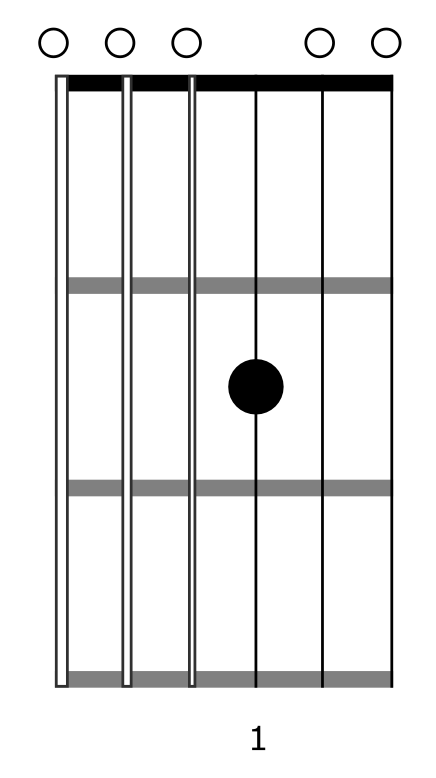
1. D Power Chord (D5)
Place your first finger on the second fret of the third string.
That's it!
Strum or pick all six strings, allowing the open strings to ring around that single fretted note.
It's a big, open sound for such a simple shape.
2. Gsus2
Place a finger on the fifth fret of the sixth string.
Play the sixth string along with the fourth, third, second, and first strings, leaving them open.
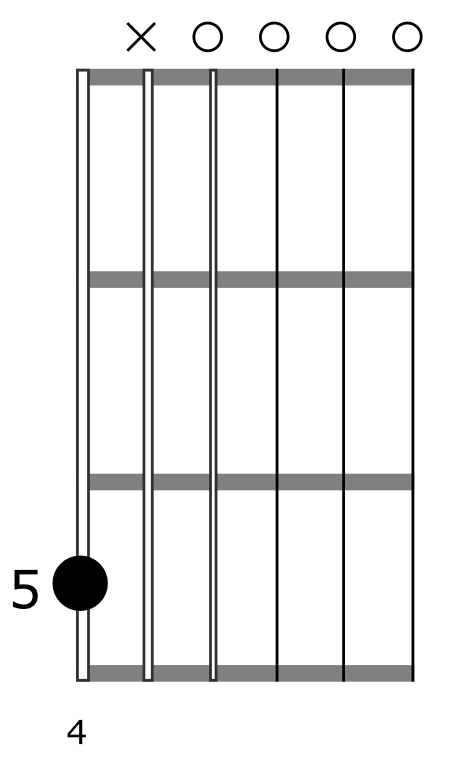
Avoid the fifth string by muting it when strumming or skipping it when fingerpicking.
This gives you a lovely, spacious Gsus2 chord.
3. Bm7
This time, you'll need two fingers.
Place one finger on the second fret of the fifth string and another on the second fret of the third string.
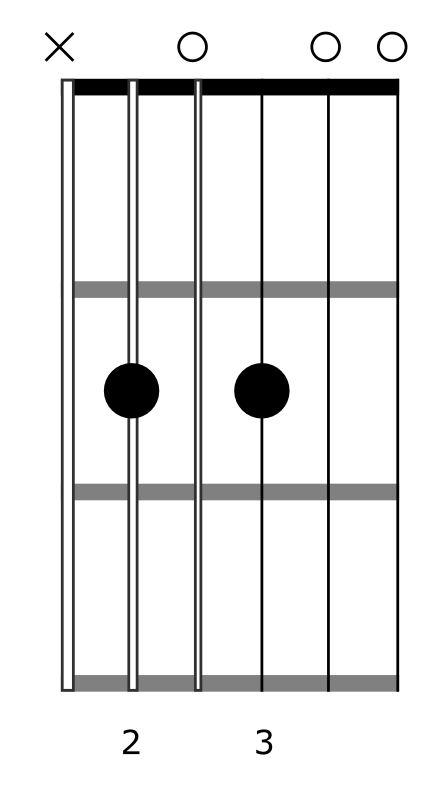
Play from the fifth string down, allowing the remaining strings to ring open.
You get a beautiful Bm7 chord without needing a barre chord.
4. A7sus4
Finally, place your first finger on the second fret of the fourth string.
Play from the fifth string down, leaving the other strings open.
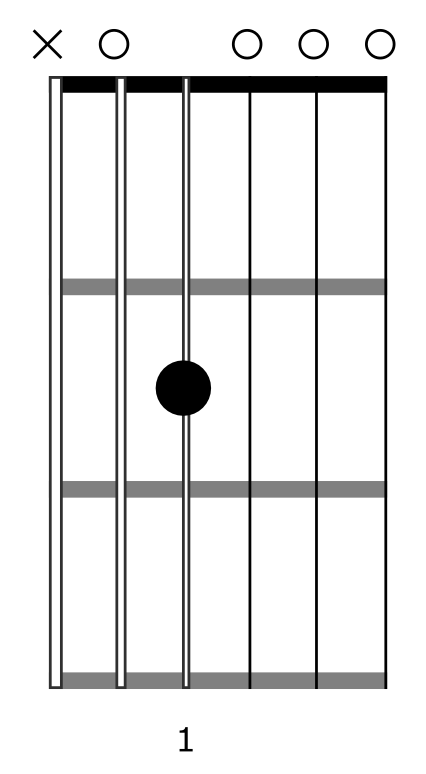
Once again, a single finger gives you a wonderfully rich sound.
Notice how much of the character of these chords comes from the open strings.
That's one of the things that makes DADGAD so enjoyable to explore.
Playing A Simple DADGAD Chord Progression
Now that you know the four shapes, let's put them together.
We'll use this progression:
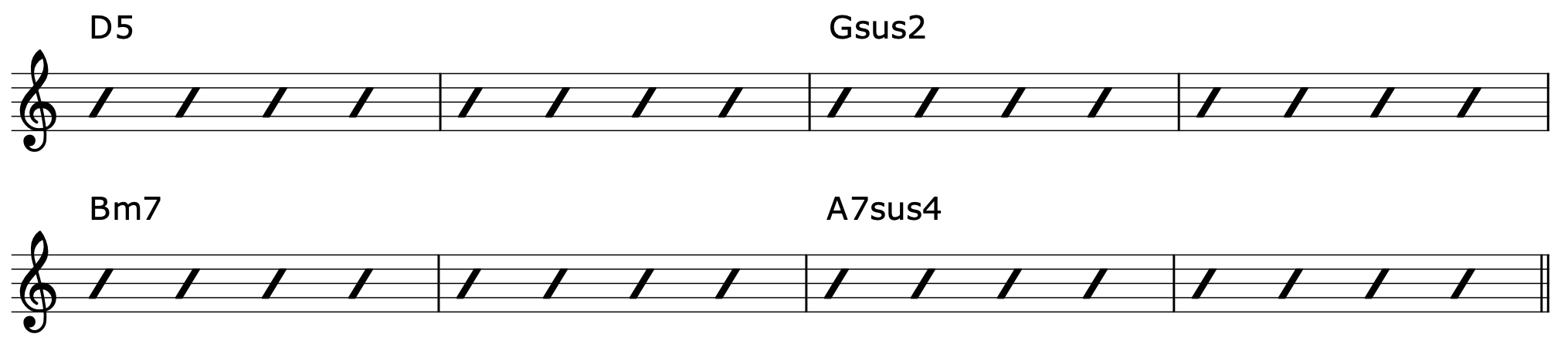
Play each chord for two bars, giving you an eight-bar progression.
Start by applying a simple, steady fingerpicking pattern to each chord:
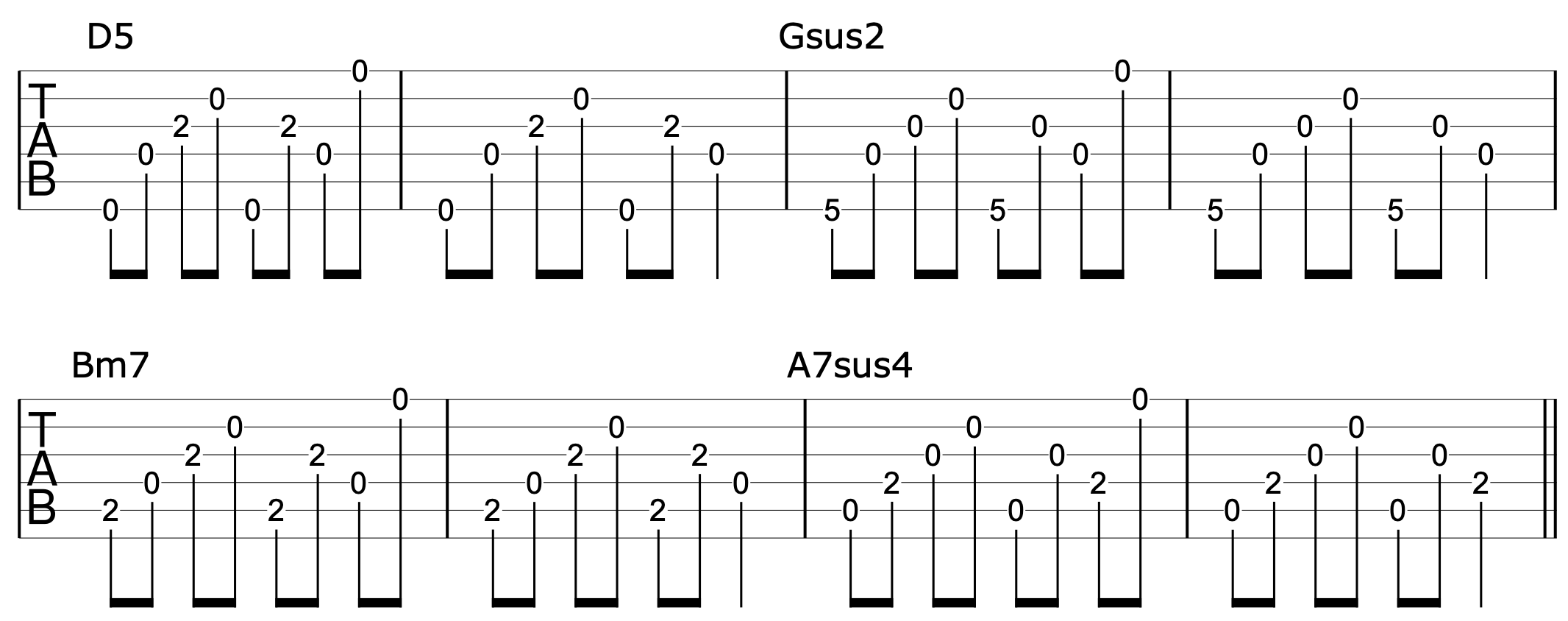
Don't worry about adding anything fancy just yet.
The idea is to become comfortable moving between the shapes while keeping the rhythm flowing.
As you play, listen to how the open strings connect the chords.
Even though the bass notes and fingerings change, those ringing strings help everything sound connected.
Already, you have something that sounds much fuller than the simplicity of the shapes might suggest.
But we can take it further.
Add Bass Movement To Make The Chords Flow
One of my favourite ways to make a simple chord progression sound more musical is to introduce a little movement in the bass.
Rather than jumping directly from one chord to the next, we can use individual bass notes to create a sense of direction, like so:
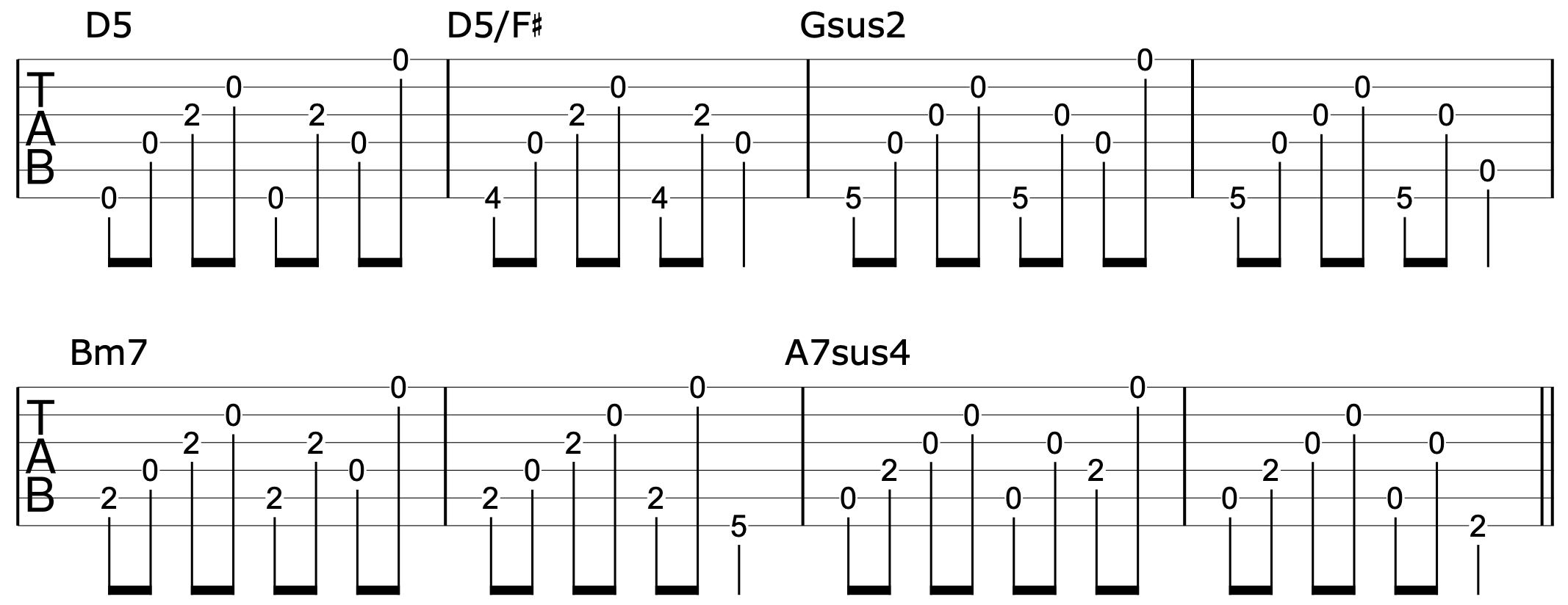
Start with the D power chord (D5).
During the second bar, introduce an F# bass note on the fourth fret of the sixth string.
This leads beautifully into the G bass note of our next chord.
Instead of moving directly from D to G, we now have:
D → F# → G
That small movement makes the transition feel much more natural.
We can use the same approach with the remaining chords:
- Gsus2 to Bm7: Play the open fifth string (A) before moving to Bm7.
- Bm7 to A7sus4: Introduce a G bass note before moving to A.
- A7sus4 to D5: Play an E bass note on the second fret of the sixth string before returning to D.
Notice how these notes help connect one chord to the next.
We're not changing the progression or introducing complicated new chords.
We're simply adding movement between the shapes we already know.
Try playing the progression without the connecting bass notes, then play it again with them.
Listen to how much difference those small additions make.
Add Simple Melodies To Your DADGAD Fingerpicking
So far, we've created movement underneath the chords.
Now let's explore what happens when we introduce a little melody on the higher strings.
This is where DADGAD can become particularly beautiful.
Because so many strings ring open, you can add melodic ideas without losing the fullness of the underlying chords, like so:
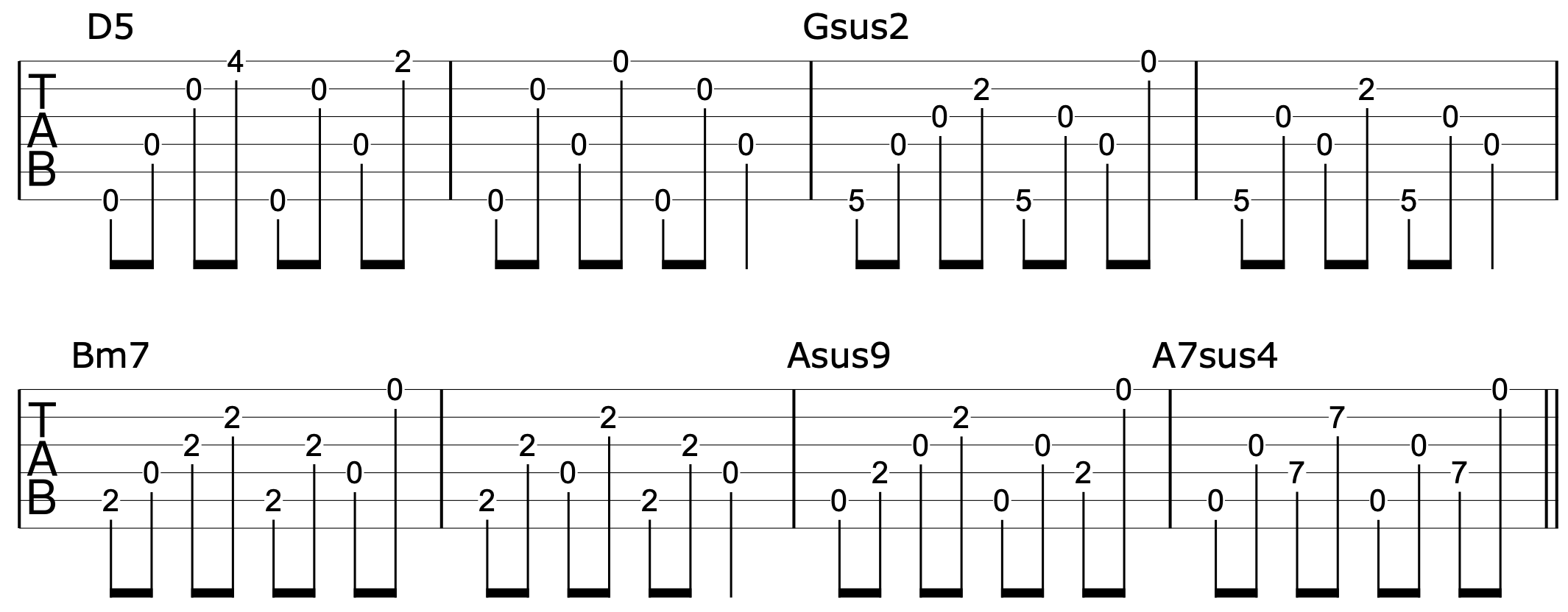
Start with the D power chord (D5).
As you fingerpick, introduce a short descending line on the first string.
You don't need anything long or complicated.
Just a few moving notes against the open strings can create a lovely effect.
When you reach Gsus2, try adding the second fret of the second string.
This introduces another colour while maintaining that open, ringing quality.
You can then carry the same note into your Bm7 chord.
Rather than treating every chord as a completely separate shape, you're allowing a note from one chord to continue into the next.
This helps everything sound connected rather than like a series of individual chords.
Finally, experiment with different voicings over the A chord.
A familiar open A7 shape from standard tuning creates an interesting suspended sound in DADGAD.
Move that same shape up to the seventh fret for another variation.
Don't get too caught up in the chord names.
What's important is hearing how these small changes create different sounds and textures.
Let The Open Strings Do The Work
One thing worth remembering when exploring DADGAD is that you don't always need to fill every space with more notes.
Part of the beauty of this tuning comes from allowing the strings to ring.
A simple chord, a moving bass note, or a short melodic phrase can sound wonderful when you give it room to breathe.
So resist the temptation to make everything more complicated.
Start with the basic progression.
Get comfortable with the fingerpicking.
Then introduce one or two connecting bass notes.
Once that feels natural, experiment with adding melody on the higher strings.
Gradually combine these ideas until your progression begins to sound like a complete piece of music.
Start Creating Your Own DADGAD Arrangements
What I love about DADGAD is how much music you can create from such simple beginnings.
We've taken four easy chord shapes and developed three versions of the same progression:
- A basic fingerpicking arrangement.
- The same progression with connecting bass notes.
- A more developed arrangement with melody and chord variations.
Throughout all of this, the open strings provide that beautiful, distinctive DADGAD sound.
And you don't need to learn dozens of new chords to start making music in this tuning.
Spend some time with these four shapes.
Experiment with changing a bass note, moving a finger, or letting an open string ring a little longer.
You might be surprised by just how much music you can create from such simple ideas.
Frequently Asked Questions
What are the easiest chords to play in DADGAD?
Some of the easiest DADGAD chords include D5, Gsus2, Bm7, and A7sus4. These shapes require only one or two fingers and make use of the open strings to create rich, ringing sounds.
Is DADGAD tuning good for beginners?
Yes. DADGAD is a great tuning for beginners to explore because many beautiful chord shapes are surprisingly simple. However, you'll need to get used to the different tuning and learn where the notes are.
Can you play normal guitar chords in DADGAD?
You can use some familiar fingerings from standard tuning, but they will often produce different chords because the strings are tuned differently. This can be a great way to discover interesting new sounds.
Is DADGAD good for fingerpicking?
Absolutely. DADGAD works particularly well for fingerpicking because the open strings allow you to combine bass notes, chords, and melodies while maintaining a full, ringing sound.
What kind of music is DADGAD tuning used for?
DADGAD is commonly associated with Celtic and folk guitar, but it's also useful for blues, fingerstyle guitar, and creating your own acoustic arrangements.
Other Lessons You Might Like
Explore these related lessons to continue building your guitar skills:
Learn More Ways To Play Guitar In DADGAD Tuning
Get comfortable with DADGAD tuning and discover how to use its open strings to create beautiful sounds on your acoustic guitar.
How To Play Blues Licks In DADGAD
Discover how to create expressive blues licks in DADGAD and bring a different sound to your acoustic blues playing.
The Easiest Way To Get Started Exploring Open Tunings On Guitar
See how different open and alternate tunings can give you fresh chord sounds, new musical ideas, and inspiration for your playing.
How To Play Guitar In Open G Tuning
Explore another popular open tuning and learn simple chord shapes that make your acoustic guitar sound rich and full.
Learn 3 Spicy Chord Progressions For Guitar
Learn how small changes to familiar chords can create more colour, movement, and interest in your guitar playing.
 Discover More Ways To Play In DADGAD
Learn how to use this beautiful tuning to create richer chords, flowing progressions, and more expressive acoustic guitar music.