How to Improvise With Fingerpicking Patterns
by Simon Candy
 You can know plenty of fingerpicking patterns and still find that your playing sounds a little repetitive.
You learn a pattern, get it comfortable under your fingers and then repeat it over and over. There’s nothing wrong with that, but after a while it can start to sound more like an exercise than music.
The solution isn’t necessarily to learn more patterns. It’s to become better at connecting the patterns you already know.
Once you can move freely between different fingerstyle patterns without breaking the flow, your fingerpicking starts to sound much more natural and musical. Instead of being locked into one repeating idea, you have choices.
And that’s where improvising with fingerpicking patterns begins.
Watch the video below to learn more:
Start With Fingerpicking Patterns You Already Know
For this approach, you don’t need complicated patterns.
In fact, simpler is better.
You could take several one-bar patterns that use a steady alternating bass, such as Travis picking patterns, and play them over a simple E7 chord.
In this lesson, we will use the following patterns:
Pattern 1:

Pattern 2:

Pattern 3:

Pattern 4:

Pattern 5:

The exact patterns aren’t the important part.
What matters is that you can play each one comfortably on its own before trying to connect it to anything else.
This is an important distinction because we’re not trying to practise the mechanics of a pattern and improvise with it at the same time.
First, get the patterns into your fingers.
Then start training yourself to use them more freely.
Connect Two Fingerstyle Patterns
Choose any two patterns you know well.
Play the first for two bars and then, without stopping, move directly into the second for two bars.
Then keep looping between them.
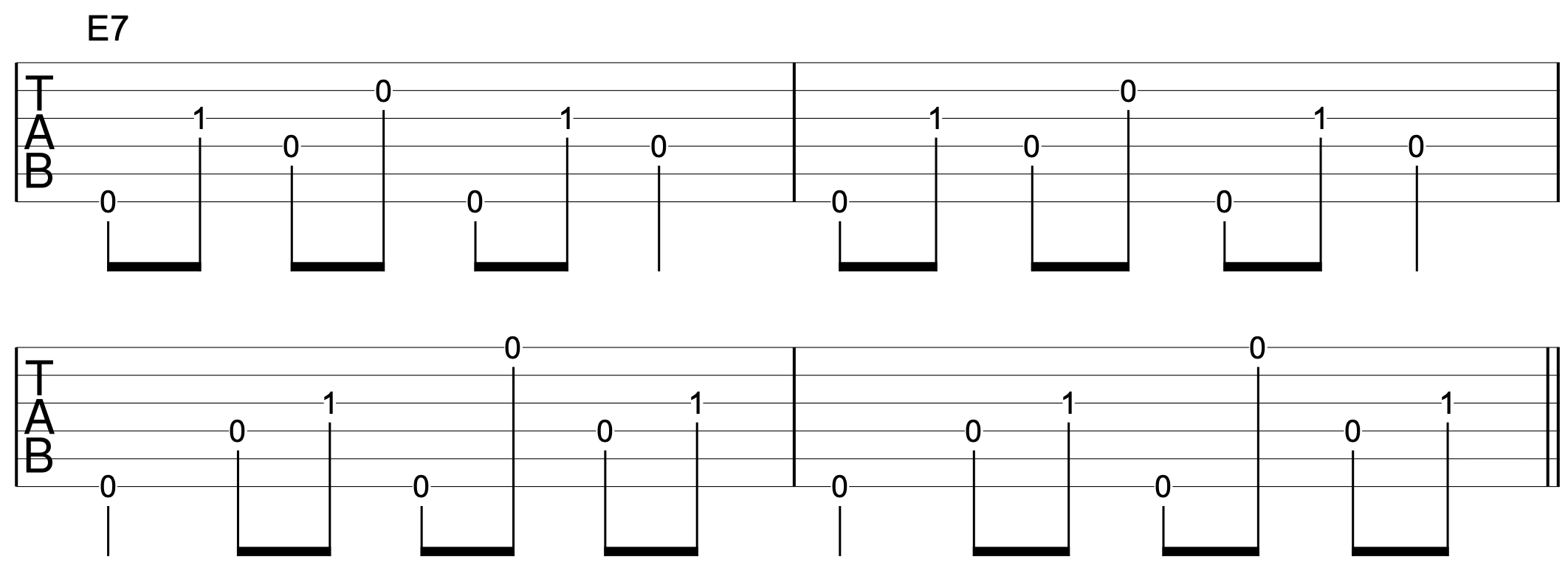
The important part is the connection.
You don’t want to play the first pattern, pause, prepare yourself and then begin the second. The goal is for one to flow naturally into the next while the underlying fingerstyle rhythm continues.
Spend a couple of minutes doing this with one pair of patterns, then choose another pair.
If you have five patterns available, for example, you could practise patterns one and two, then three and four, then two and five.
Mix the combinations up.
Here is another example of this:
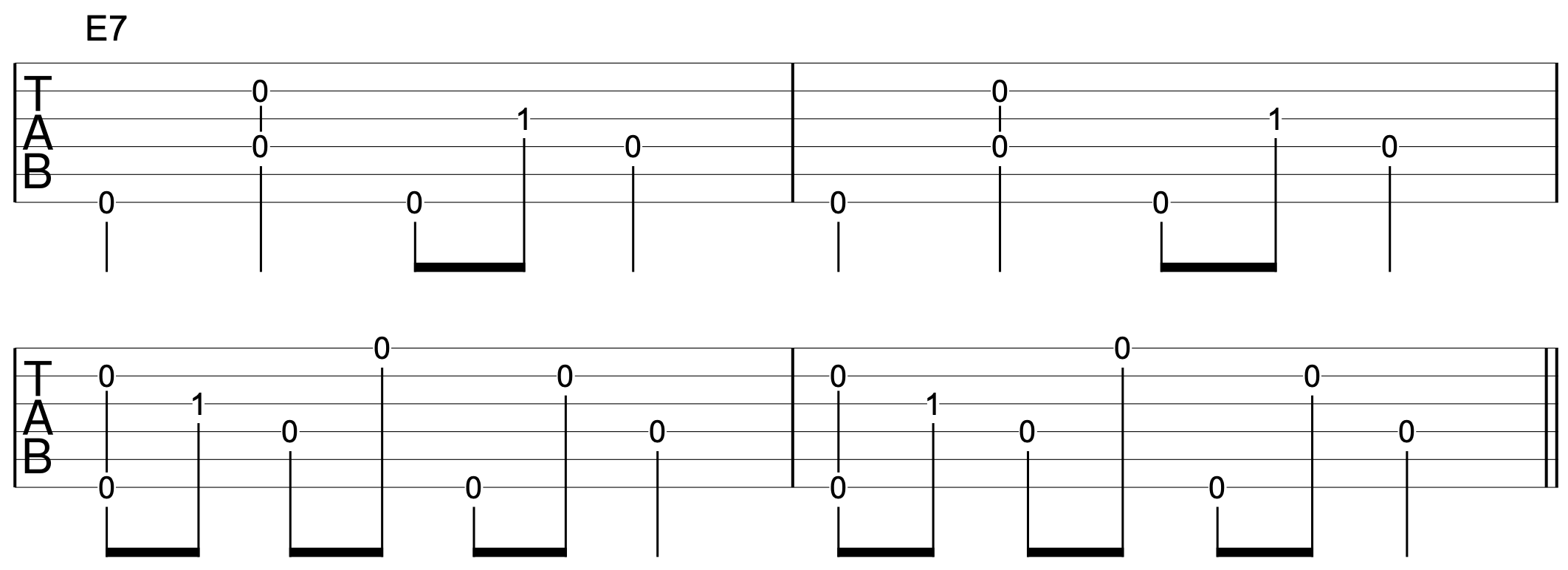
This is a simple fingerpicking exercise, but it begins breaking the habit of playing the same pattern repeatedly.
Make Your Pattern Changes More Frequent
Once switching every two bars feels comfortable, start changing patterns every bar.
You might alternate between patterns one and three, for example:

Because the changes happen more frequently, you have less time to prepare for them.
That’s useful.
You’re gradually training yourself to move between ideas while you’re actually playing rather than treating each pattern as something separate.
Keep the priority on maintaining the flow.
If you have to slow things down to make the connection smoothly, do that.
Fluency is much more important than speed.
Start Choosing Patterns While You Play
This is where things become particularly useful.
Instead of deciding beforehand which fingerpicking patterns you’re going to play, start choosing them while you’re playing.
Begin with any pattern.
While you’re playing it, decide which one you’re going to move to next.
Then, while playing that pattern, make your next choice.
You can keep the patterns in front of you. There’s no need to memorise them. What you’re developing is the ability to think just a fraction ahead of what your fingers are currently doing.
Initially, you’ll probably hesitate occasionally.
That’s fine.
Those little pauses simply show you where the skill needs developing. With practice, you gradually iron them out, and the transitions become smoother.
This ability to think slightly ahead is an important part of improvising on the guitar.
Watch the video above for an example of this particular drill.
Fingerpicking Improvisation Isn’t Starting From Scratch
Improvisation can sound like a mysterious skill where you somehow create everything out of thin air.
But that’s not really what’s happening.
Think about having a conversation.
You’re improvising the words you’re saying, but you didn’t invent those words. You already know them. You understand the language and have used the words many times before.
What you’re improvising is how you put them together in the moment.
You can approach fingerpicking guitar in the same way.
The individual patterns are your vocabulary.
You already have them in your fingers. The improvisation comes from connecting them in different ways as you play.
That’s when your fingerpicking starts to feel less memorised and more like something you’re actually communicating through the guitar.
Take Your Fingerpicking Patterns Into Real Music
Of course, you’re rarely going to sit on one chord forever.
Once you can move comfortably between patterns on a single chord, take the same approach into a progression.
A simple eight-bar blues in E works well:
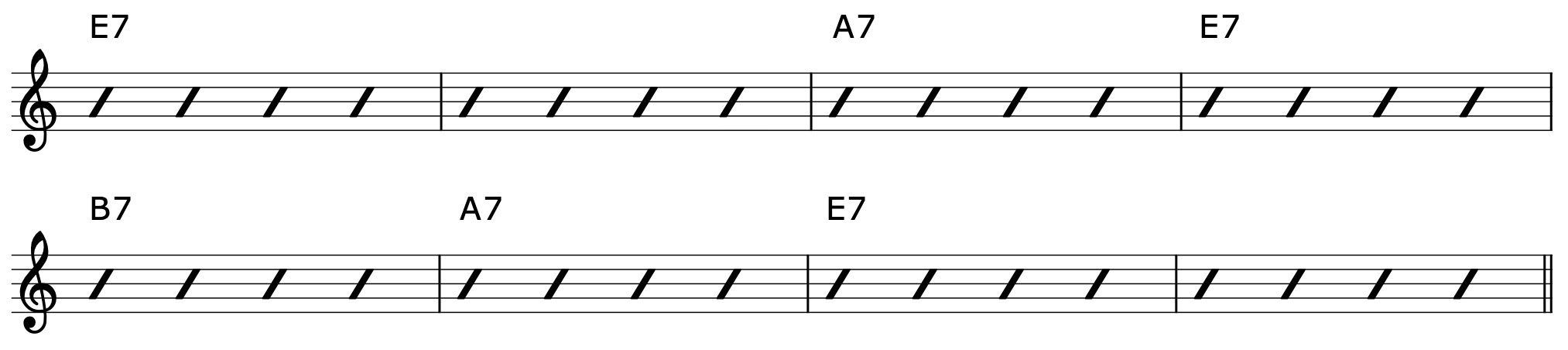
Start simply.
Choose two patterns and alternate between them as you move through the chords. You might play pattern one for one bar, pattern three for the next, and continue alternating throughout the progression.
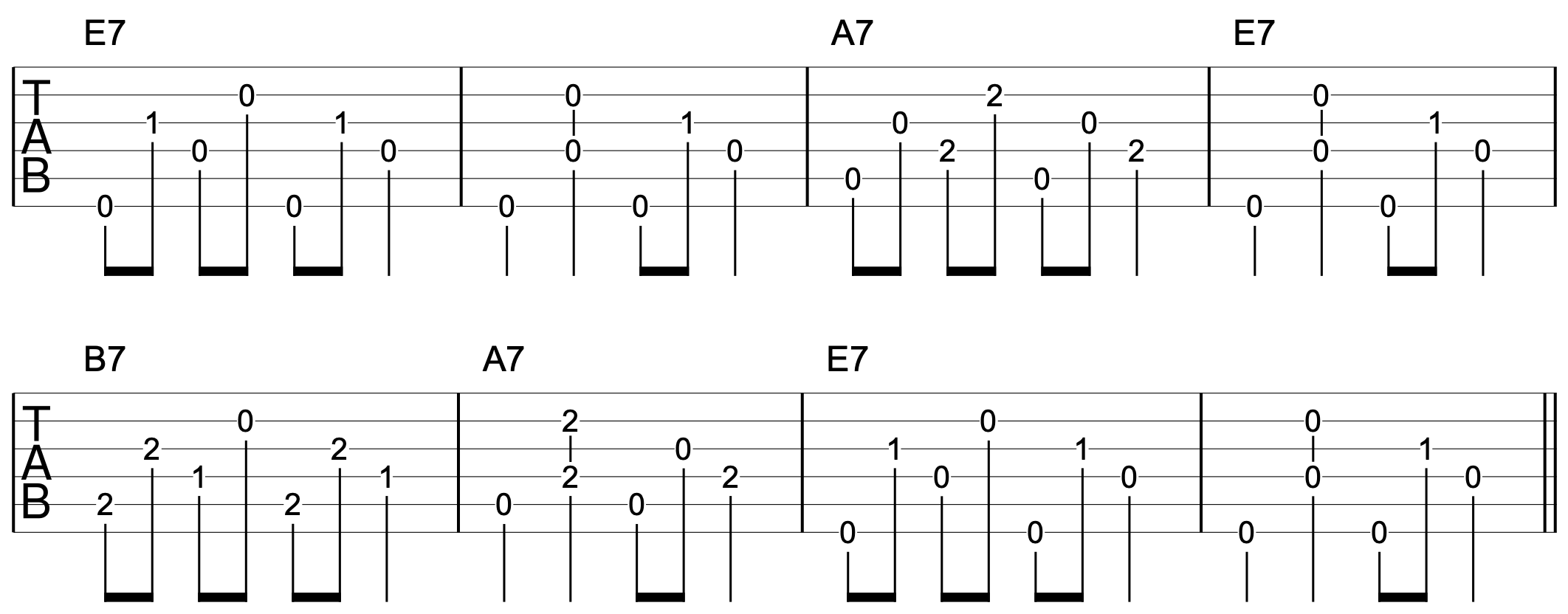
Then choose two different patterns and repeat the exercise.
Eventually, start making the pattern choices randomly as the chords change.
Now you’re no longer simply practising patterns. You’re learning how to use them within actual music.
Don’t Memorise Your Pattern Combinations
There’s one temptation to avoid here.
Once you find a combination of patterns that sounds good, you might naturally start repeating it until that combination itself becomes memorised.
There’s nothing wrong with doing that if you want to create an arrangement, but it defeats the purpose of this particular exercise.
The randomness is important.
You want to develop the ability to play whatever feels appropriate in the moment rather than replacing one memorised pattern with a larger memorised sequence.
The exercise might sound a little methodical while you’re developing the skill.
That’s okay.
The methodical practice is what eventually gives you the freedom to let loose when you play.
And while alternating-bass patterns are a great way to practise this, the idea isn’t limited to Travis picking. You can apply the same approach to any fingerpicking patterns you already know.
Frequently Asked Questions
How many fingerpicking patterns should I learn?
You don’t need dozens of patterns to make your fingerpicking sound interesting. A small collection that you can comfortably vary and connect will often be more useful than knowing many patterns that you can only play in isolation.
How do I stop my fingerpicking from sounding repetitive?
Instead of repeating one pattern throughout a progression, practise switching smoothly between two or more patterns. Once that feels comfortable, start choosing which pattern comes next while you’re actually playing.
What is the best way to practise fingerpicking patterns?
First learn each pattern individually. Then practise connecting two patterns without stopping, initially changing every two bars and later every bar. Finally, make the order random, so you develop greater freedom when playing.
Do I need to learn Travis picking to use this approach?
No. Travis picking patterns work particularly well because their alternating bass provides a steady foundation, but you can use the same approach with other fingerstyle patterns.
How can I make fingerpicking sound more musical?
Think beyond simply playing the correct pattern. Smooth transitions, rhythmic flow, variation and dynamics all help turn fingerpicking patterns into something that sounds more like music and less like an exercise.
Other Lessons You Might Like
Explore these related lessons to continue building your guitar skills:
Easy Fingerpicking Patterns
Build your vocabulary with some simple patterns you can get under your fingers quickly and then use with the approach covered in this lesson.
Fingerpicking Patterns for Beginners
A useful starting point if you’re still developing the basic coordination needed to play fingerpicking patterns smoothly and consistently.
Fingerpicking Patterns for Guitar
Explore more ways to use fingerpicking patterns across your playing and build a wider collection of ideas to draw from.
Top 5 Travis Picking Patterns
Learn five useful Travis picking patterns that provide excellent material for practising the switching and improvising approach covered here.
Travis Picking With Chords
Take your Travis picking further by combining the alternating bass with richer chord sounds and harmonic movement.
 10 Melodic Fingerpicking Patterns
Learn simple fingerpicking ideas and discover how to turn them into playing that sounds expressive and musical.