Fingerpicking Melodies on Guitar: 3 Simple Guitar Melody Tips That Instantly Improve Your Sound
by Simon Candy
 Many guitarists believe it takes years of practice before their melodies start sounding polished, expressive, and musical.
But there's actually a much faster way to improve your guitar melody playing without learning complicated scales or flashy licks.
With just a few simple lead guitar techniques, you can transform a plain melody into something rich, expressive, and full of tone, even if the notes themselves don't change.
In this guitar melody tutorial, you'll learn three simple guitar melody tips that can instantly make your playing sound more musical:
• Changing the timbre of notes
• Letting open strings ring against fretted notes
• Adding beautiful natural harmonics
These ideas are powerful tools for melody arrangement on guitar, helping your melodies resonate and sing.
To demonstrate the concepts, we'll use the classic melody "Aura Lee" (also known as "Love Me Tender").
You'll hear how a simple tune can go from sounding basic… to something far more expressive.
What Makes a Guitar Melody Sound Better?
A guitar melody sounds better when notes are allowed to ring, sustain, and vary in tone colour.
By changing where notes are played on the fretboard, using open strings, and adding harmonics, guitarists can make simple melodies sound richer, more expressive, and more musical without changing the actual notes.
These simple guitar melody techniques are often used in fingerstyle guitar and melodic lead playing to make melodies sound smoother and more pro.
Watch the video below to learn more:
The Melody We're Working With
The melody used in this lesson is Aura Lee.
We'll break the tune into four-bar sections and compare two versions of each phrase:
• A plain version of the melody
• An enhanced version using the guitar melody tips from this lesson
This makes it easy to hear how small changes in phrasing and tone can dramatically improve a guitar melody.
Technique 1: Change the Timbre of the Notes
The first concept is timbre.
Timbre refers to the tone colour or character of a note.
On guitar, the same pitch can be played in multiple places on the fretboard, and each position produces a slightly different sound.
For example, the same C note, in the same octave, can be played:
• 1st fret of the B string
• 5th fret of the G string
• 10th fret of the D string
• 15th fret of the A string
• 20th fret of the E string
Even though the pitch is identical, the sound changes because:
• The string thickness is different
• The string tension changes
• The resonance of the guitar varies across the fretboard
Here is an example of this on our tune Aura Lee.
Instead of playing this:

We play this:

Notice, instead of returning to the D note, 3rd fret/2nd string on beat 3, we slide up to the equivalent D note at the 7th fret/3rd string.
By choosing different positions for the same note, you can instantly make a melody more expressive.
This is a simple, and often subtle, but powerful lead guitar technique that great players use all the time.
Technique 2: Avoid Consecutive Notes on the Same String
Another powerful way to make guitar melodies sing is to avoid playing consecutive notes on the same string whenever possible.
Instead, place notes on different strings so they can ring into one another.
This creates a more sustained and resonant melody.
For example, instead of playing a phrase like this:

You might move certain notes to different strings so the previous note continues to ring, like so:

This small change creates a richer sound because:
• Fretted notes and open strings ring together
• The melody moves across multiple strings
• Each note has its own unique tone colour
It's a subtle guitar phrasing tip, but it makes a big difference.
Technique 3: Add Natural Harmonics
The final idea adds a beautiful, sparkling texture to the melody.
This comes from natural harmonics.
Natural harmonics occur when you lightly touch the string directly above certain frets, such as:
• 12th fret
• 7th fret
• 5th fret
Instead of pressing the string down, you lightly touch the string and pluck it.
The result is a bell-like, chiming tone.
For example, in the second phrase of the melody, we can replace some regular notes with harmonics. like so:

Because harmonics sustain naturally, they create a shimmering tone that contrasts beautifully with fretted notes and open strings.
This is a great way to add subtle, simple harmonic embellishments to a melody.
Mixing the Techniques Together
The real magic happens when you combine all three ideas.
These guitar melody tips work best when used together:
• Fretted notes in different positions
• Open strings ringing against them
• Harmonics sprinkled throughout the melody
For example, in the third phrase of the tune, the melody repeats the note E several times.
Instead of playing the same E on one string, you can play:
• A fretted E higher on the neck
• An open E string
• A harmonic E
Each note has the same pitch, but each has a different tone colour.
The result is far more expressive than simply repeating the same note.
Here is that phrase:

Optional: Adding Harmony Notes
Once you're comfortable with the melody, you can also add occasional chord tones underneath it.
For example, if the harmony is C major, you might briefly add a C bass note under the melody.
This helps:
• Suggest the harmony
• Add depth to the arrangement
• Move toward a full melody arrangement for guitar
Here is an example of this in bars 11/12 of Aura Lee:

Even small harmony notes can make a simple melody feel more complete.
Managing Dissonance
When letting open strings ring, you may occasionally hear notes clashing.
For example, an open B string ringing against a C note creates tension.
Sometimes this sounds beautiful.
Other times, you may want to control it.
A simple solution is to lightly touch the string with your fretting hand to stop the ringing when needed.
This gives you control over how much resonance and tension you want in the melody.
Three Simple Guitar Melody Tips to Transform Any Melody
To summarise, here are the three ideas that can instantly improve a guitar melody:
1. Shift the Timbre
Play notes in different positions on the fretboard to change their tone colour.
2. Avoid Consecutive Notes on the Same String
Move notes to different strings so they can ring together.
3. Add Natural Harmonics
Use harmonics at the 12th and 7th frets to create beautiful chiming tones.
When combined, these ideas can transform even a simple tune into something that sounds far more expressive.
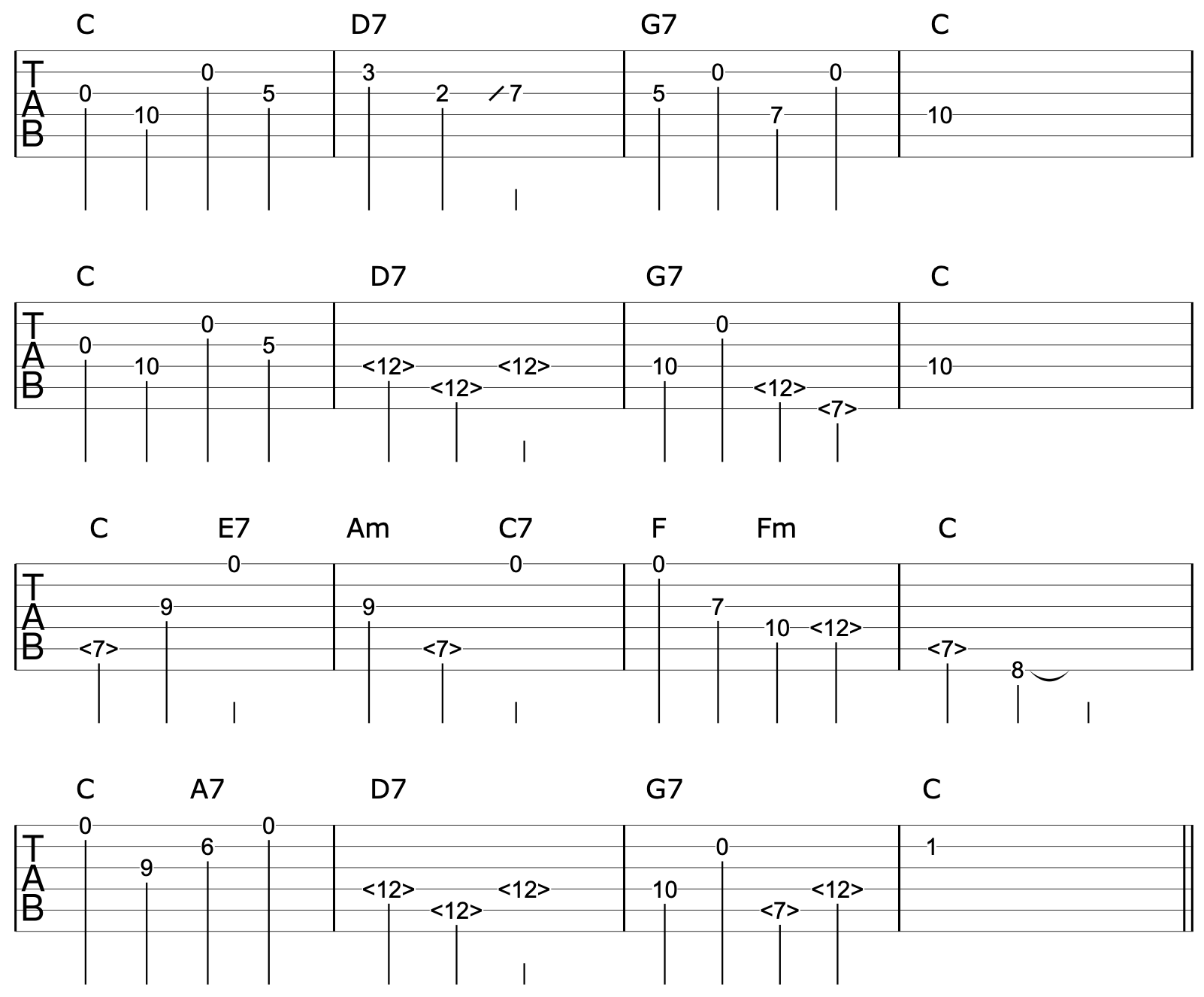
Here is the full arrangement of Aura Lee using a mixture of the techniques we have explored in this lesson:
Frequently Asked Questions
How can I make my guitar melodies sound better?
You can improve guitar melodies by allowing notes to ring together, varying where notes are played on the fretboard, and adding techniques like natural harmonics. These changes create richer tone and smoother phrasing.
What makes a melody sound expressive on guitar?
Expressive guitar melodies often use tone variation, sustain, and phrasing techniques. Playing the same note on different strings, using open strings, and letting notes overlap can make melodies sound more musical.
Why do fingerstyle guitar melodies sound fuller?
Fingerstyle guitar often allows multiple notes to ring simultaneously, creating natural sustain and resonance. This makes melodies sound fuller compared to single-string lead playing.
What are natural harmonics on guitar?
Natural harmonics are produced by lightly touching a string above certain frets (like the 12th, 7th, or 5th fret) and plucking the string. This produces a bell-like tone often used to embellish melodies.
Try These Guitar Melody Tips Yourself
Take any melody you already know and experiment with:
• Finding alternative string choices for notes
• Letting open strings ring
• Adding harmonics where possible
With just a few small adjustments, even the simplest tune can start to sing beautifully on the guitar.
Other Lessons You Might Like
Explore these related lessons to continue building your guitar skills:
How to Play Chords and Melody on Guitar at the Same Time
Learn how to play chords and melody on guitar at the same time and turn simple chord progressions into rich fingerstyle arrangements. This lesson shows practical techniques for combining harmony and melody so you can sound like two guitarists at once.
How to Play Open String Riffs and Runs on Guitar
Discover how to play open string riffs and runs on guitar to create fast, flowing lines that sound impressive but are surprisingly easy to play. This lesson explores creative ways to use open strings to add speed, movement, and musicality to your playing.
How to Create Beautiful Guitar Melodies Using Open Strings
Explore how to create beautiful guitar melodies using open strings and unlock unique melodic ideas that fall naturally under your fingers. You'll learn how open strings can add resonance, sustain, and creativity to your guitar melodies.
 The Ultimate Beginner Fingerpicking Guitar Course
Check out The Ultimate Beginner Fingerpicking Guitar Course if you want a clear, step-by-step system for developing fingerstyle technique. This course walks you through the essential skills needed to build confidence, coordination, and musicality in your fingerpicking.