Natural Harmonics on Guitar: How to Play and Use Them Musically
by Simon Candy
 There’s a sound hiding inside your guitar that most players barely scratch the surface of.
It’s that shimmering, bell-like tone that almost doesn’t sound like a guitar at all: Natural harmonics.
And if you want to take that sound even further, harp harmonics open up even more beautiful possibilities.
Many players treat harmonics on guitar as a novelty, something you try once and move on from.
But when you truly understand how to play harmonics and use them musically…
They transform your sound.
They add space, colour, and expression in a way very few techniques can.
And the best part?
They’re much easier than they look.
Watch the video below to learn more:
What Are Natural Harmonics on Guitar?
Natural harmonics on guitar are created by lightly touching a string directly over the fret (not pressing down) and plucking it to produce a bell-like tone.
The most common positions are:
- 12th fret
- 7th fret
- 5th fret
They are widely used on both acoustic and electric guitars to add texture and expression.
How to Play Harmonics on Guitar:
- Place your finger directly over the fret wire
- Lightly touch the string (do NOT press)
- Pluck the string
- Lift your finger immediately to let it ring
This produces the clear, bell-like tone that defines the natural harmonics guitar technique.
It also connects nicely with the kind of ringing effect you get when creating open string melodies.
Try this with the 12th fretted harmonics like so:

Using Guitar Harmonics in Chord Progressions
Once you understand how to play harmonics, the next step is using them musically.
1. Replace Notes Within Chords
Example progression:

Instead of playing a standard Em chord:
- Play the root note
- Add 12th fret harmonics on the higher strings

This creates a richer, more expressive version of the chord.
Think of harmonics as a new texture for familiar chords.
2. Strumming Harmonics
Instead of arpeggiating, strum the chords normally, then move up and play harmonics over the Em chord like so:

3. Suggesting Chords with Harmonics
Different harmonic positions imply different chords:
- 12th fret harmonics → Em/G
- 7th fret harmonics → Bm/D
This allows you to simplify your playing while still sounding full and expressive.
For more examples of this, be sure to watch the video above.
Mixing Harmonics with Fretted Notes
This is where your playing starts to sound more advanced.
Instead of choosing between:
- Harmonics
- Fretted notes
Combine both.
How?
- Play chord shapes near the 12th fret
- Use fretted notes for structure
- Add harmonics on open strings
This creates:
- Warm, grounded tones
- Bright, shimmering harmonics
A powerful contrast that elevates your sound instantly, especially when you start to play both the chords and melody of a song at the same time.
Here is an example of a progression that does exactly this:

Watch the video above for a complete breakdown and more harmonic ideas.
Using Harmonics in Melodies
Harmonics in melodies can completely transform how your playing feels.
If a note exists as a harmonic, you can use it.
Instead of only using fretted notes:
- Replace key notes with harmonics
- Alternate between fretted notes and harmonics
- Let harmonics ring longer for sustain
Here is an example of this using the tune Amazing Grace:
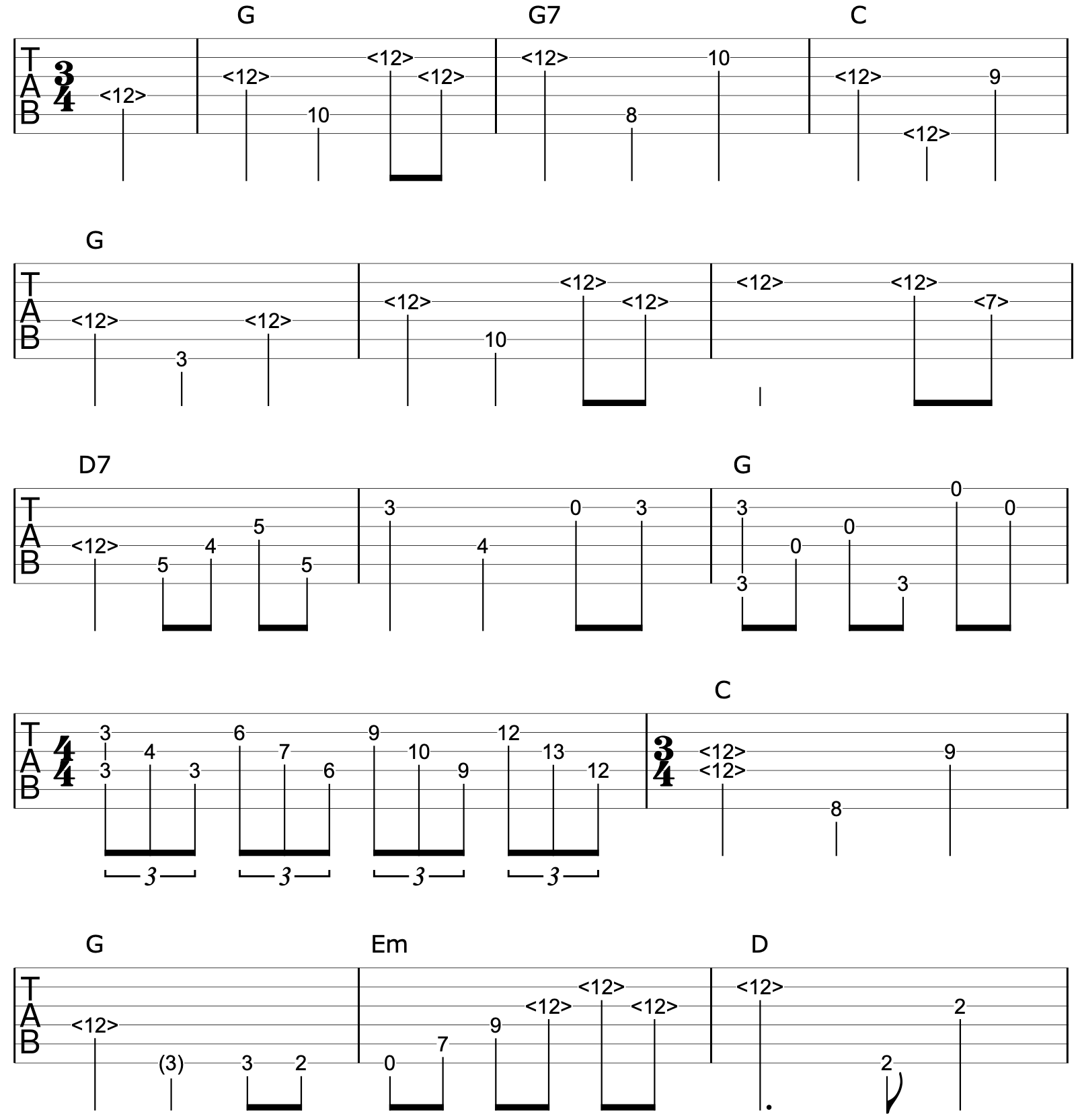
Using harmonics in a melody allows you to:
- Highlight important notes
- Add sustain and clarity
- Create a fuller arrangement
By combining harmonics, fretted notes and chord tones, you move from a simple melody to a complete musical arrangement.
Why You Should Use Natural Harmonics More
Using guitar natural harmonics allows you to:
- Add space and beauty to chord progressions
- Create expressive melodies
- Sound more advanced with minimal effort
And importantly…
They are accessible to beginners.
All you need is:
- A light touch
- Good positioning
- Musical intention
Natural harmonics are not just a trick.
They are one of the most musical and expressive tools available on guitar.
They can also lead you into more advanced sounds, such as extended harp harmonic arpeggio patterns.
Once you start using them regularly, your playing will sound more refined, more dynamic, and more unique.
Frequently Asked Questions
What are natural harmonics on guitar?
Natural harmonics are produced by lightly touching a string over specific frets (like the 12th, 7th, or 5th) to create a bell-like tone.
Why won’t my guitar harmonics ring clearly?
You may be pressing too hard or not positioning your finger directly over the fret wire. Use a light touch and lift your finger after plucking.
Where are the easiest harmonics to play?
The 12th fret harmonics are the easiest, followed by the 7th and 5th frets.
Can beginners learn guitar harmonics?
Yes. Natural harmonics are one of the easiest techniques to learn and are ideal for beginners.
Are harmonics used on acoustic and electric guitar?
Yes. Both acoustic guitar harmonics and electric guitar harmonics are widely used across many styles.
Other Lessons You Might Like
Explore these related lessons to continue building your guitar skills:
Learn how to combine harmonics with fretted notes to create that signature “harp-like” effect and add movement to your playing.
Harp Harmonic Techniques on Acoustic Guitar
A clear, structured guide to help you confidently bring expressive, bell-like tones into your music.
Extended Harp Harmonic Arpeggio Patterns
Expand your fretboard range with advanced patterns that sound full and flowing without extra movement.
Chords and Melody on One Guitar
Combine bass, chords, and melody into a full arrangement for a more independent and musical style.
Add depth and sophistication to your playing using this powerful and expressive harmonic approach.

Harp Harmonic Chord Progressions
Take what you’ve learned here and apply it musically by combining harmonics with chord progressions to create flowing, professional-sounding fingerstyle arrangements.