How to Make Any Chord Progression Sound More Musical
by Simon Candy
 Do your chord progressions ever feel a bit flat?
Maybe you’re playing the right chords, but it still sounds a little predictable. A bit lifeless. Like something is missing.
That’s a really common place to get stuck as a guitar player.
Most people assume the solution is to learn more chords or dive into music theory. But in reality, it’s often not what you play, it’s how you play it.
Small, musical changes can take even the most basic progression and turn it into something that sounds fuller, more expressive, and more enjoyable to play.
In the video below, I walk you through 5 simple approaches you can apply straight away. These are all practical ideas, things you can drop into your playing without needing to overhaul everything you already know.
Watch the video below to see and hear these ideas in action, broken down step by step so you can start using them in your own playing:
The Chord Progression We’re Working With
Before we get into the different approaches, it’s worth quickly looking at the chord progression used throughout the lesson.
It’s a simple one:

Nothing fancy.
And that’s the point.
This is the kind of progression most players already know, or something very close to it. On its own, it can sound perfectly fine, but also a little predictable.
What we’re going to do is take this same progression and play it five different ways.
Same chords. Same order.
But each approach changes how it feels, how it flows, and how musical it sounds.
That’s really the key idea here.
1. Add Rhythm Fills Between Chords
One of the quickest ways to make chords sound better is to stop treating them as isolated blocks.
Instead, think about what happens between them.
This is where rhythm fills come in, small connecting ideas that lead from one chord to the next.
Musically, this gives your playing:
- Movement
- Flow
- Groove
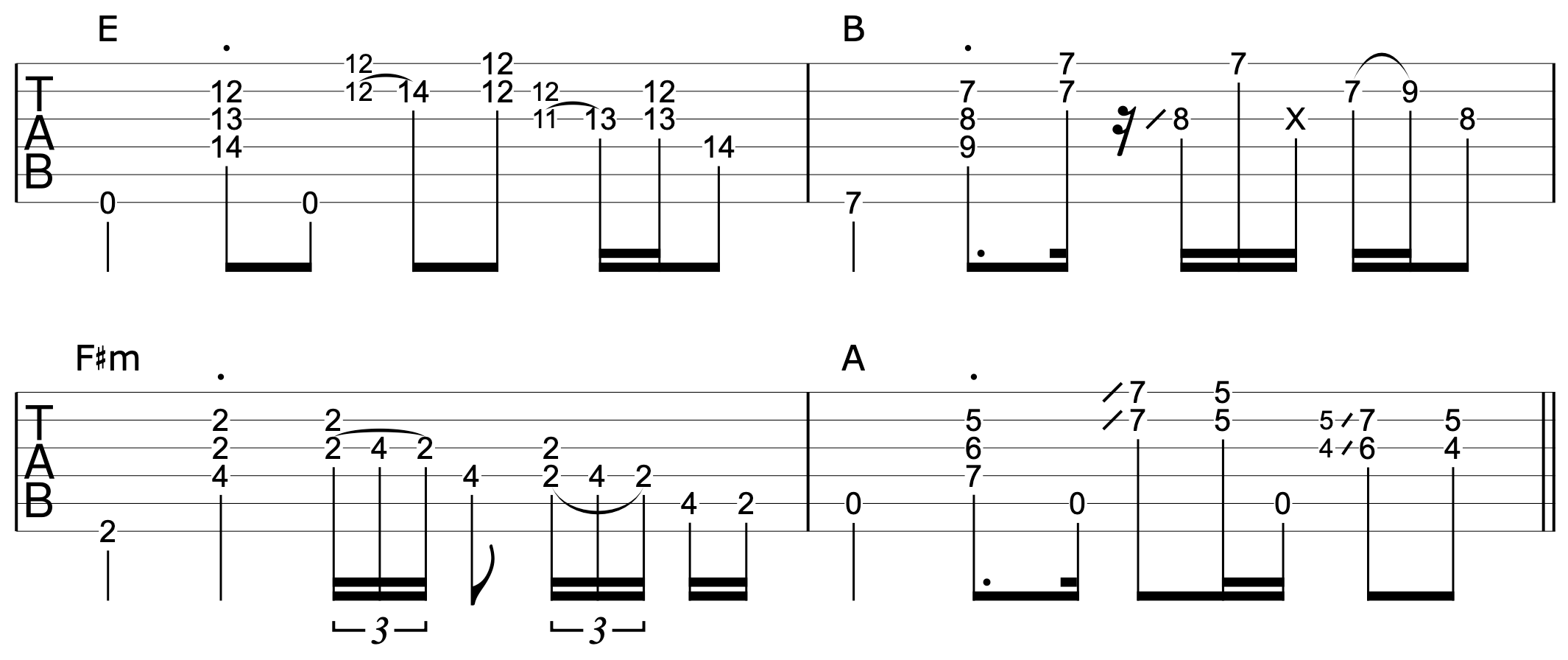
Double stops (two notes played together) work particularly well here, adding texture and character. This is a common approach in styles influenced by players like Hendrix or John Mayer.
Here is an example of rhythm fills being applied to our progression:
2. Use Natural Harmonics for a More Expressive Sound
If you want a completely different texture, natural harmonics on guitar are a great option.
They instantly give your playing a lighter, more spacious, chime-like quality.
The idea is simple:
- Lightly touch the string over the 12th fret
- Pluck it
- Let it ring
Then start blending that sound into your chords.
Instead of playing every note as a fretted note, you can:
- Replace certain notes with harmonics
- Let them sustain over the chord
Here is an example of applying natural harmonics to our progression:
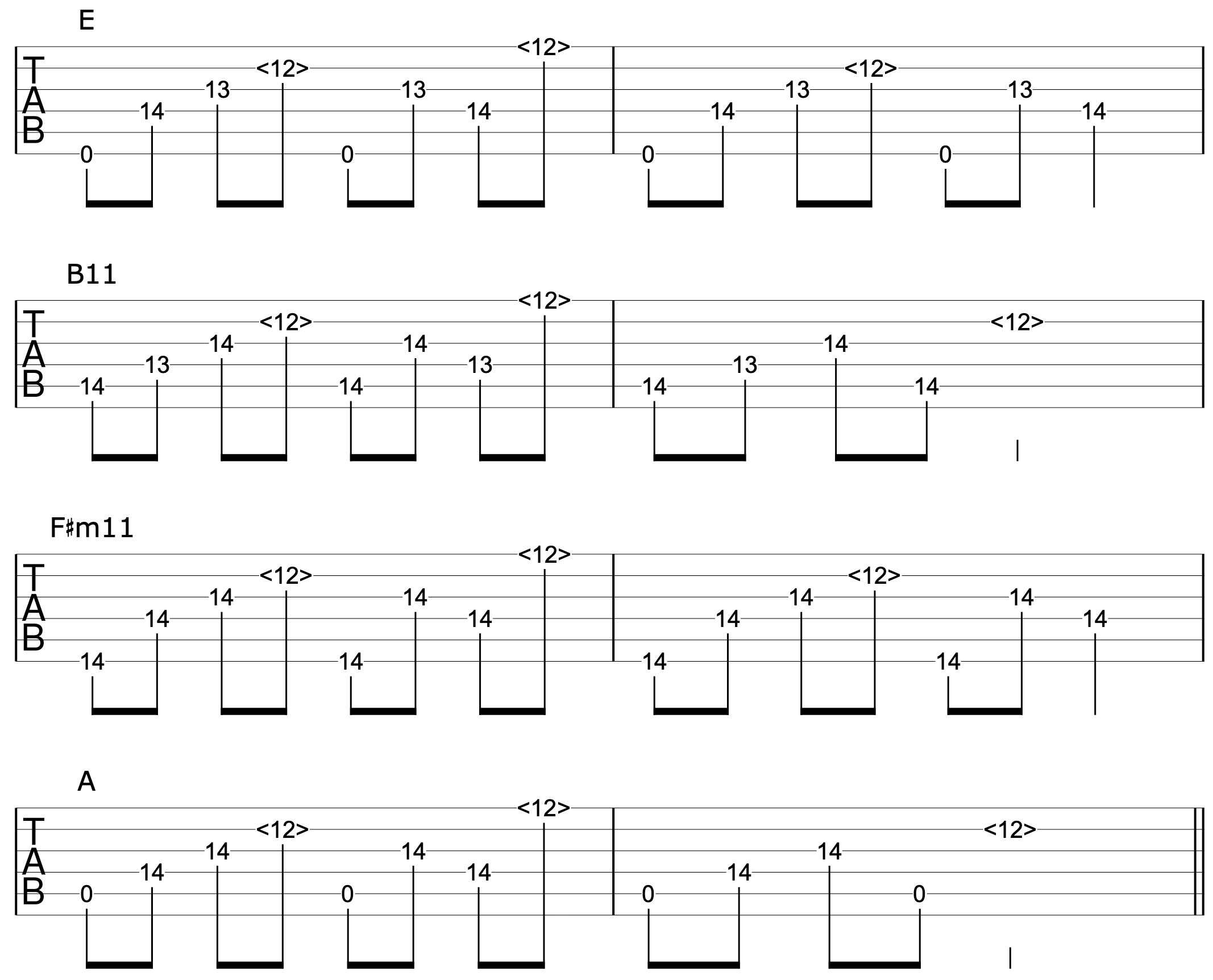
What you’ll notice is:
- The sound opens up
- Notes ring longer
- The progression feels more expressive
You’re still playing the same progression, but it now has a very different character.
3. Use Chord Fragments and Open Strings
You don’t always need full chords.
In fact, using less can often sound better.
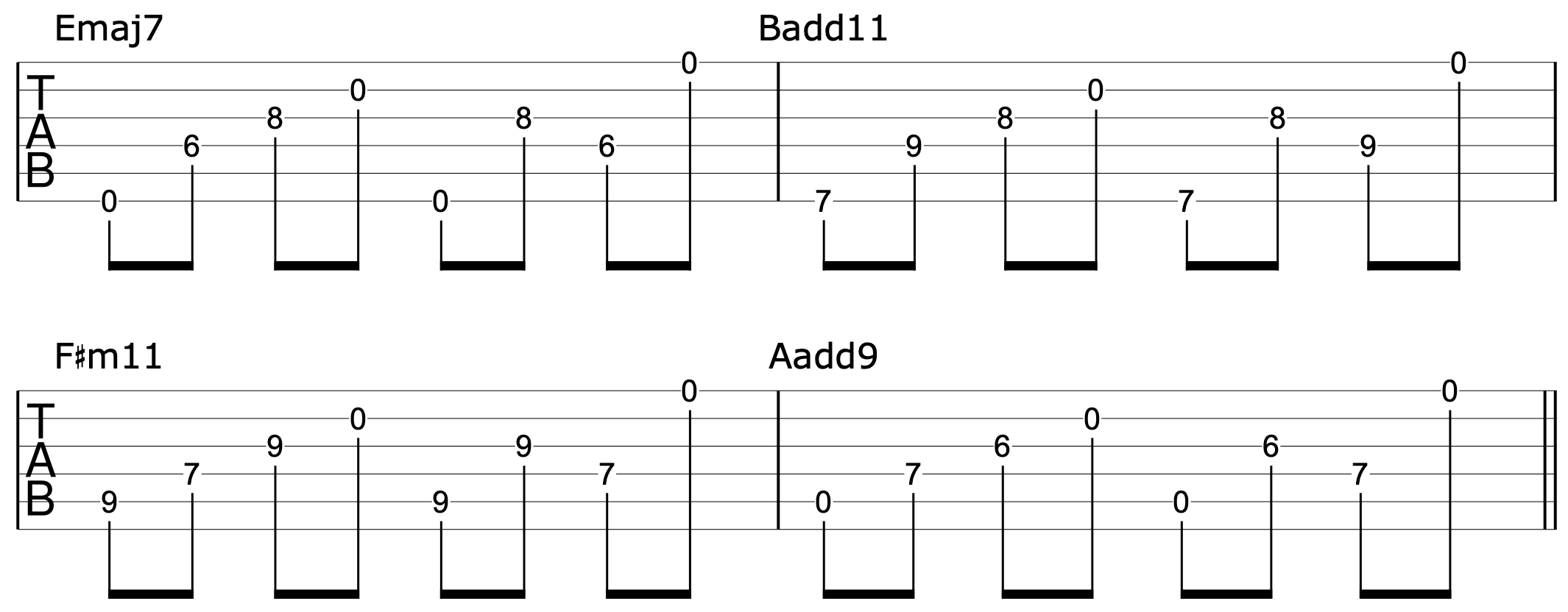
Using chord fragments on guitar, smaller parts of a chord, and letting open strings ring around them creates a fuller, more modern sound without adding complexity.
Here is an example of taking this idea and applying it to our progression:
Musically, this gives you:
- A more spacious sound
- Natural sustain
- A more polished feel
4. Change the Sound with a Capo
Sometimes the easiest way is to use a capo to transform a progression.
A capo lets you:
- Keep the same progression
- But access completely different chord shapes
This gives you that open chord sound in a new key.
For example:
- You might play familiar open shapes
- But because of the capo, they sound in a different key
Here is an example of using the capo to change the sound of our progression:
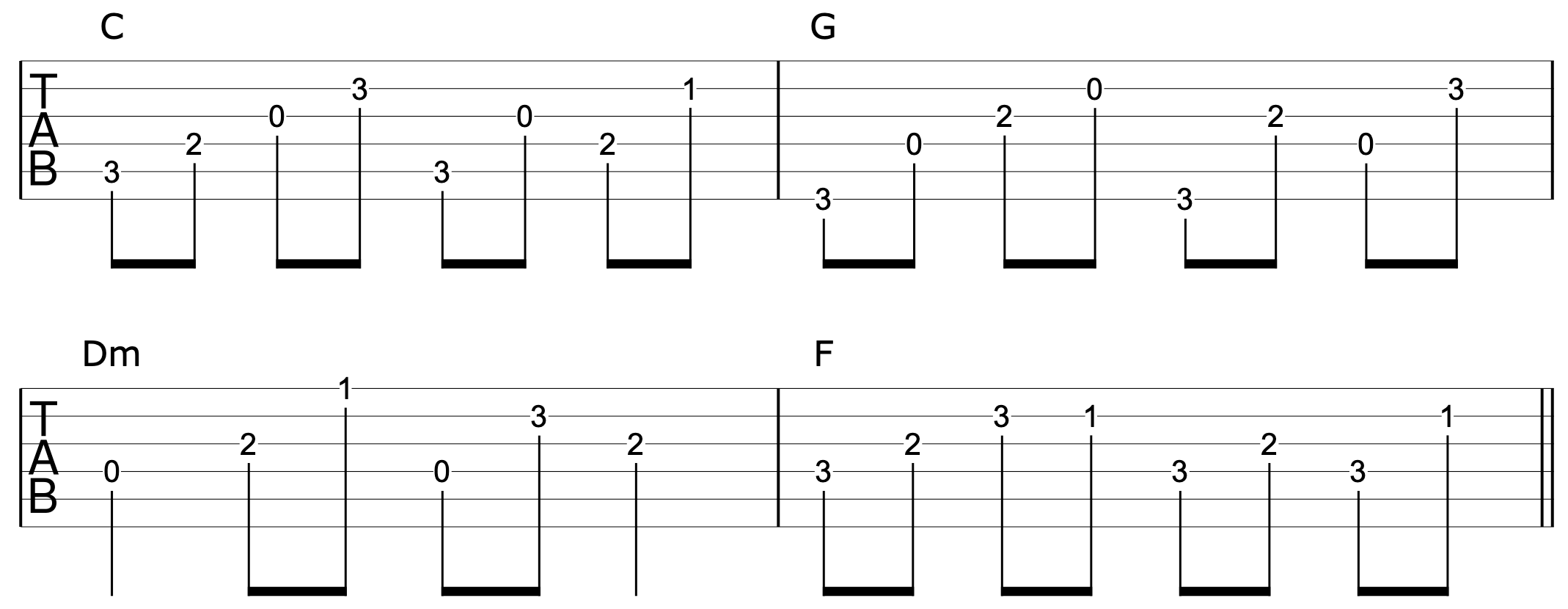
The result:
- Brighter tone
- New embellishment options
- More expressive movement within the chords
You’ll often find it easier to add small details like hammer-ons and pull-offs with these shapes.
5. Add Simple Harmony (Thirds, Sixths, Tenths)
The final approach is to move away from full chords and focus on simple guitar harmony techniques.
Instead of strumming everything, you pick out pairs of notes that outline the chord.
A great place to start is tenths, a wide, open-sounding interval.
Here is an example of using 10th harmony to outline our progression:
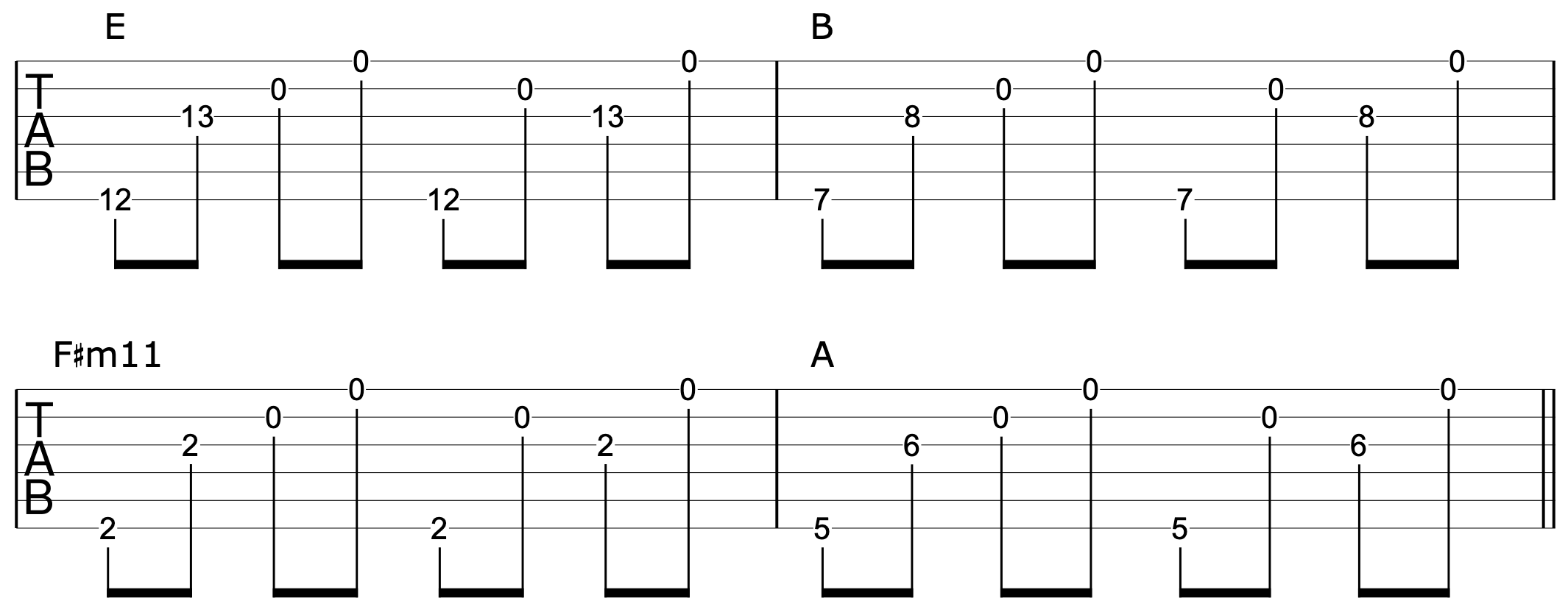
What you hear is:
- A more melodic sound
- Clearer movement between chords
- A lighter, more expressive feel
It’s a simple way to make a chord progression sound more melodic, especially when combined with open strings.
Bringing It All Together
All of these approaches work because they shift your focus away from finding more complex chords and toward making the progression sound more musical.
You don’t need to use all five at once.
Start small:
- Add a short fill
- Swap in a harmonic
- Simplify a chord shape
Even a small change can completely transform how a progression feels to play and to listen to.
Take a progression you already know and try one of these ideas today.
That’s where the real improvement happens.
FAQ Section
How do I make my chord progressions sound less boring?
Focus on how you play the chords rather than changing them. Adding rhythm fills, dynamics, or small embellishments can make a big difference.
Do I need to learn more chords to sound more musical?
Not necessarily. Most of the time, improving your phrasing, rhythm, and expression will have a bigger impact than learning more shapes.
What are chord embellishments on a guitar?
These are small additions like hammer-ons, pull-offs, double stops, or fills that add interest and movement to your chords.
Are harmonics difficult to learn?
Natural harmonics are quite accessible. Starting at the 12th fret is the easiest way to get a clean sound.
What is the easiest technique to start with?
Rhythm fills are usually the quickest win. Even a simple connecting note between chords can make your playing feel more musical.
Other Lessons You Might Like
Explore these related lessons to continue building your guitar skills:
Learn simple ways to connect your chords and add movement to your playing.
See practical examples of filling the space between chords in real time.
Understand how a capo can completely change your sound with minimal effort.
A step-by-step guide to adding harmonics into your playing.
Learn how to create melodic movement using simple harmony shapes.

Learn how to turn simple chords into musical, supportive accompaniment that fits perfectly in a real playing situation.