Rhythm Guitar Fills For Beginners: How To Add Fills Between Chords
by Simon Candy
 Do you want to make your rhythm guitar playing more interesting and musical?
In this beginner-friendly tutorial, you learn how to create rhythm fills from scratch, adding guitar embellishments between chords that sound pro.
Most videos just show you a few cool riffs or licks, but they don’t explain how to come up with your own fills.
That’s exactly what we’re going to do here.
Once you understand the basics, you can add little riffs, melodic ideas, and fills between chords in any song you play.
Here’s what we’re gonna do:
• First, we’ll get locked into a solid groove — that’s the foundation for everything
• Then, we’ll create a fill from scratch
• After that, we’ll fit it into a progression so it flows naturally
• Next, we’ll talk about phrasing and feel — this is the part that makes your fills sound pro, not robotic
• And finally, I’ll show you how to build variations — so one fill turns into five, ten, or more
By the end, you’ll not only have a bunch of awesome rhythm fills you can use anywhere — you’ll actually understand how to make your own, anytime you want.
Watch the video below to learn more:
Creating Rhythm Fills From Scratch
Be sure to watch the video above for a detailed breakdown and demonstration of the method below.
Step 1: Lock Into a Solid Groove
First, we need to create a progression in which to add our rhythm fills:

We are going to purposely keep everything straight for now. We will make the progression groove more in step 4.
Step 2: Create The Rhythm Fill
Next, we create the fill itself:

This fill comes from pattern one Am pentatonic scale.
We will make this fill sound more expressive in step 4.
Step 3: Fit The Rhythm Fill Between The Chords Naturally
In this step, we integrate the progression and fill together, like so:

I’ve decided to place the fill in the second half of the second bar over the Am chord. This way, the fill will provide a nice connection between the Am and G chords
Step 4: Phrasing and Feel
This step is all about making what we have sound more musical and expressive.
Here is our progression with a bit more groove:

Here is our fill with phrasing applied:

And here are the two combined:

Step 5: Build Rhythm Fill Variations
Creating variations of the rhythm fill is a great way to multiply the fills you can play, as opposed to coming up with completely new ones all the time.
• Variation 1
The first variation has our fill coming in a half beat later (on the + of 3):

• Variation 2
The second variation comes in early on beat 2, extending the fill over 3 beats of the bar instead of 2:

• Variation 3
The third variation has you playing fills over both the G and Am chords of the progression:
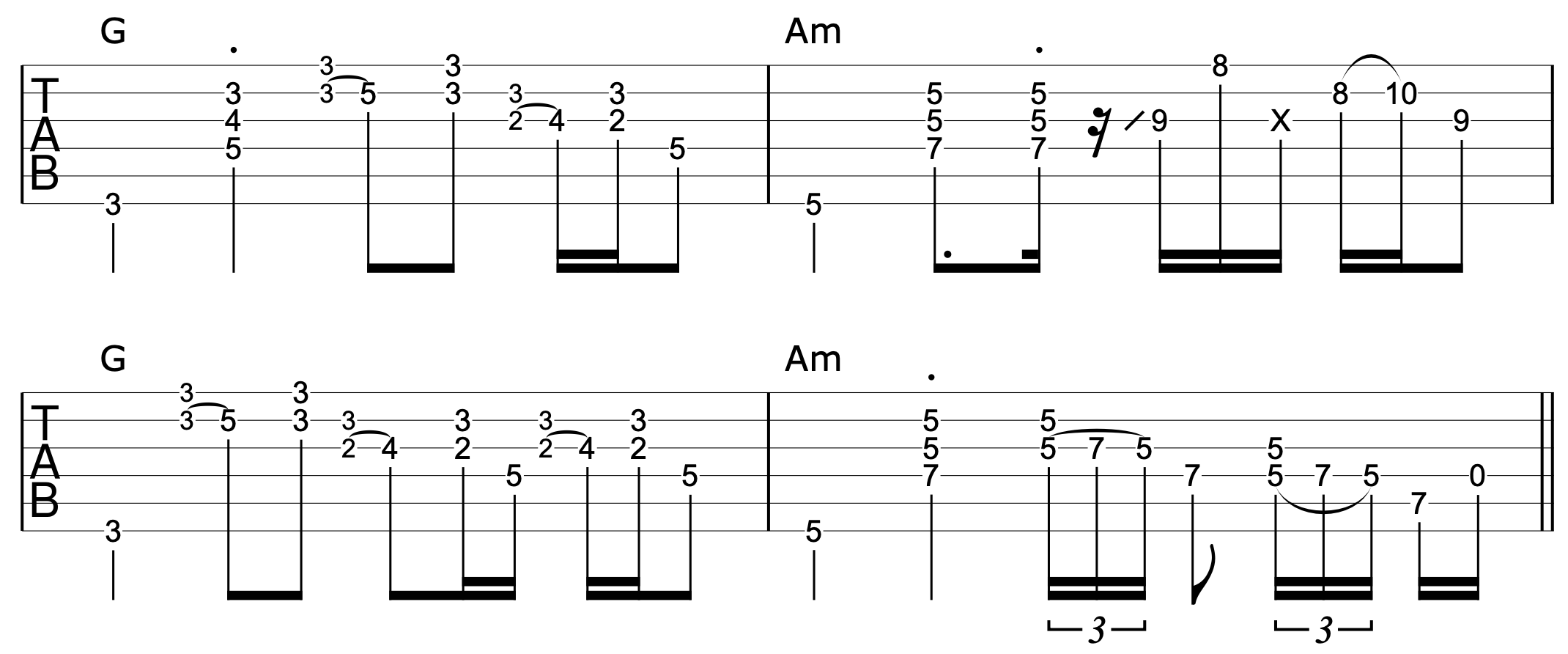
A little more going on here than just variations of our fill, with lots of ideas you could take and create your own variations from.
Other Lessons You’ll Love
Explore these related lessons to continue building your guitar skills:
How to Play Riffs Between the Chords of a Progression
Dive into a lesson that shows you how to weave guitar riffs between chord changes to bring rhythm and groove into your playing. The article walks you through rhythm-fills (double stops, grace-notes, single-note textures) and applies them to real progressions, including a quick trick to convert major fills into minor ones.
How to Sound Better Strumming Guitar
Want to upgrade your strumming beyond just patterns? This post focuses on the guitar strumming sound—how dynamics, palm-muting and percussive hits give your rhythm playing character and life.
The Open Chord Trick That Makes Your Progressions Sound Amazing
Unlock a powerful technique using open guitar chords to instantly lift the sound of your progressions. If you already know basic open shapes, this lesson shows you how to transform everyday progressions into more interesting versions using those same shapes.
 Acoustic Guitar Rhythm Techniques 5 Day Minicourse
Discover a variety of acoustic guitar rhythm techniques that transform plain chord progressions into rich, musical accompaniments. This lesson shows you how to decorate chords using bass-note picking, percussive hits, and dynamic strumming — so your rhythm playing sounds full, alive, and never boring.