3 Simple Ways To Make Your Strumming Sound Better
by Simon Candy
 Does every chord progression you play on guitar end up sounding more or less the same?
You know the chords. You can change between them comfortably. And you've probably got a few strumming patterns you regularly use.
But no matter what progression you're playing, the result can sometimes feel a little predictable.
There's nothing necessarily wrong with your strumming.
It's just that playing every chord in exactly the same way doesn't give the music much variety.
The good news is that you don't need to learn more complicated strumming patterns to change this.
There are some simple guitar rhythm techniques you can use to break things up, create movement and make your chord progressions sound much more musical.
In this lesson, you learn 3 ways to make strumming sound better by combining bass notes, picking and short fills with the chords you already know.
And once you're comfortable with each approach, you can start mixing them together to create your own variations.
Watch the video below to learn more:
Start With A Simple Four-Chord Progression
We'll use the same progression throughout the lesson:

Play each chord for one bar.
This is a very common progression, and you could simply strum through it using a regular pattern.
That would sound perfectly fine.
But instead of treating every chord the same way, we're going to experiment with different ways of playing them.
The chords won't change.
What changes is how we approach them.
And that's where things start to get interesting.
1. Make Strumming Sound Better With Bass Note Picking
Our first approach is to pick out individual bass notes before strumming the chord.
This is one of the simplest ways to break up strumming because it creates a little separation between the lower notes and the rest of the chord.
Instead of strumming all the strings together every time, you give the bass note a chance to stand out.
Start By Picking The Root Note
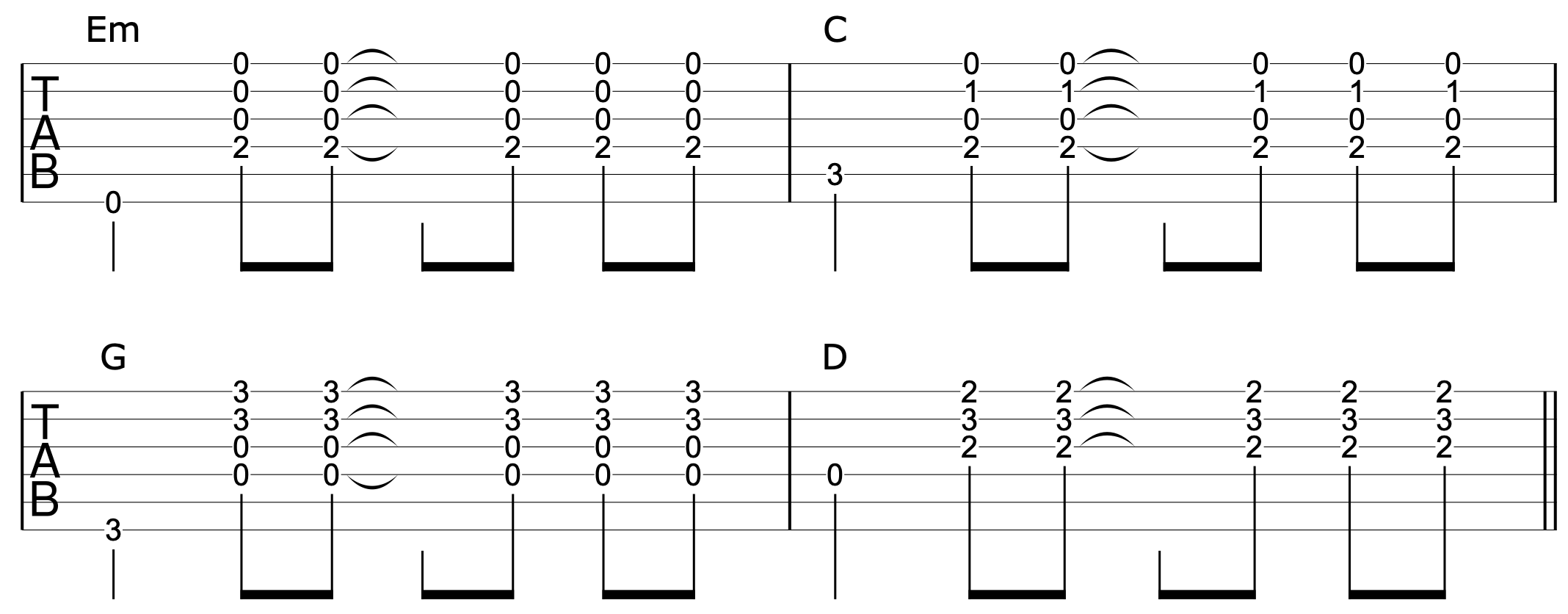
Take your Em chord.
Pick the low E string on beat one, then strum the chord.
When you move to C, pick the C bass note on the fifth string before strumming.
Do the same with G and D.
Here is the result:
It's a small change, but it immediately gives the progression a different feel.
Add Bass Notes On Beats One And Three
Next, try picking the root note on both beats one and three, with strumming in between.
This creates more movement and gives the bass a stronger presence throughout the bar.
You're still playing the same chords, but the rhythm has more shape.
Here is this idea applied to our progression:


Use Different Bass Notes Within The Chord
Once you're comfortable picking the root note, try introducing other notes from the chord.
Here is an example where we are picking bass notes on beats 1 and 3 and strumming on beats 2 and 4:
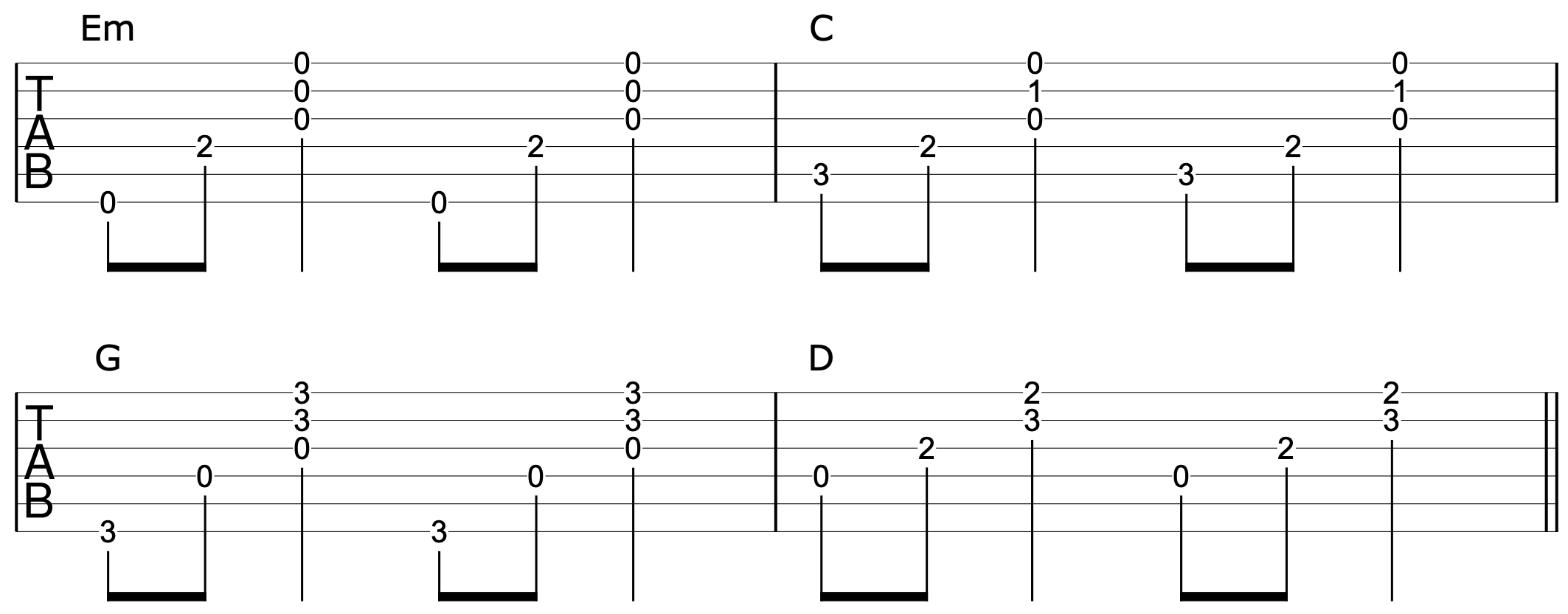
These are all notes belonging to their respective chords, so they fit naturally with the harmony.
The important thing isn't to create a complicated bass line.
It's simply to introduce some variety underneath your strumming.
2. Combine Picking And Strumming
The second approach is to mix individual picked notes with full chord strums.
This is one of my favourite ways to make a simple chord progression sound more interesting because it gives you a lot of flexibility.
You can have mostly strumming with a little picking, or mostly picking with a little strumming.
Both approaches work well, but they create quite different sounds.
Mostly Strumming With A Little Picking
Start with your Em chord.
Pick the bass note, strum the chord, pick a few individual notes from the higher strings, then finish with another strum.
Apply the same idea to C, G and D:
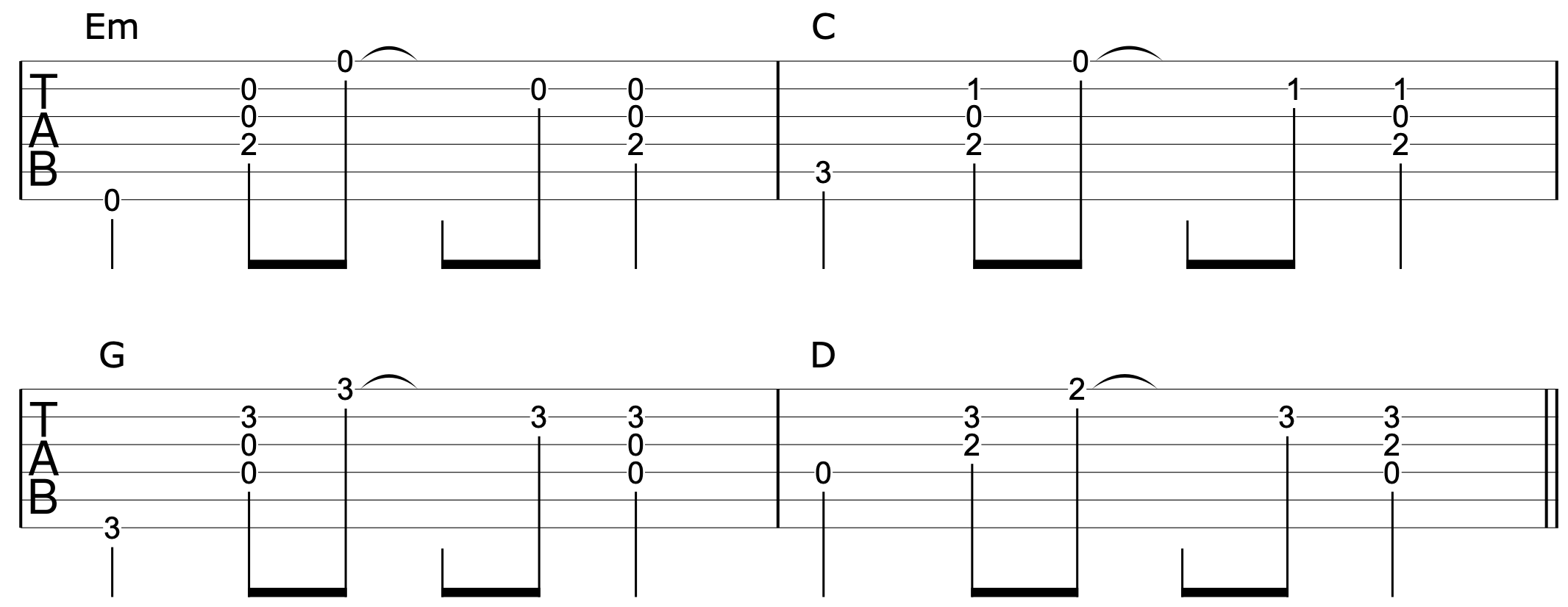
You might keep the overall rhythm quite similar to your usual strumming pattern, but replace one or two strums with picked notes.
This gives the music more space and makes the individual notes of the chord stand out.
And because you're not constantly strumming all six strings, the progression starts to sound more varied.
Mostly Picking With A Little Strumming
Now reverse the approach.
Instead of using strumming as the main part of the pattern, pick individual notes from the chord and introduce an occasional strum.
For example, you might pick through Em for most of the bar, then add a strum towards the end.
Repeat this idea across the progression, like so:
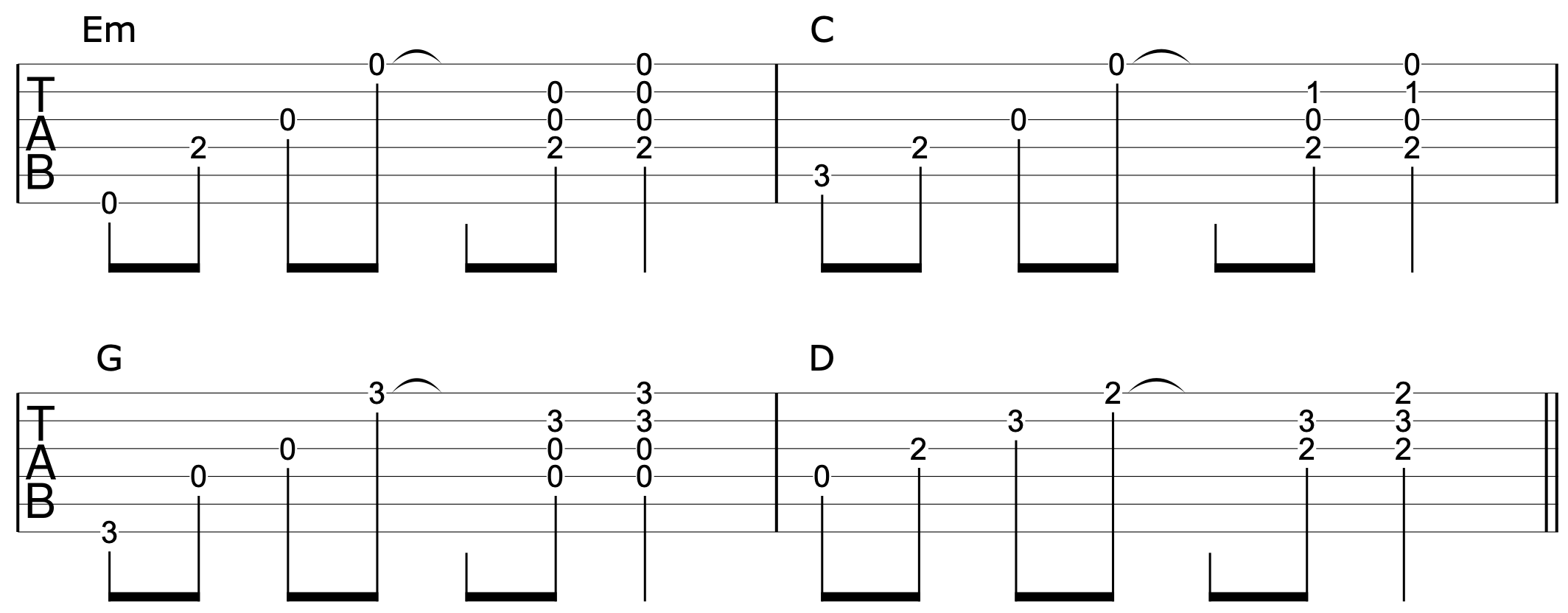
The sound becomes a little more delicate and spacious.
This combination of guitar picking and strumming is particularly useful when accompanying a singer, because you can change the intensity of your playing without changing the chords.
You might use more picking during a quieter verse, then introduce additional strumming as the song builds.
There's no single correct combination.
The idea is to experiment with the balance between the two.
3. Add Simple Guitar Fills Between Chords
Our third approach is to add short fills between the chords of a progression.
A fill is simply a small musical phrase that occupies the space between chords.
Rather than strumming continuously, you deliberately leave a little room to play a few notes.
This can make your rhythm guitar sound much more connected and musical.
Here is an example of rhythm fills applied to our chord progression:
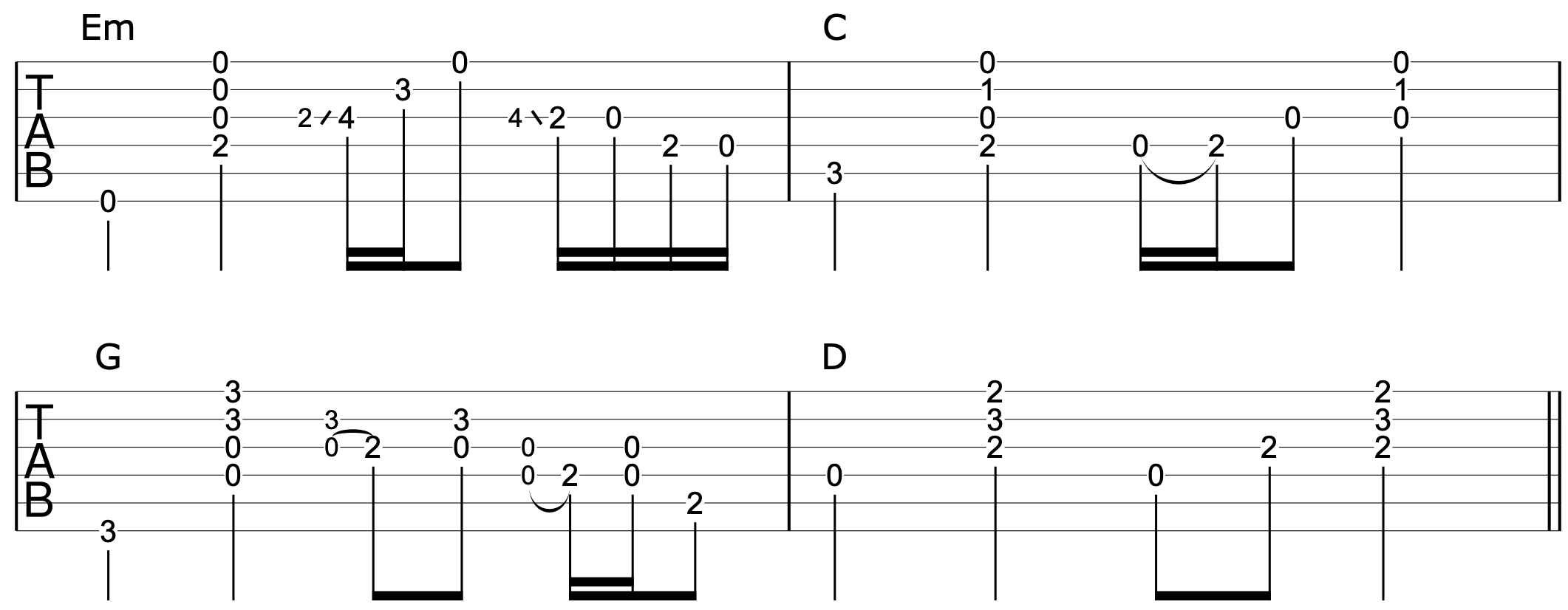
Because the notes are coming from a scale that fits the progression, you have a useful starting point for creating your own guitar fills.
And remember, you don't need to put a fill between every chord.
In fact, using them occasionally often sounds better because they create contrast.
4. Mix These Rhythm Techniques Together
Once you've explored each approach separately, the next step is to combine them.
This is where you can really start making the progression your own.
For example, somehting like this:
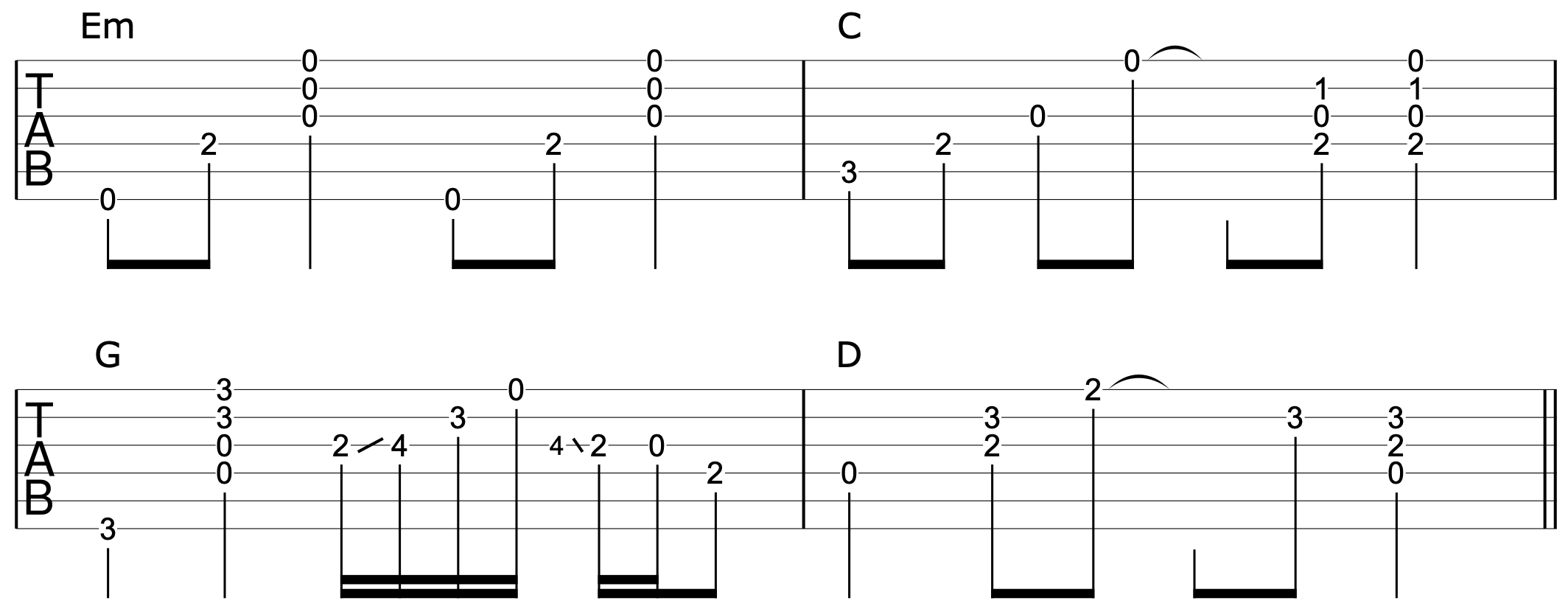
Notice that we're using a different approach for each chord.
We haven't changed the progression, and we haven't introduced any complicated new chords.
We're simply varying what we do with the chords we already have.
You could play through the progression again and use a completely different combination.
Or keep most of it the same and change just one bar.
That's the real value of these ideas.
Rather than relying on a single strumming pattern every time you play, you develop different ways to approach a progression depending on the sound you're after.
And the more you experiment, the more naturally these variations will begin to appear in your playing.
The goal isn't to make everything busier.
It's to create contrast, movement and interest so that your guitar playing sounds more like music and less like an exercise in changing chords.
Frequently Asked Questions
How can I make my guitar strumming sound better?
Try breaking up your strumming by picking individual bass notes, mixing picked notes with chord strums and adding short fills between chords. These techniques create variety without requiring more complicated strumming patterns.
How do I combine picking and strumming on guitar?
Start by replacing one or two strums in a familiar pattern with individually picked notes from the chord. You can gradually increase the amount of picking or return to fuller strumming depending on the sound you want.
What are guitar fills in rhythm playing?
Guitar fills are short musical phrases played between chords or during gaps in the rhythm. They can come from scales, chord notes or simple embellishments and help connect different parts of a progression.
Do I need to learn more strumming patterns to sound better?
Not necessarily. Often, changing how you play a familiar pattern is more effective than learning another one. Adding bass notes, picking and occasional fills can make even basic patterns sound more musical.
How can I make acoustic guitar accompaniment more interesting?
Vary the amount of strumming and picking, introduce bass notes, leave space between phrases and use occasional fills. These ideas help create dynamics and make your accompaniment more supportive of a singer or melody.
Other Lessons You Might Like
Explore these related lessons to continue building your guitar skills:
How To Play Rhythm Fills For Beginners
Get started with simple fills you can use in everyday chord progressions. A great next step if you want to introduce lead-style ideas into your rhythm guitar playing.
5 Rhythm Fills For Guitar
Learn how to create fills that fit naturally between chords. This lesson will help you add short musical phrases to your rhythm playing without interrupting the flow of the progression.
How To Connect Chords Using Bass Notes
Discover how to use moving bass notes to connect one chord to another. These techniques make your chord changes sound smoother and give your progressions a stronger sense of direction.
9 Ways To Improve Your Strumming Technique
Explore 9 practical tips for developing better strumming technique. Learn how to make your rhythm playing feel more natural, controlled and musical.
How To Combine Strumming And Picking On Guitar
Take the picking and strumming approach further with additional ways to combine individual notes and full chords. Discover how to create more variety and texture in your acoustic guitar playing.
 How To Back A Singer On One Guitar Workshop
Learn how to create more dynamic and musical guitar arrangements using rhythm fills, chord variations and simple techniques that support a singer without overplaying. Includes demonstrations with a live vocalist and a companion PDF.