Rhythm Fills for Guitar: 5 Powerful Ways to Connect Chords and Bring Progressions to Life
By Simon Candy
 Most guitar players can strum chords.
But far fewer know how to use rhythm fills for guitar to truly connect those chords and make a progression flow.
If you’ve ever listened to players like Jimi Hendrix, Stevie Ray Vaughan, or John Mayer, you’ve probably noticed something subtle happening in their rhythm playing:
They don’t just strum chords. They connect them. They add small melodic or harmonic ideas between chords, and that’s what gives their rhythm playing movement, personality, and polish.
In this lesson, you learn five powerful approaches to rhythm guitar fills that you can use immediately in your own playing.
Watch the video below to learn more:
What Are Rhythm Fills?
A rhythm fill is a short melodic or harmonic idea that connects one chord to the next.
Instead of moving abruptly from chord A to chord B, you use notes, intervals, or small chord fragments to bridge the gap.
Learning how to connect chords on guitar this way is what separates mechanical strumming from expressive rhythm playing.
For the examples below, we are going to use the following chord progression:

The specific chords aren’t as important as the concepts, because these ideas work in any key.
1. Pentatonic Scale Fills (The Easiest Entry Point)
The simplest way to start using guitar rhythm fills is with the pentatonic scale.
If you're in the key of E, for example, you can pull notes from the E major pentatonic scale and place short phrases between chords.
(i)
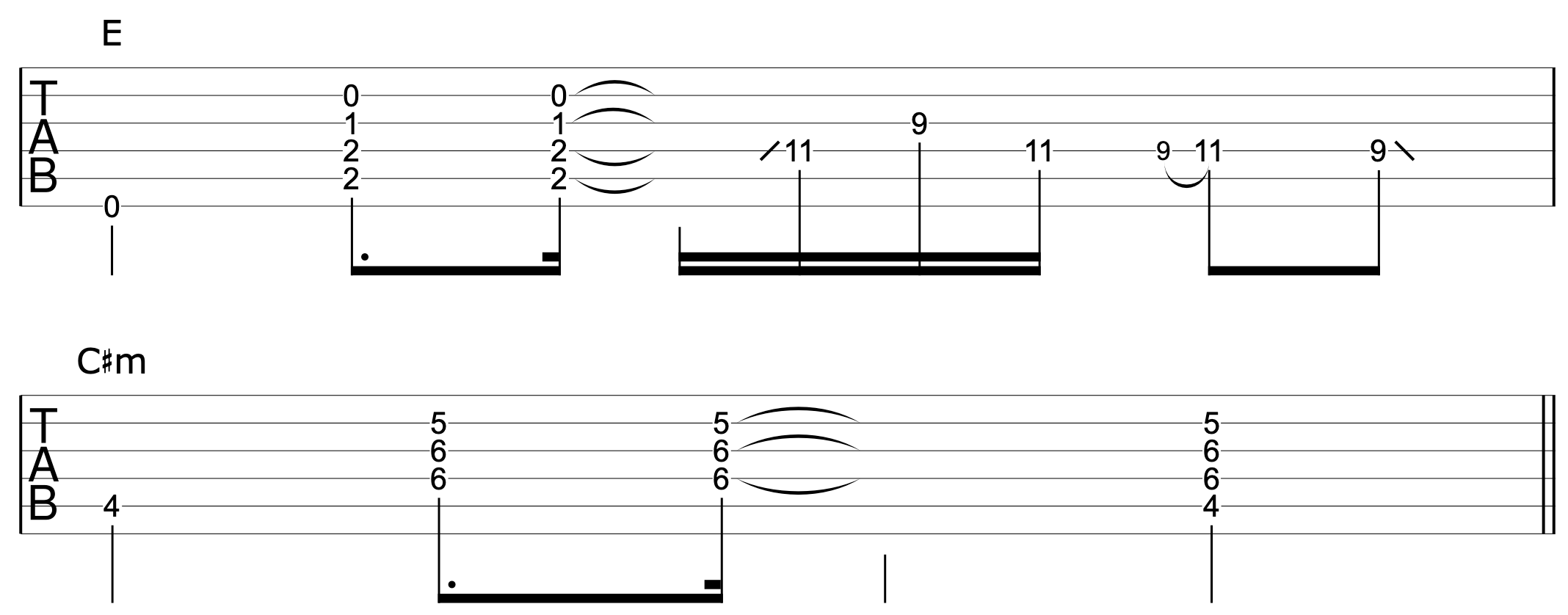
Here is one example of this, placing the fill over the E chord, before connecting to the C#m:
(ii)
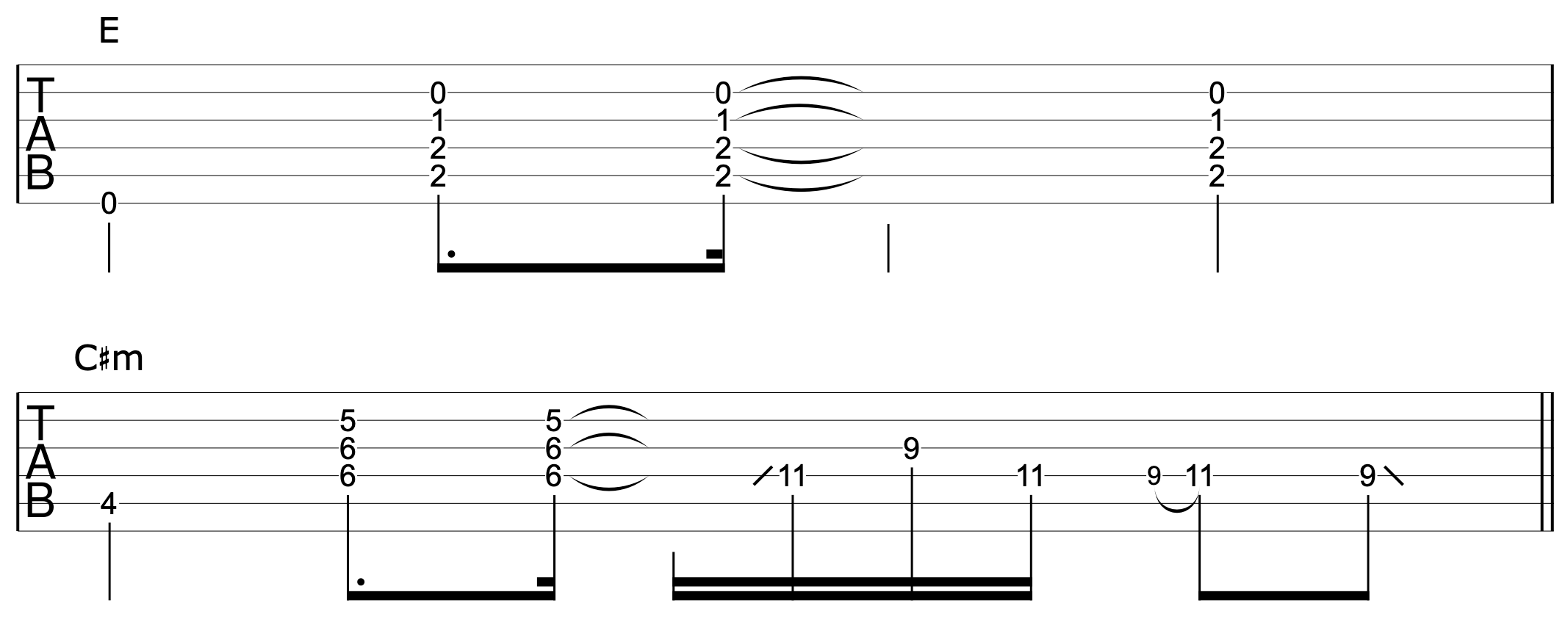
Here is the same fill, this time played over the C#m chord before connecting back to the E:
Why Pentatonic Fills Work
The pentatonic scale:
• Contains strong consonant tones
• Stays safely inside the key
• Avoids harsh dissonance
That makes it perfect for beginners experimenting with guitar fills between chords.
You don’t need complex theory.
You just need control and timing.
Start small.
Even two or three notes can completely transform your rhythm playing.
2. Double Stops for Thickness and Expression
Next, we expand from single-note lines to double stops (two-note combinations).
Still using the pentatonic framework, you now:
• Add harmonic depth
• Add thickness
• Create a more vocal, blues-inspired sound
(i)
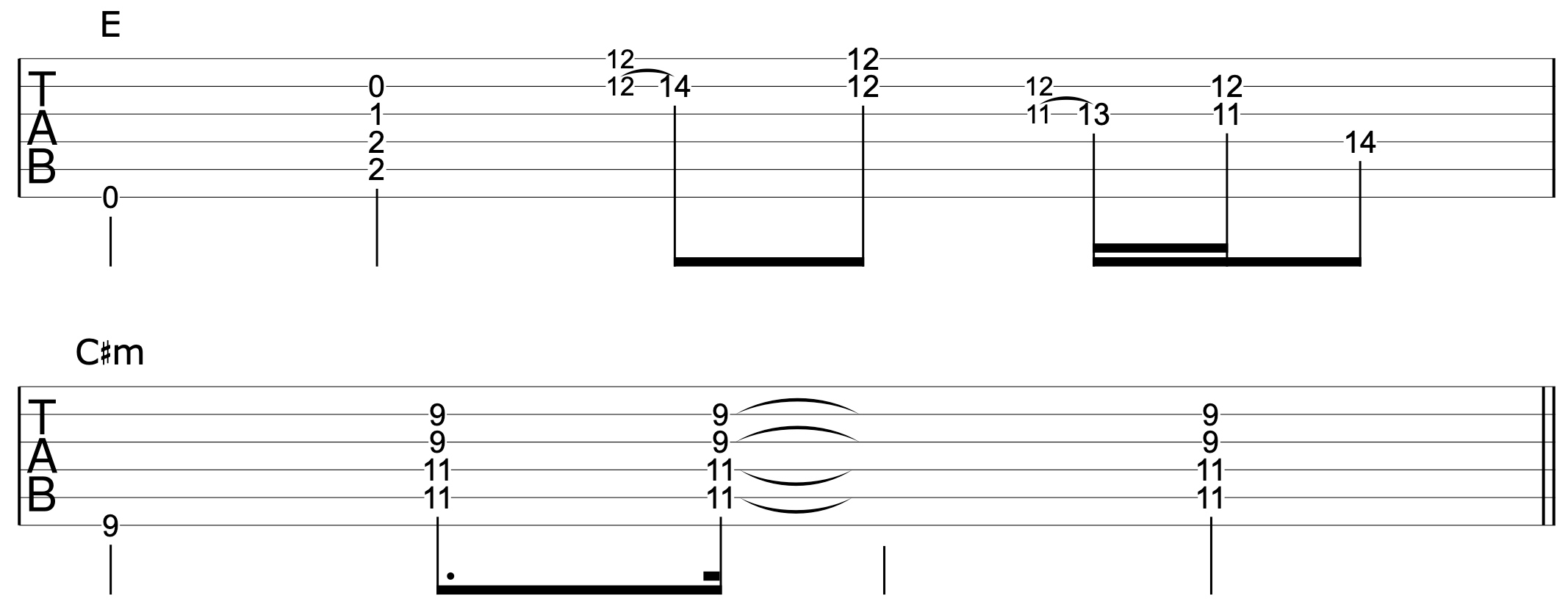
Here is an example of a double stop riff played over the E chord before connecting to the C#m:
(ii)
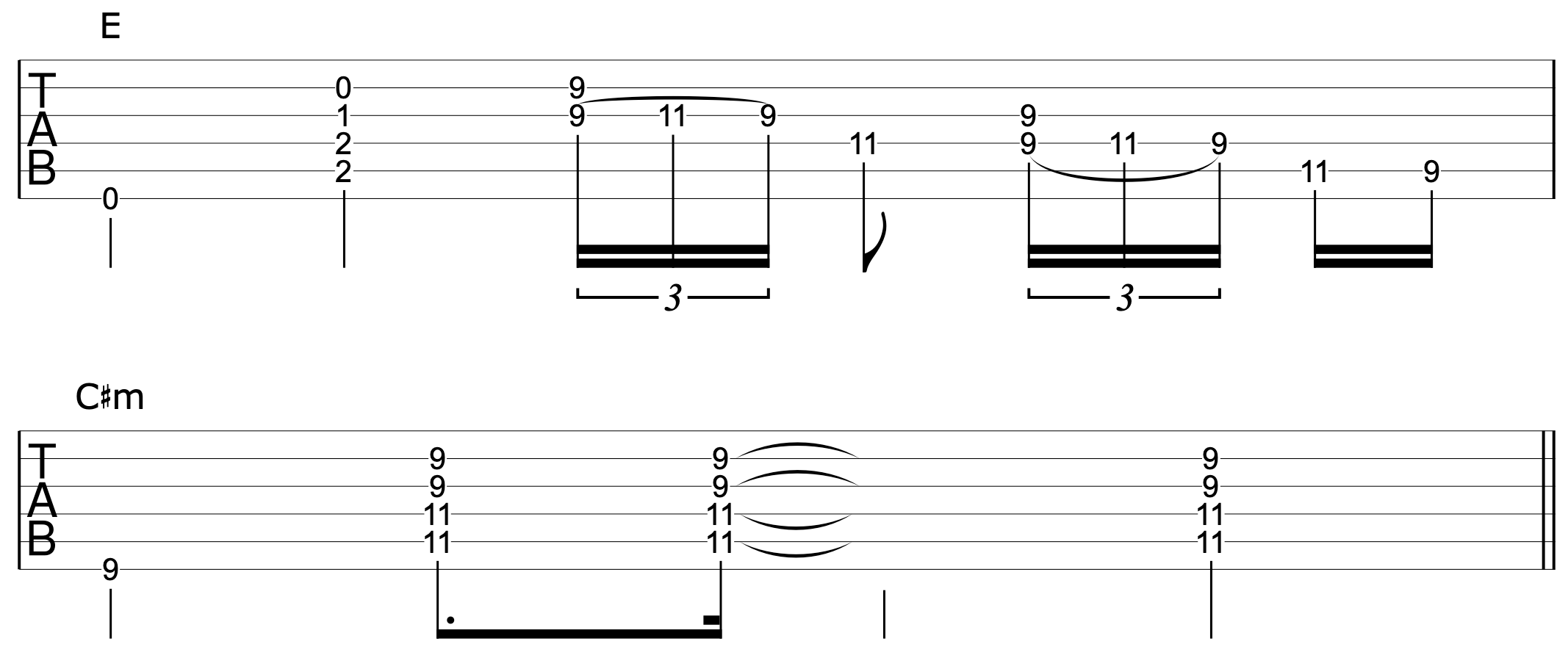
Here is another example of a double stop rhythm fill connecting the E chord to C#m:
Why Double Stop Fills Work
Double stops instantly make rhythm guitar fills sound fuller and more expressive.
Instead of a thin melodic line, you now have harmony embedded inside the fill.
This is where your rhythm playing starts to sound more mature and professional.
3. Using Triads as Rhythm Guitar Fills
Triads are one of the most powerful and most underused tools for rhythm guitar fills.
If you know even a few basic triad voicings on guitar, especially on the top three strings, you can create beautiful harmonic movement between chords.
You can:
• Play small arpeggiated triads
• Use percussive stabs
• Add suspended notes for motion
• Slide shapes into position
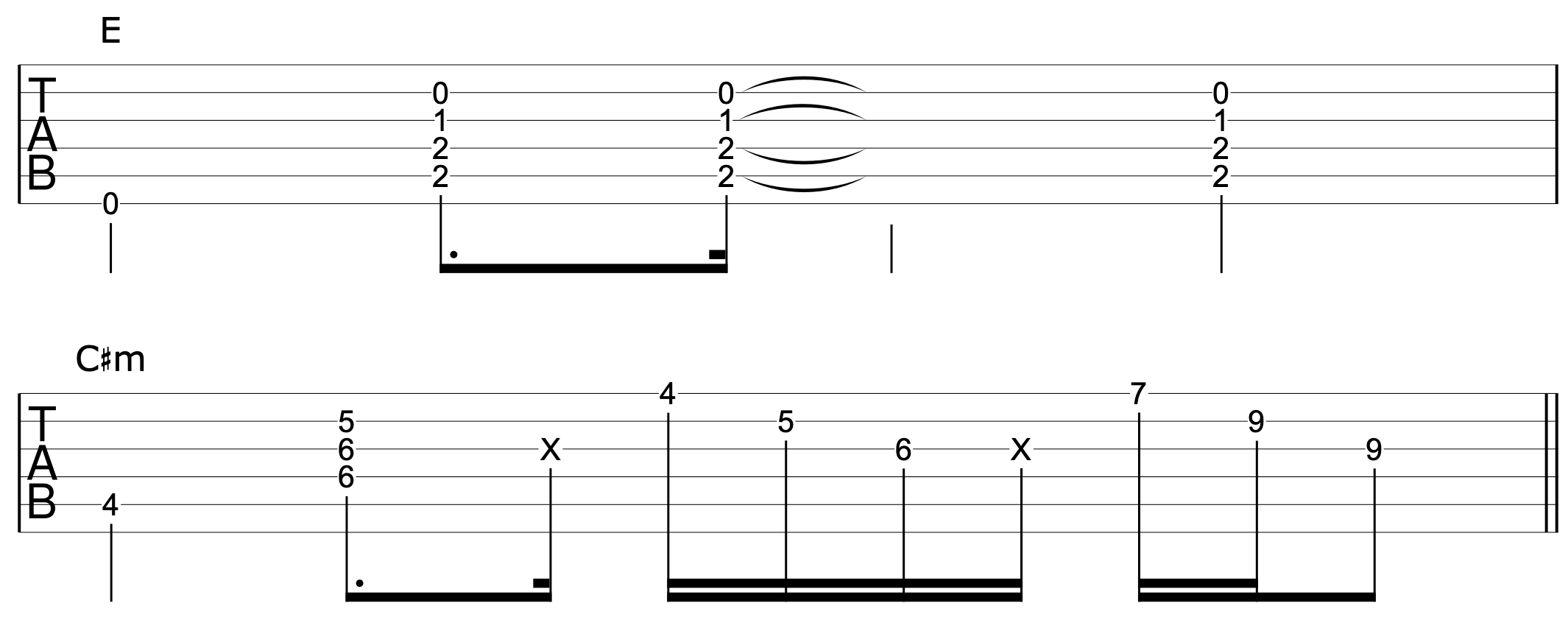
(i)
Here is an example of arpeggiated triads connecting the C#m to the E chord:
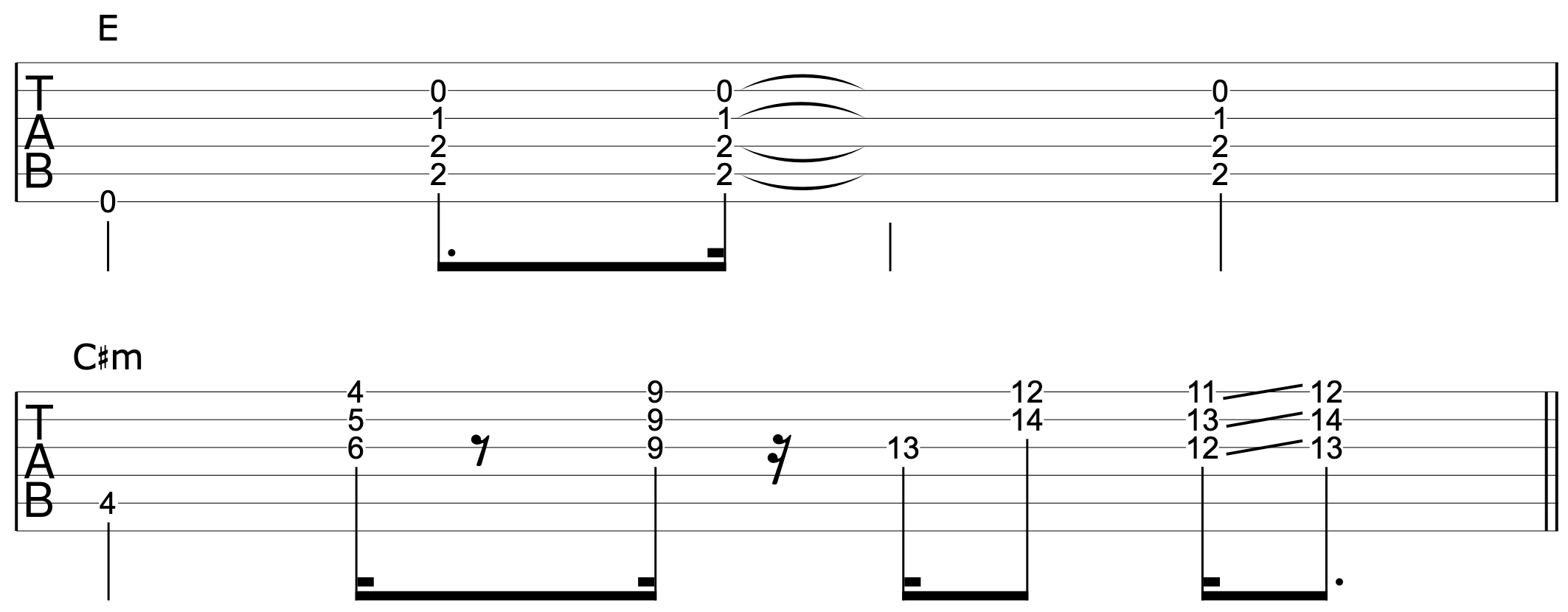
(ii)
Here is another example of using triads, this time playing a series of C#m triads up the neck before connecting back to the E chord:
Why Triads Work So Well
Triads contain the 1, 3, and 5 of a chord.
That means they:
• Clearly outline the harmony
• Stay close to the chord tones
• Move smoothly between chord shapes
Because they’re compact, they don’t overpower the progression; they enhance it.
This is especially effective in rock and pop contexts, where triads can act as subtle but powerful connections between bigger chord shapes.
4. Harmony Fills: Thirds and Sixths
Now we step into harmonised rhythm fills.
Instead of playing single notes or full triads, we use intervals — especially:
• Thirds
• Sixths
These create beautifully melodic movement while still functioning as rhythm fills.
Sixths
Sixths often:
• Appear on non-adjacent strings
• Require hybrid picking
• Slide smoothly between positions
They sound smooth, sophisticated, and slightly soulful.
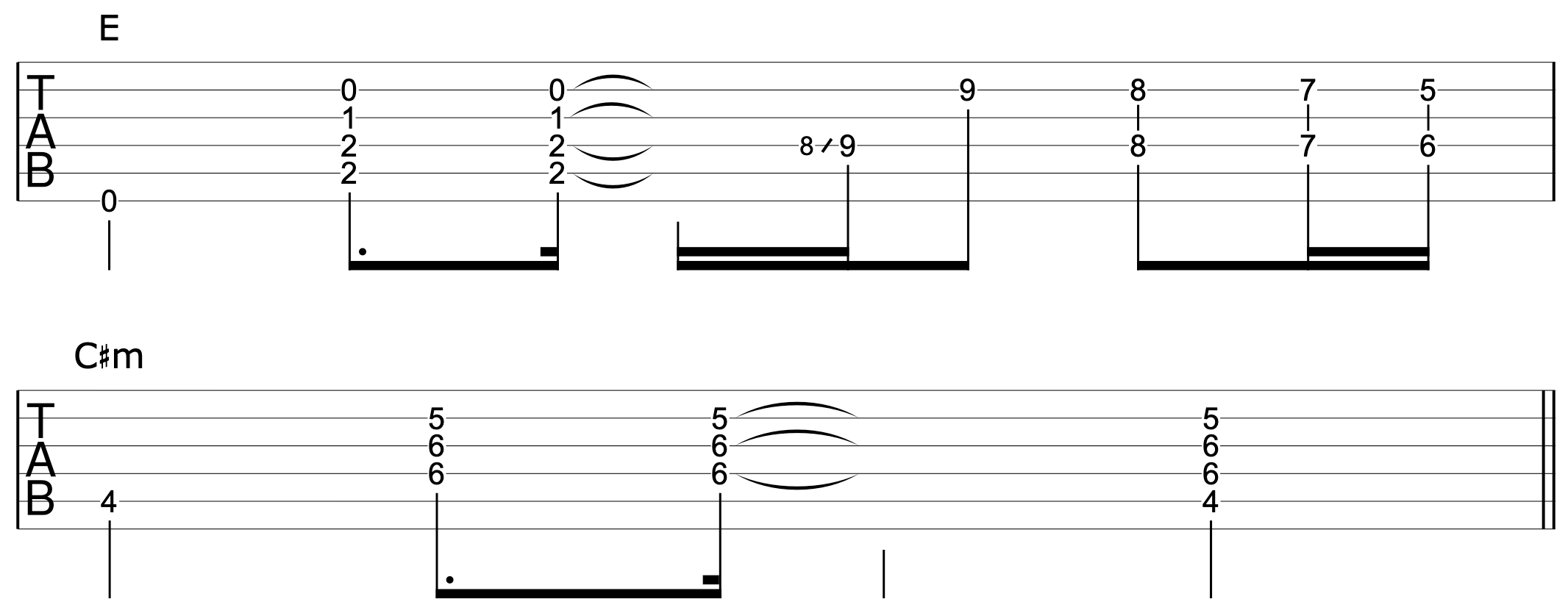
(i)
This example uses 6ths to connect the E chord to the C#m:
Thirds
Thirds tend to:
• Slide into each other naturally
• Create a sweet, vocal quality
• Work beautifully in melodic transitions
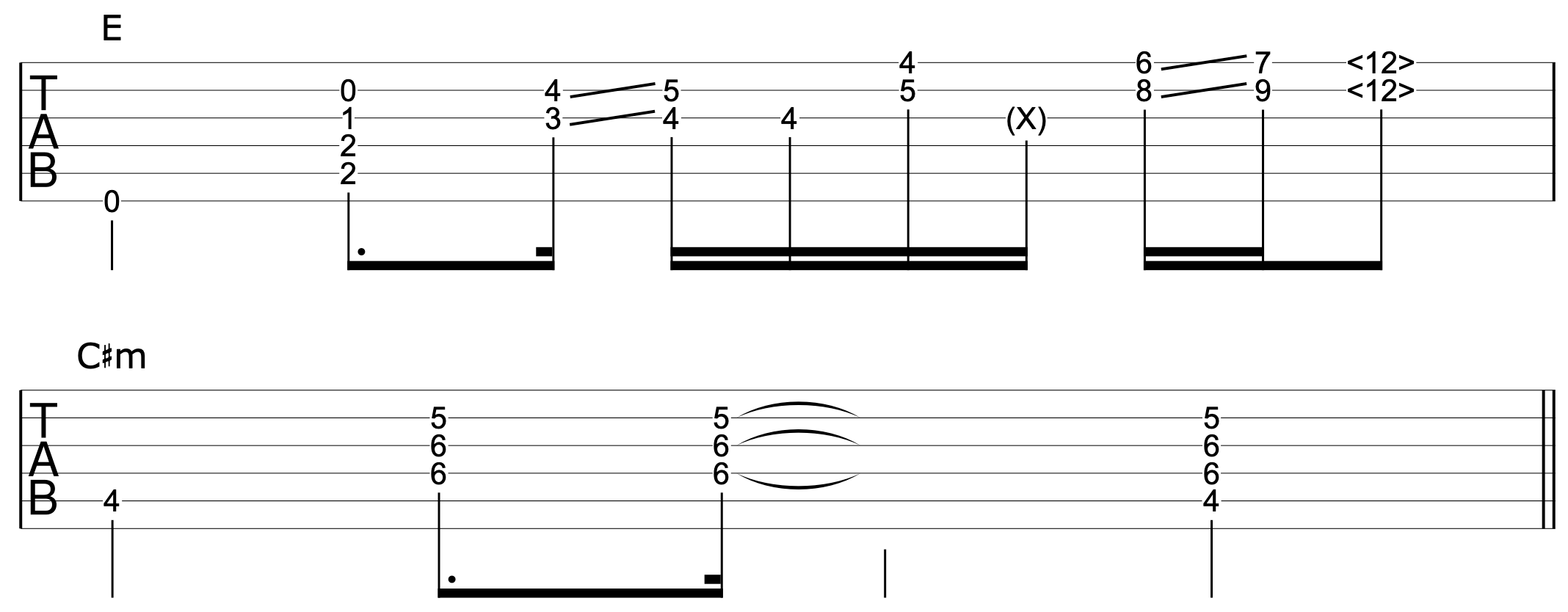
(i)
Here is an example that uses thirds to connect the E to C#m chord:
Both intervals add polish and musicality to your rhythm guitar without becoming overly busy.
5. Extended Arpeggios (Adding Colour and Sophistication)
This is where things become more harmonically rich.
Instead of sticking to basic triads (1–3–5), we extend into:
• 7ths
• 9ths
• Other upper extensions
For example:
An E major 7 arpeggio contains a D# (the major 7).
That same D# might function as:
• The major 7 over E
• The 9th over C# minor
Same note. Different harmonic function. Different colour.
(i)
In this example, the fill is played over the E chord before connecting to the C#m:
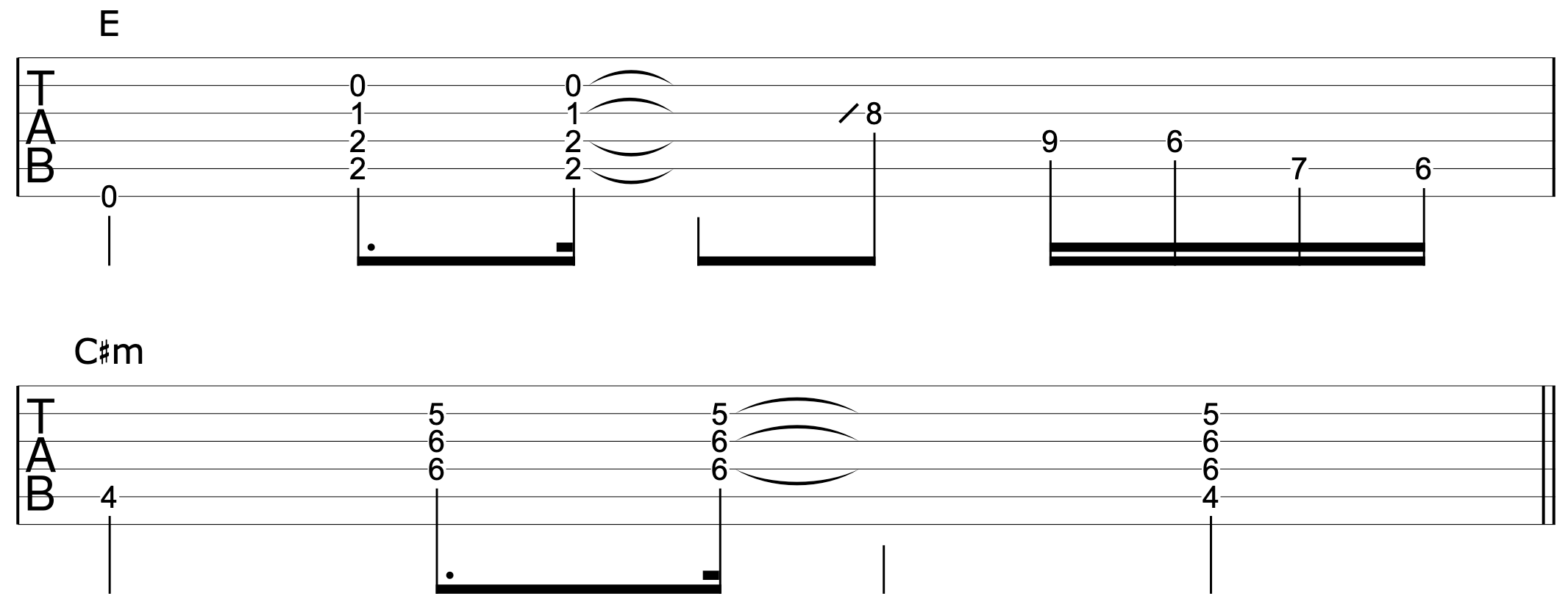
(ii)
In this example, the arpeggio is played over the C#m chord before connecting back to the E chord:
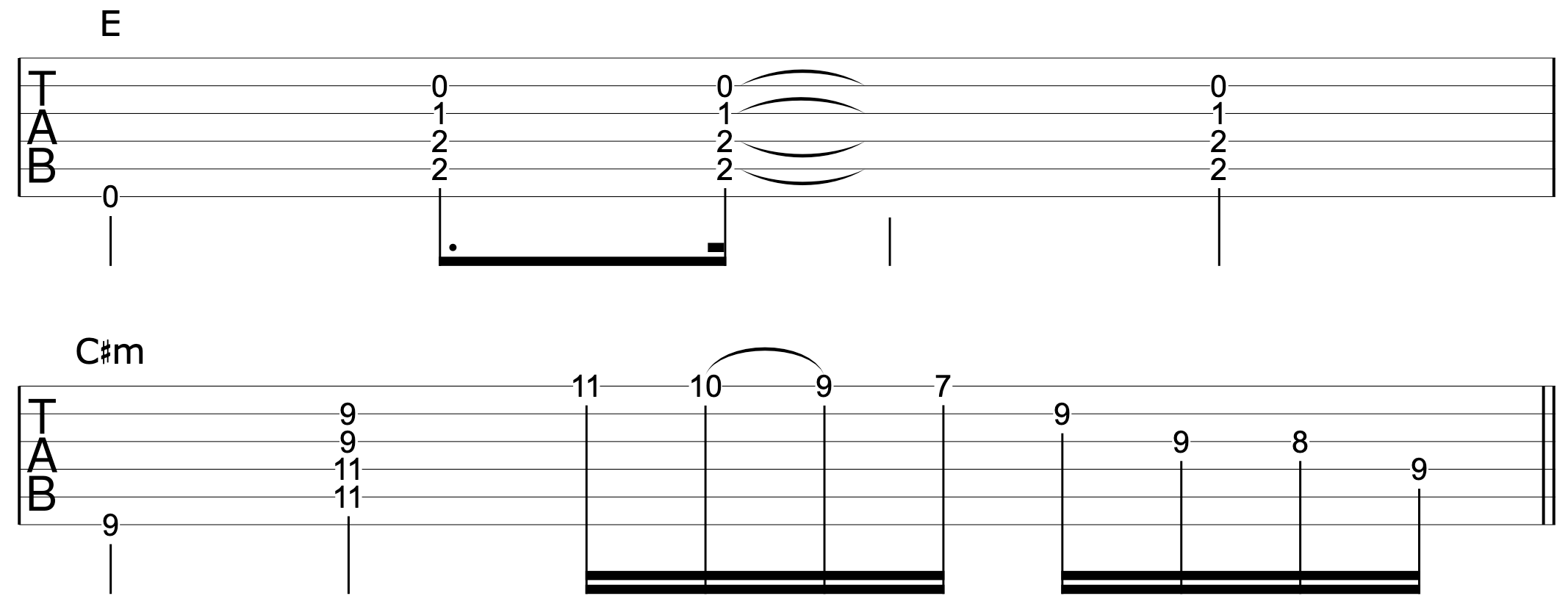
Why Extended Arpeggios Work
• Add tension and release
• Introduce subtle jazz and soul flavours
• Work beautifully across related chords in the same key
They are ideal for more advanced rhythm fills for guitar, especially when you want sophistication without overplaying.
The Big Principle: Fill the Space Intentionally
All five approaches share one core idea:
Great rhythm guitar players don’t leave empty space between chords; they shape it.
Whether you use:
• Single-note pentatonic ideas
• Double stops
• Triads
• Harmonised intervals
• Extended arpeggios
The goal isn’t complexity.
The goal is flow.
When you begin thinking this way, your rhythm playing becomes:
• More expressive
• More connected
• More musical
• More professional
And that’s the real purpose of rhythm fills for guitar.
Where to Start
If this feels like a lot, begin here:
1. Take a simple chord progression.
2. Add one or two pentatonic notes between chords.
3. Gradually experiment with double stops.
4. Then introduce small triad shapes.
Build slowly.
You don’t need flashy licks.
You need musical connection.
If you’d like to see all five approaches demonstrated in context, make sure to watch the full lesson above.
And start listening closely to great rhythm players.
Once you hear rhythm guitar fills in action, you’ll start noticing them everywhere.
That’s when your rhythm playing truly starts to evolve.
Other Lessons You Might Like
Explore these related lessons to continue building your guitar skills:
How To Create Rhythm Fills On Guitar (Step-By-Step Guide)
Want to go deeper into creating your own rhythm guitar fills for beginners? This guide walks you through exactly how to build musical, expressive fills between chords using simple techniques you can apply immediately. Perfect if you want to make your rhythm playing sound more fluid and professional.
Strumming Technique Guitar – 9 Tips To Improve Your Rhythm Instantly
Before you add fills, your strumming needs to feel solid. In this lesson, you’ll learn 9 powerful strumming guitar tips to improve timing, groove, dynamics, and control — all essential for clean and confident chord transitions.
How To Play 6th Harmony On Guitar (And Make Your Chords Sound Beautiful)
Sixth harmony is one of the most musical ways to add richness to your rhythm guitar parts. In this guide, you’ll learn how to use 6th harmony on guitar to create smooth fills, melodic movement, and beautiful chord embellishments that instantly elevate your sound.
 Free 5-Day Acoustic Guitar Rhythm Techniques Mini Course
If you’re serious about improving your rhythm guitar skills, this free 5 Day Rhythm Guitar Mini Course will show you how to develop dynamic strumming, chord embellishments, creative fills, and polished rhythm techniques — all in short, practical lessons.