The Easiest Way To Use Triads On Guitar
by Simon Candy
 There's a big difference between knowing a few triad shapes on guitar and actually knowing how to use them to create music.
You might be able to play triads in several positions across the fretboard, but when it comes to putting them into a chord progression, you're not quite sure what to do with them.
The good news is that learning how to use triads on guitar doesn't mean memorising shapes all over the fretboard.
In fact, just a handful of shapes, combined with familiar open chords and open strings, can give you some surprisingly big, rich sounds.
And rather than replacing your open chords, we're going to use triads to expand on them, creating more movement, variety, and interest in your playing.
Watch the video below to learn more:
How To Use Triads On Guitar With Simple Chords
For this lesson, we'll use a simple chord progression in the key of A:

Each chord lasts for one bar.
You could quite happily strum your way through this progression using standard open chord shapes.
But we're going to take those same chords and explore how triads can make them sound much more interesting.
We'll begin with guitar triad shapes on strings 4, 3, and 2.
These are simply three note chord shapes played across those particular strings.
You can find these triads in several positions along the fretboard, using what's known as root position, first inversion, and second inversion shapes.
Position 1:
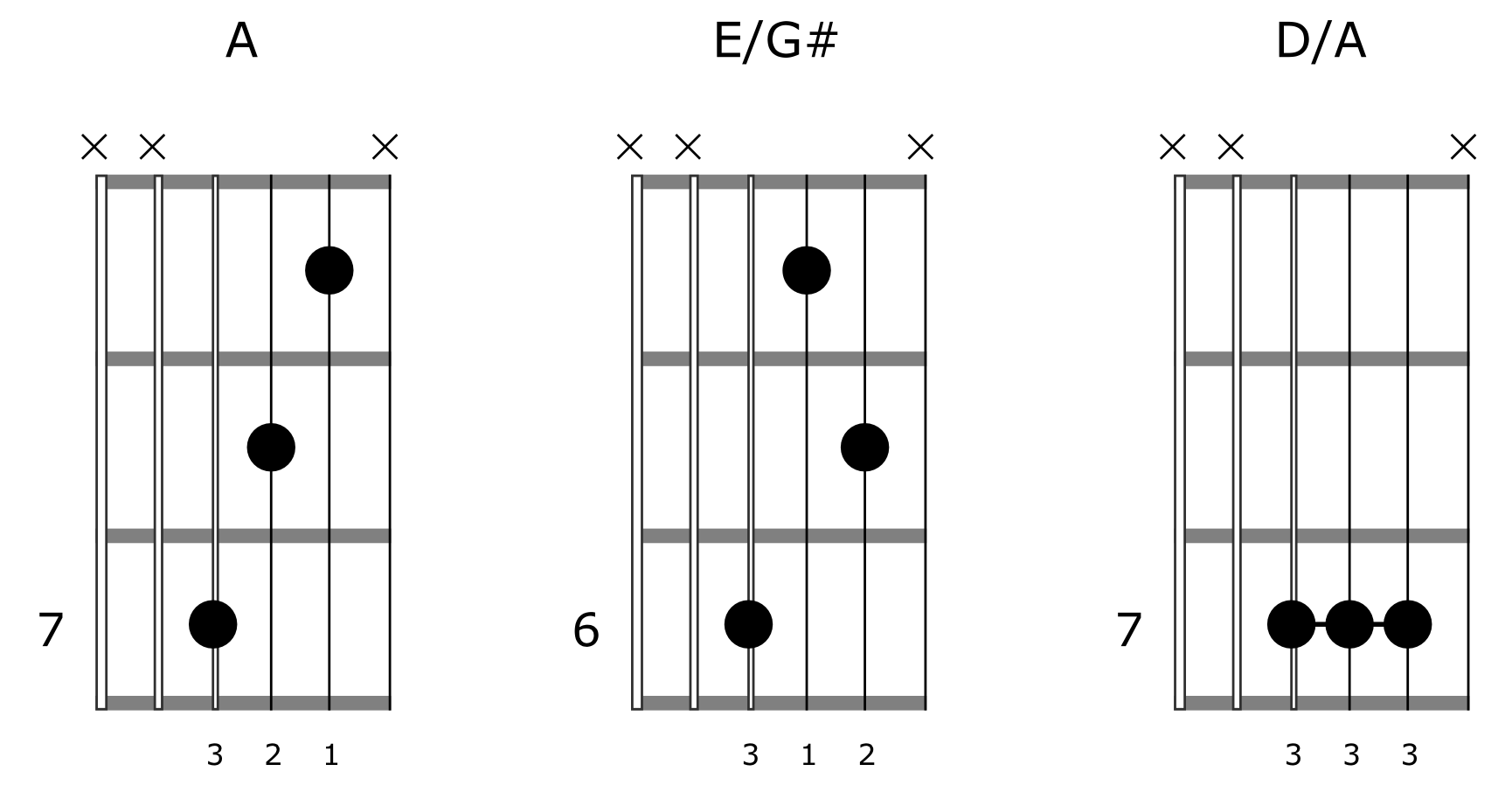
Position 2:
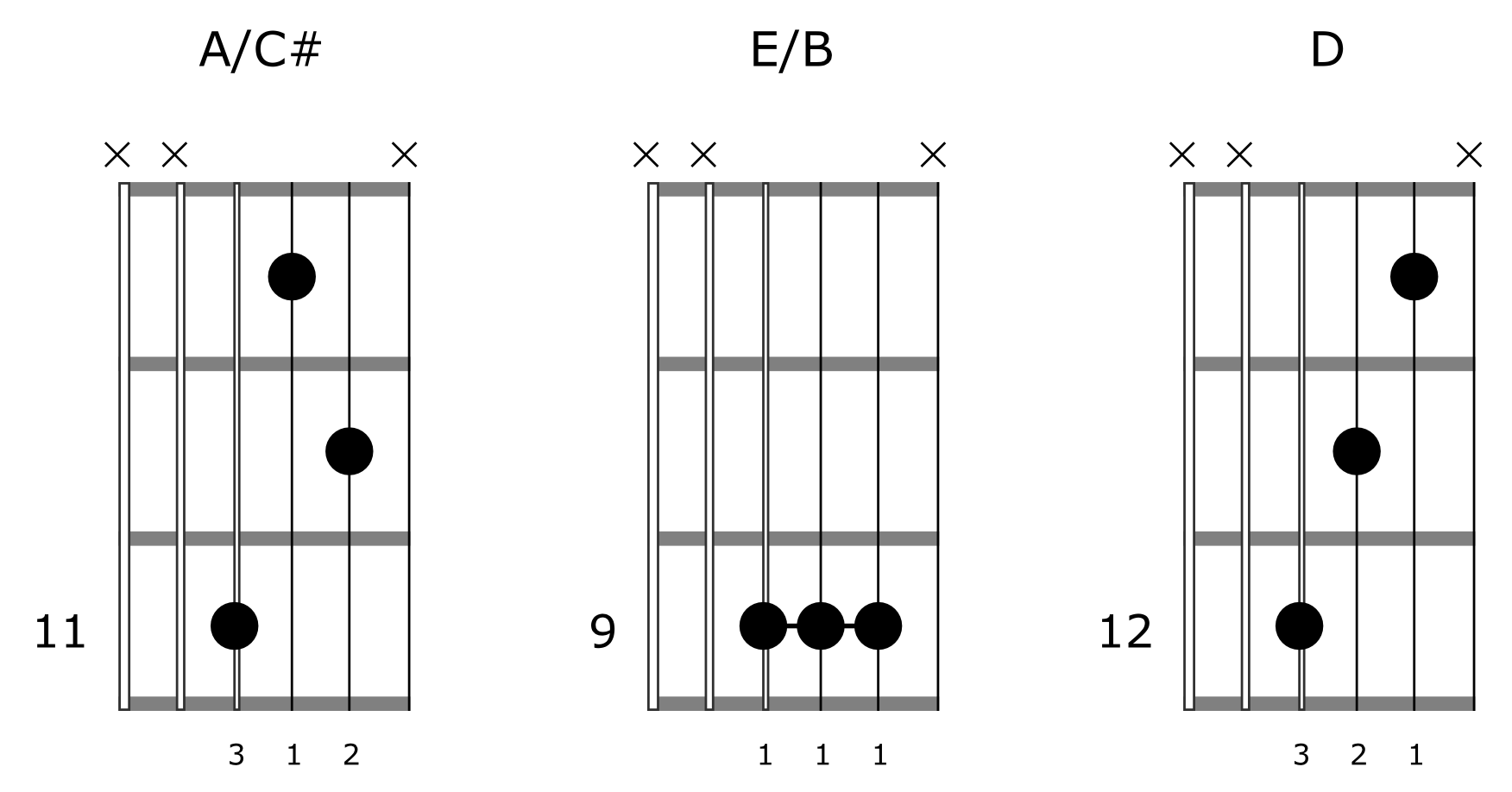
Position 3:
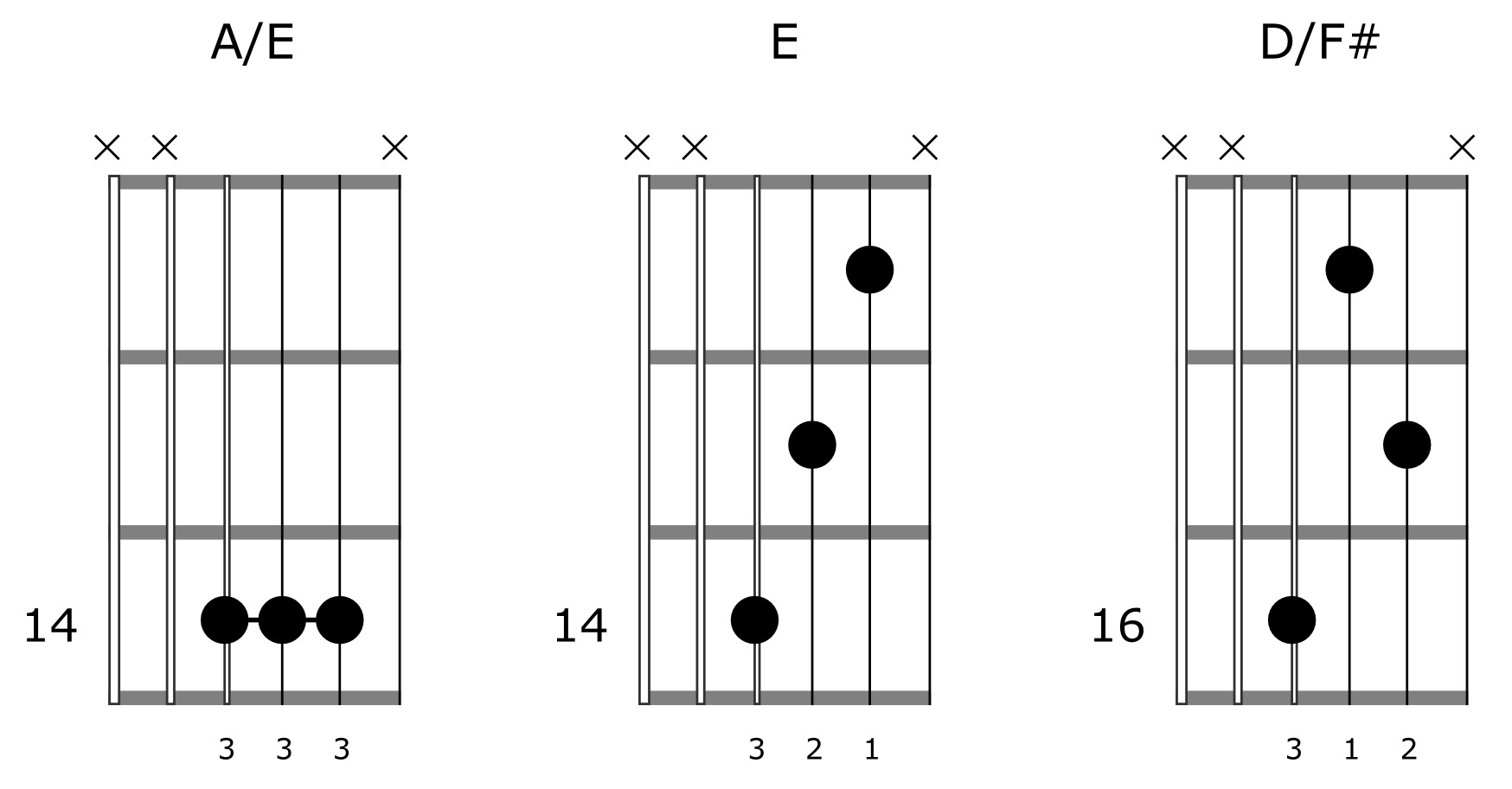
Don't get too caught up in those names.
The important thing is that you can play the same chord progression using different combinations of triads, often without moving very far along the neck.
For now, we'll focus on one small area of the fretboard.
After all, the goal isn't to memorise dozens of shapes.
It's to start making music with the shapes you already know.
Make Guitar Triads Sound Bigger With Open Strings
One thing you might notice when playing triads on their own is that they can sound a little thin compared to full open chords.
And that's understandable.
You're only playing three notes, often across the middle or higher strings.
But here's where things get interesting.
By combining triads with open strings, you can create a much bigger, fuller sound.
For example, take an A triad played on strings 4, 3, and 2.
Now include the open fifth string, giving you a low A in the bass, along with the open first string:
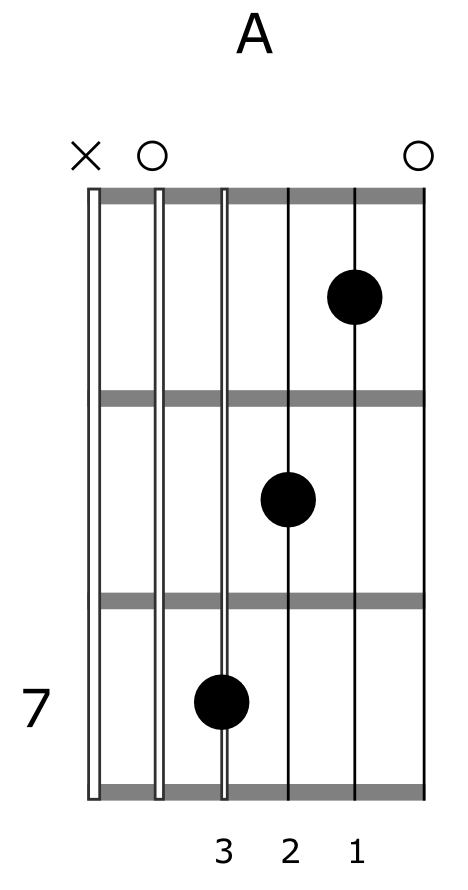
Suddenly, that small triad has a much richer sound.
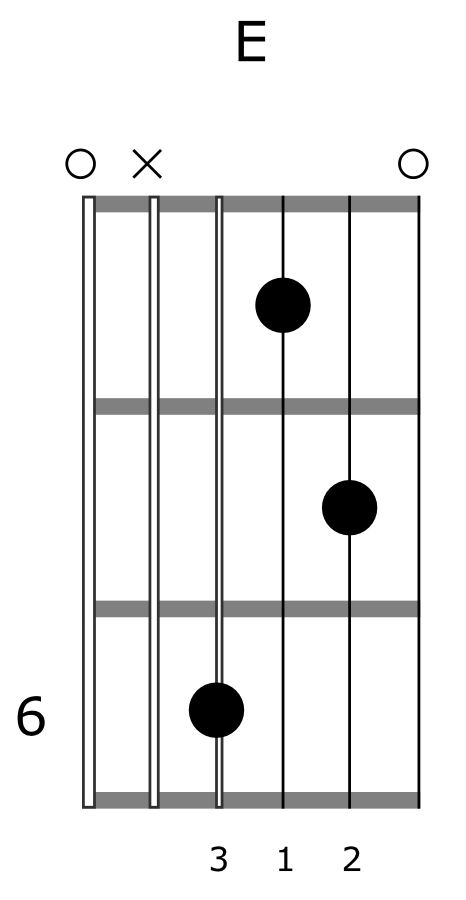
You can do something similar with the E triad, adding the low open E string and the open first string:
For the D chord, we'll make a slight adjustment.
Instead of using the original three-note shape, we'll use a D triad across strings 3, 2, and 1, allowing the open fourth string to provide our bass note:
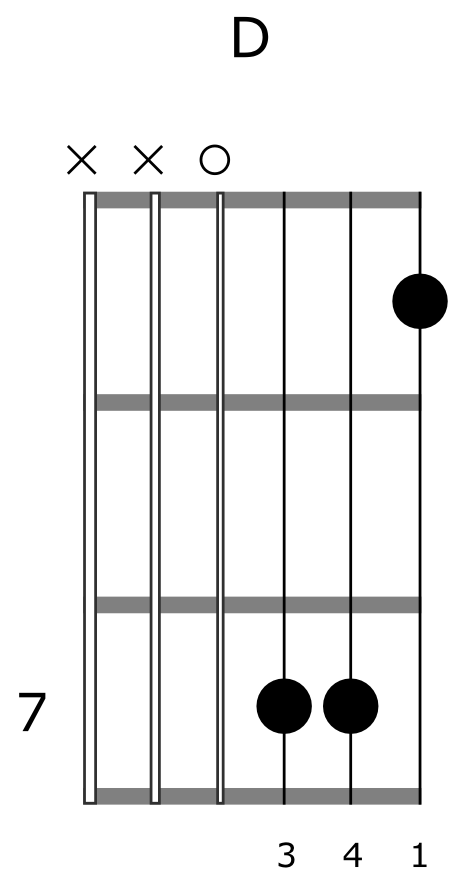
Now we have three chords that sound much bigger than the original triad shapes.
And because we're using open strings, we get that lovely ringing quality that works so well when using triads for acoustic guitar.
Triads And Travis Picking
Once you've combined your triads with open strings, there are all sorts of ways you can use them.
One particularly effective approach is fingerpicking.
Try applying a Travis picking pattern to our A–E–D–A progression:
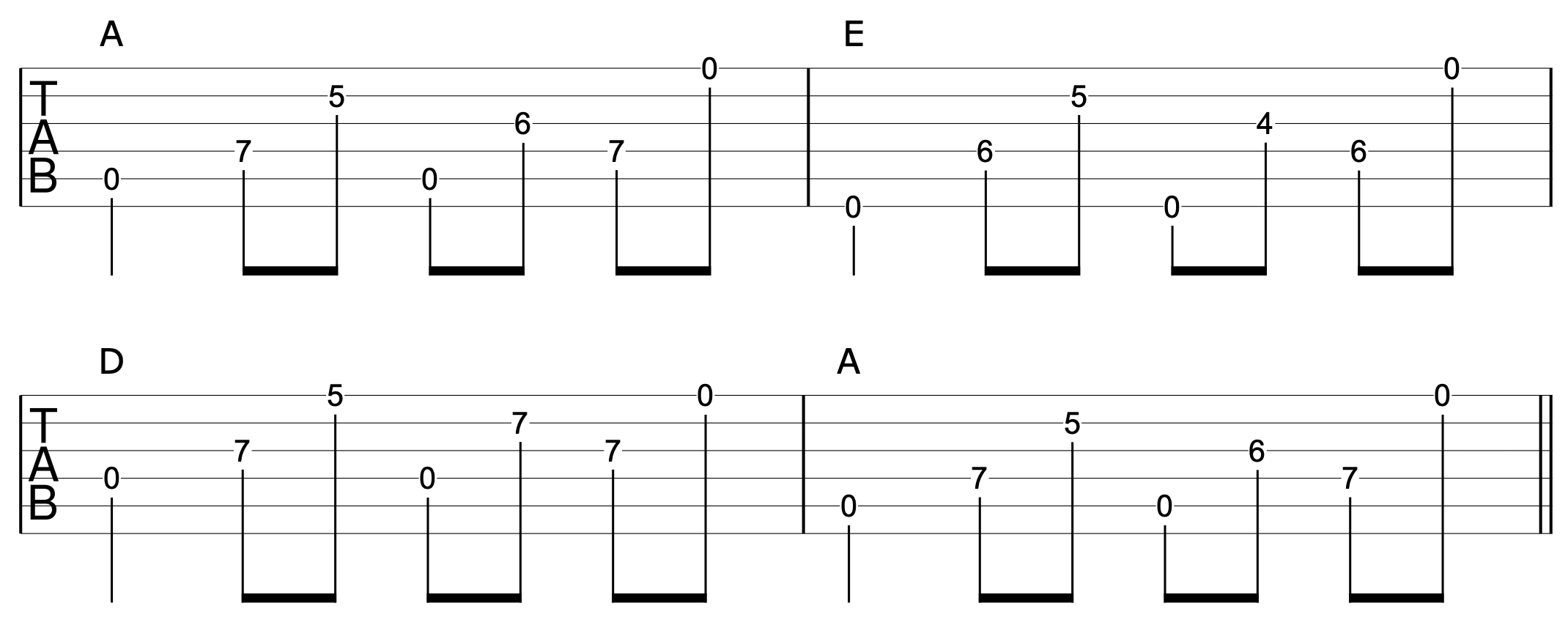
Instead of picking through standard open chords, you're now picking through these expanded triad shapes.
The bass notes provide a foundation while the higher notes ring out above them.
This creates a fuller, more layered sound.
And the nice thing is that you haven't made the progression particularly complicated.
You're still playing the same chords.
You're simply approaching them differently.
Try playing through the progression using ordinary open chords first, then switch to the triads with open strings.
Listen to how the character of the progression changes.
Create Tension And Release With A Pedal Bass Note
Another interesting way of using triads on guitar is to keep the same bass note ringing underneath the entire progression.
This is sometimes called a pedal tone.
And it's a simple idea that can produce some beautiful sounds.
Let's return to our A–E–D–A progression.
This time, instead of changing the bass note with every chord, we'll keep an A in the bass throughout.
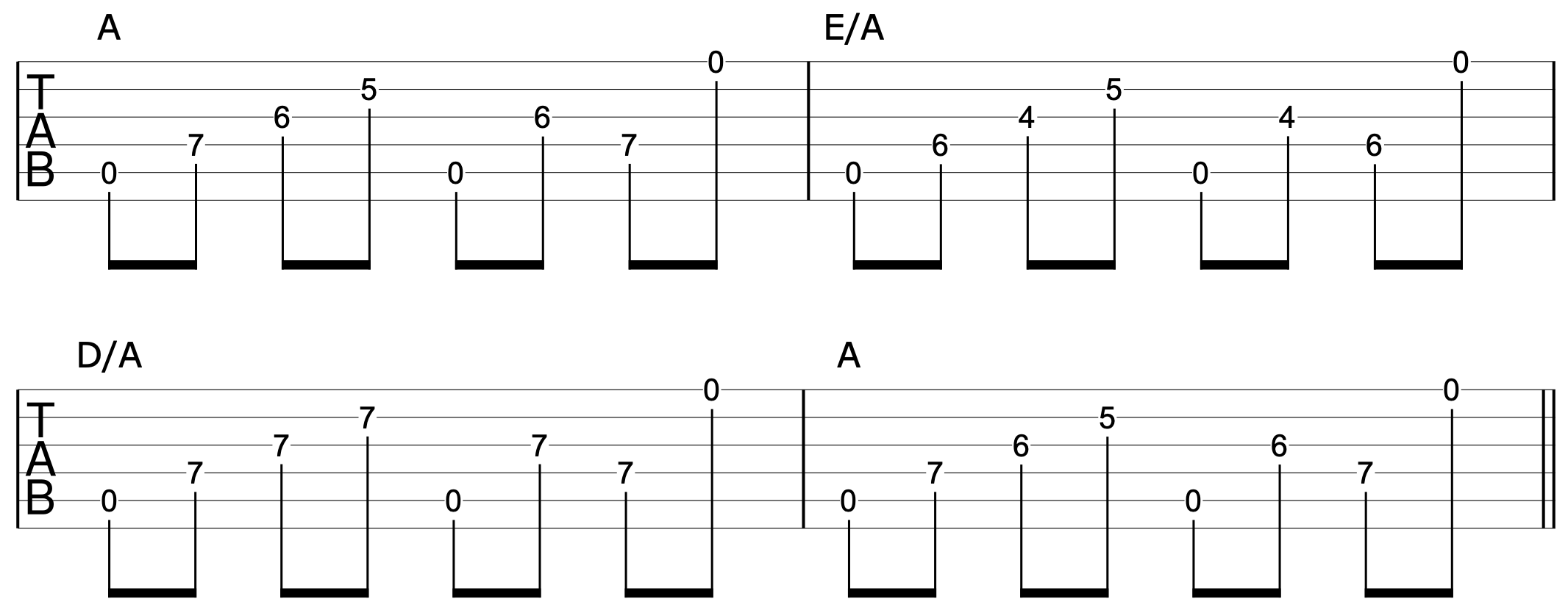
When you play the A triad, everything sounds settled.
But when you move to the E triad while keeping that A underneath, you get a little tension.
Then, when you move to D, the sound changes again.
Finally, returning to A gives you that feeling of resolution.
It's a great example of how you can create movement and interest without changing the underlying chord progression.
Try fingerpicking these shapes, allowing the A bass note to sound beneath each chord.
Then try strumming them, like so:
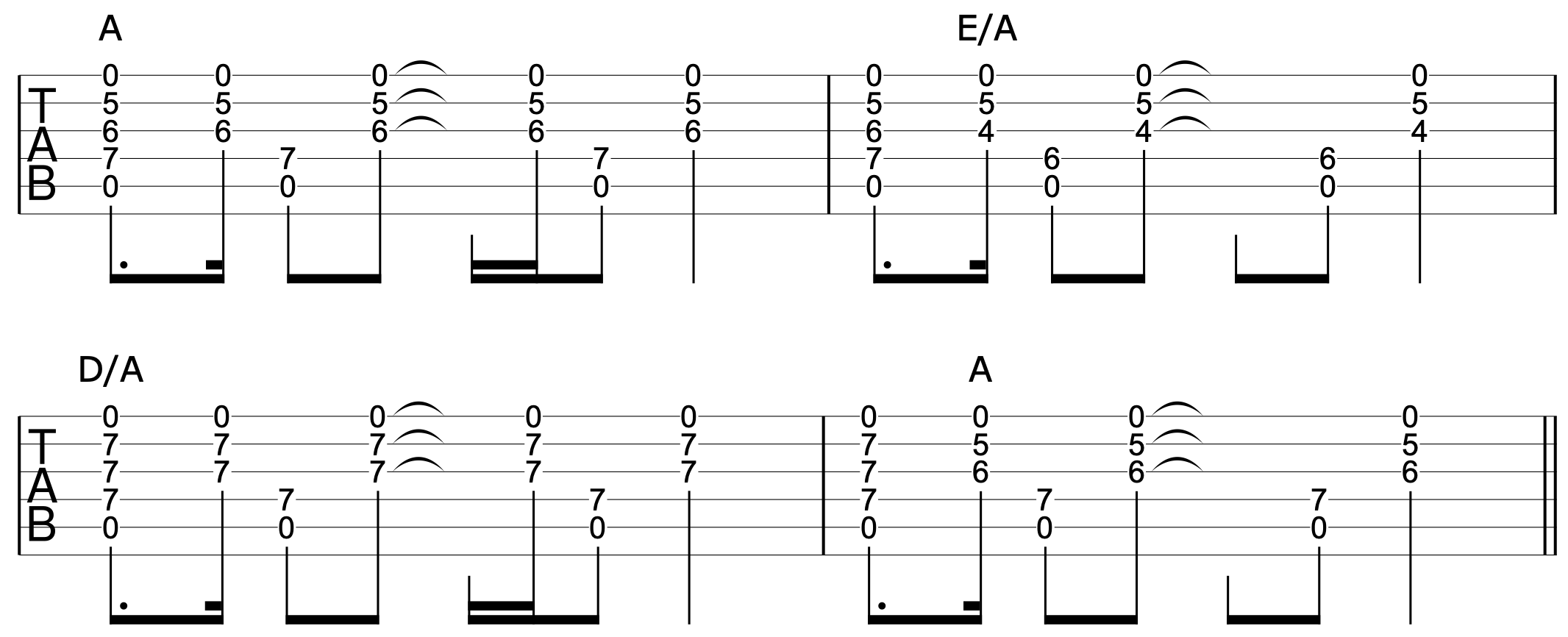
You'll notice that the same idea takes on a different character depending on how you play it.
Combine Triad Shapes With Open Chords
So far, we've mainly focused on using triads in one area of the fretboard.
But another great way to use them is to combine them with the open chords you already know.
Rather than playing an open A chord for an entire bar, for example, you could begin with that familiar shape and then move to an A triad higher up the neck.
You haven't changed the chord.
But you've changed the sound.
You can do the same with E and D, moving between open chords and triad shapes in different positions.
For this approach, we'll also bring in some triads played across strings 3, 2, and 1:
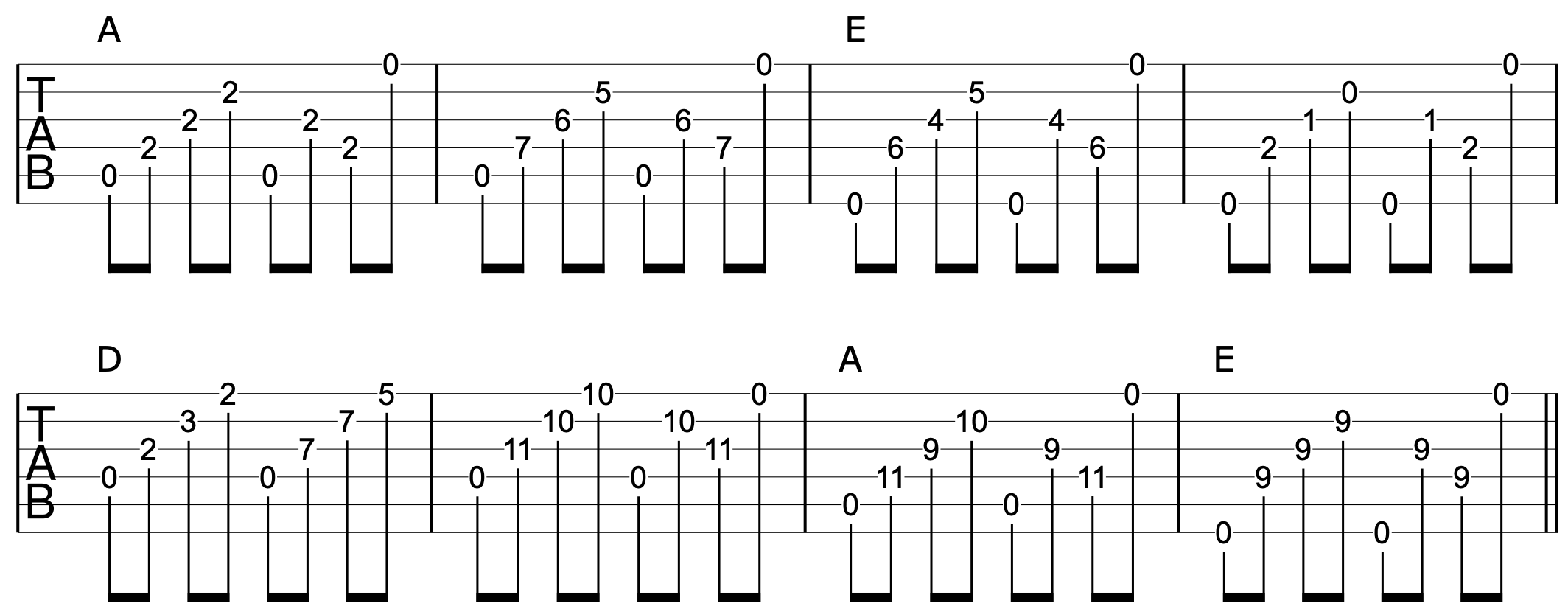
These higher shapes work particularly well when combined with open strings, giving you a lovely contrast between the ringing notes and the fretted triads.
The result is a guitar part with much more movement and variety.
This is where triads become particularly useful: not as replacements for your open chords, but as additional sounds you can bring into your playing.
Triads And Strumming
Everything we've explored so far can also work with strumming.
In fact, moving between open chords and triads while strumming can create some surprisingly big sounds.
Try taking our original A–E–D–A progression and using two different chord shapes within each bar:
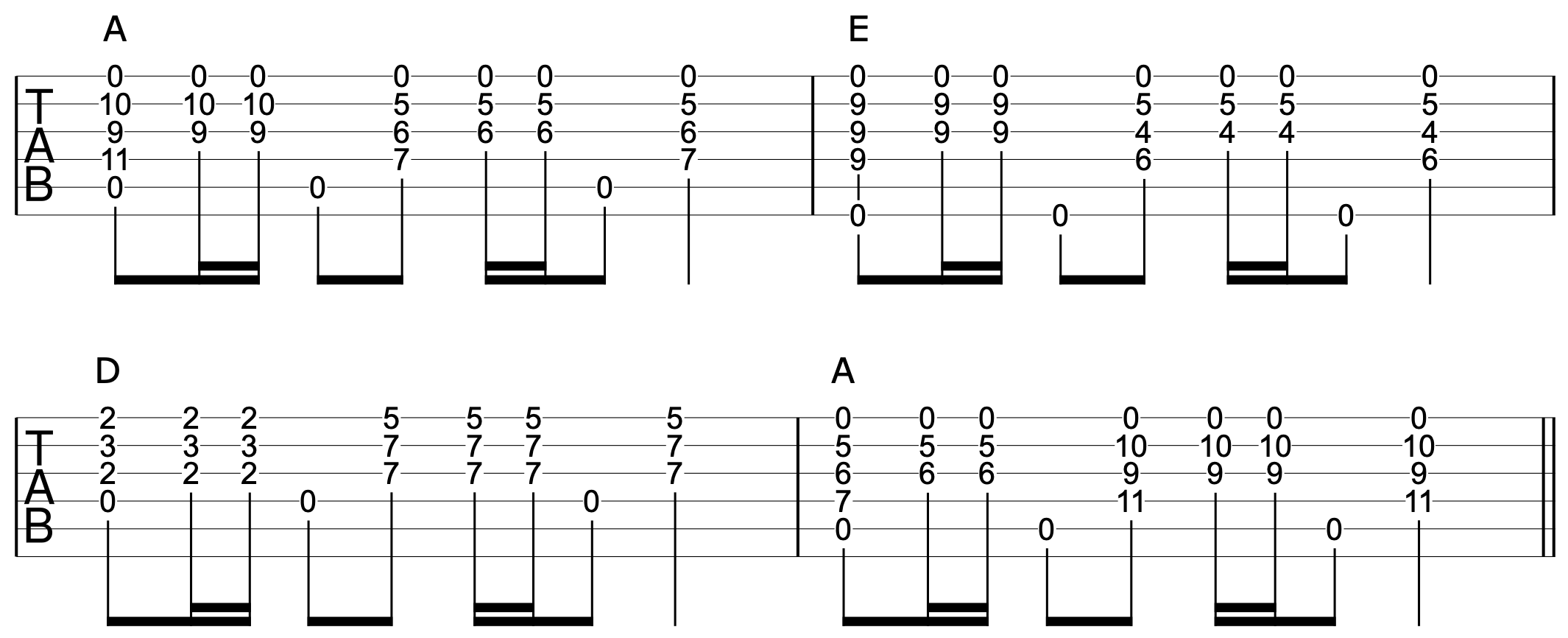
The open strings help connect these shapes, creating a fuller sound as you move between them.
There is one thing to watch out for, though.
When strumming some of the E triad shapes, you'll need to mute the open fifth string.
Otherwise, that unwanted A note can interfere with the sound you're trying to create.
A simple way to do this is to let one of your fretting fingers lightly touch the fifth string while holding the triad.
That way, you can strum across the strings without hearing the unwanted note.
It's a small adjustment, but it makes a big difference to how cleanly these expanded shapes sound.
Frequently Asked Questions
What are triads on guitar?
Triads are three-note chords made up of a root, third, and fifth. On guitar, these notes can be played in different positions and on different groups of strings. They're useful for creating chord variations, melodies, and more interesting rhythm guitar parts.
Do I need to learn every triad shape on guitar?
No. You can start making music with just a few triad shapes in one area of the fretboard. As you become comfortable using them in chord progressions, you can gradually explore other positions.
How do I make triads sound fuller on acoustic guitar?
One effective approach is to combine triads with open strings. Adding suitable bass notes and ringing treble strings creates a bigger, richer sound while keeping the underlying triad shape relatively simple.
Can I use triads for fingerpicking and strumming?
Absolutely. Triads work well with fingerpicking patterns, including Travis picking, and can also be combined with open chords when strumming. Both approaches help create movement and variety within familiar progressions.
What's the best way to practise using triads musically?
Start with a simple chord progression such as A–E–D–A. Learn a triad shape for each chord, then experiment with open strings, fingerpicking patterns, and moving between different positions. Focus on how the progression sounds rather than memorising lots of shapes.
Other Lessons You Might Like
Explore these related lessons to continue building your guitar skills:
The Best Way To Learn Triads On Guitar
Develop a clearer understanding of triad shapes and how they connect across the fretboard. A useful next step if you want to expand beyond the shapes used in this lesson.
How The Beatles And Pink Floyd Used Triads
Explore how triads can be used to create musical guitar parts inspired by The Beatles and Pink Floyd, helping you connect these shapes with sounds you already recognise.
Explore Two String For Soloing On Guitar
Discover another approach to using smaller chord shapes to create interesting guitar parts and add movement to familiar progressions.
How To Create Bigger Sounds On Guitar Using Spread Triads
Learn how spread triads can give familiar chords a more open, spacious sound and introduce fresh textures into your rhythm guitar playing.
How To Combine Pentatonic Scales And Triads
Take your triad playing further by combining chord shapes with pentatonic scales to create more melodic guitar lines and musical ideas.
 Discover How To Accompany A Singer On One Guitar
Get my free video workshop and learn how to create more dynamic, musical guitar arrangements that support a singer without overplaying.