7 Ways to Make a Simple Chord Progression Sound Better
by Simon Candy
 It’s easy to fall into the habit of playing chord progressions the same way every time.
You see an A chord, so you play your usual open A, then E, then D.
There’s nothing wrong with that, but after a while your rhythm guitar playing can start to sound a little plain and predictable.
If you want to make chords sound better on guitar, the answer isn’t necessarily to learn more chords.
Often, the missing piece is simply how you connect and present the chords you already know.
Small movements, simple harmony, open strings and little fills can completely change the character of a progression.
Watch the video below to learn more:
Throughout this lesson, we’ll use the following simple four-bar chord progression in the key of A:

Here are seven ways you can take those same three chords and make them sound much more interesting and musical.
1. Use Simple Two-Note Harmony
Instead of playing complete chords, try reducing them to just two notes.
3rds, 6ths, and 10ths work particularly well for this. These harmonies are already sitting inside the chord shapes you know; you’re simply pulling out two notes rather than playing the entire chord.
For example, you could play a 10th harmony shape over the A chord, move that shape to outline E, then move again for D.
Add a simple picking pattern and allow suitable open strings to ring alongside the shapes, and suddenly your chord progression sounds much more melodic:
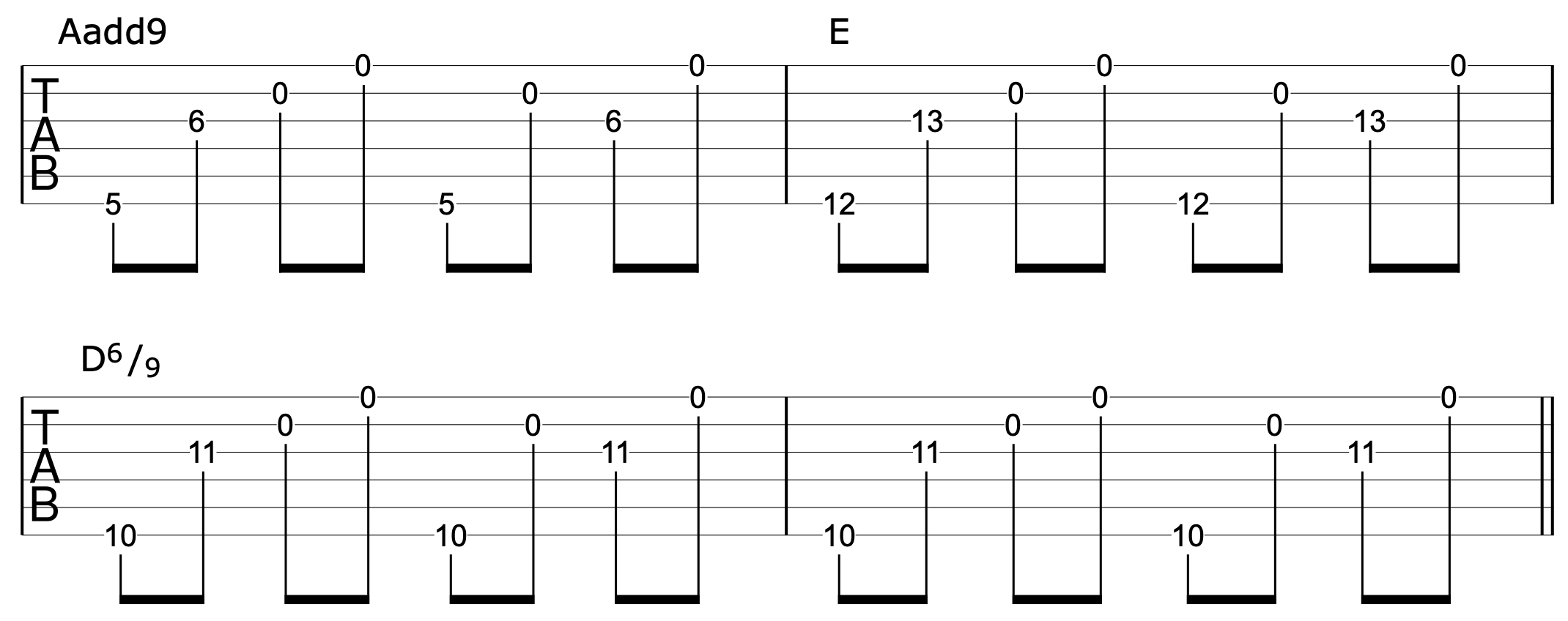
You don’t need to understand all the theory behind these harmonies to use them. Start with a few shapes and listen to how they sound against the chords.
Watch the video above for a detailed breakdown of this, as well as examples of using 3rds and 6ths to voice the progression.
2. Add Simple Guitar Embellishments
You can also stay completely within the familiar open position and make small changes to your existing chords.
For our A–E–D progression, you might play an Asus2 instead of a regular A, add an F# to the E to create an Eadd9, then use a Dsus2 with a simple hammer-on and pull-off, like so:
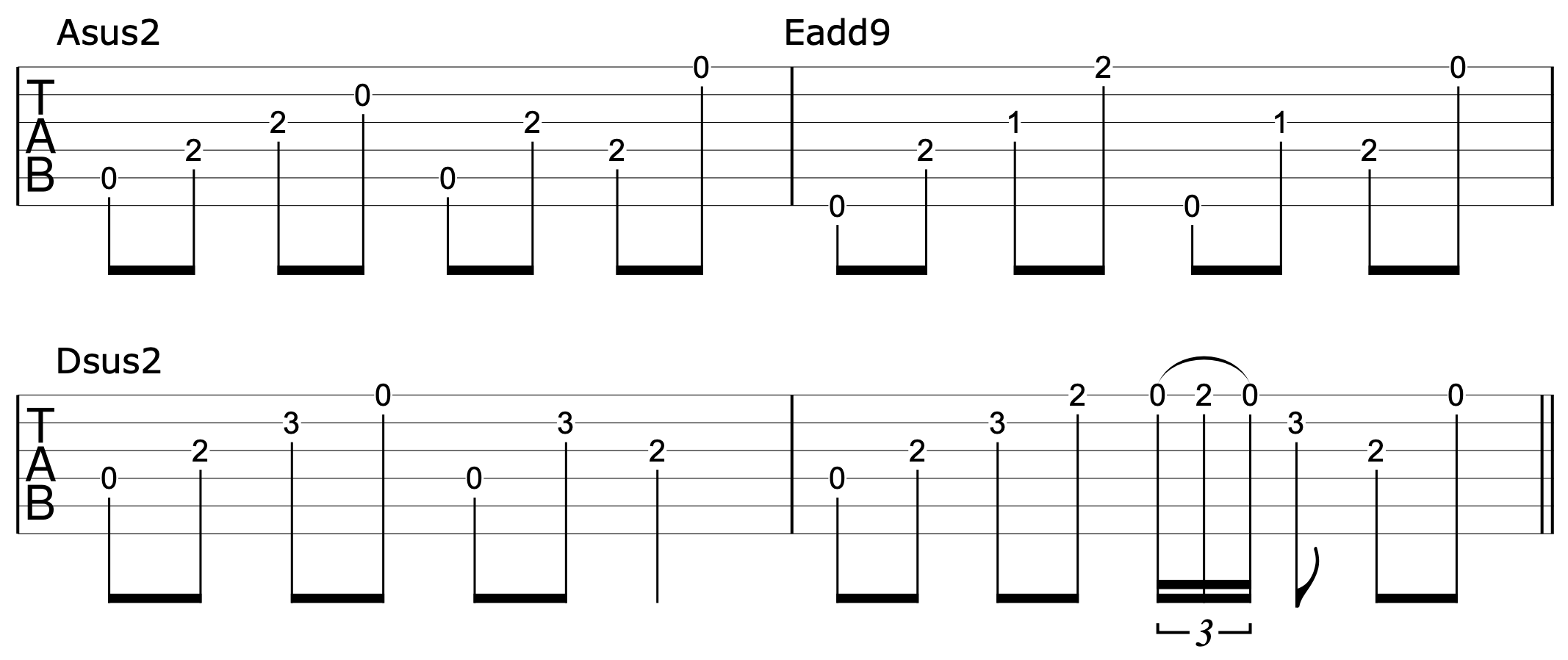
You haven’t really changed the chord progression.
You’ve simply added movement within the chords.
This is an important idea because making rhythm guitar more interesting doesn’t mean constantly adding more notes. Sometimes changing just one note within a familiar chord is enough.
Take a progression you already know and experiment with lifting or adding one finger at a time.
Listen for the small movements that catch your ear.
3. Move Familiar Chord Shapes Up the Neck
Another great way to discover new guitar chord variations is to take an open chord shape you already know and move it to another part of the fretboard.
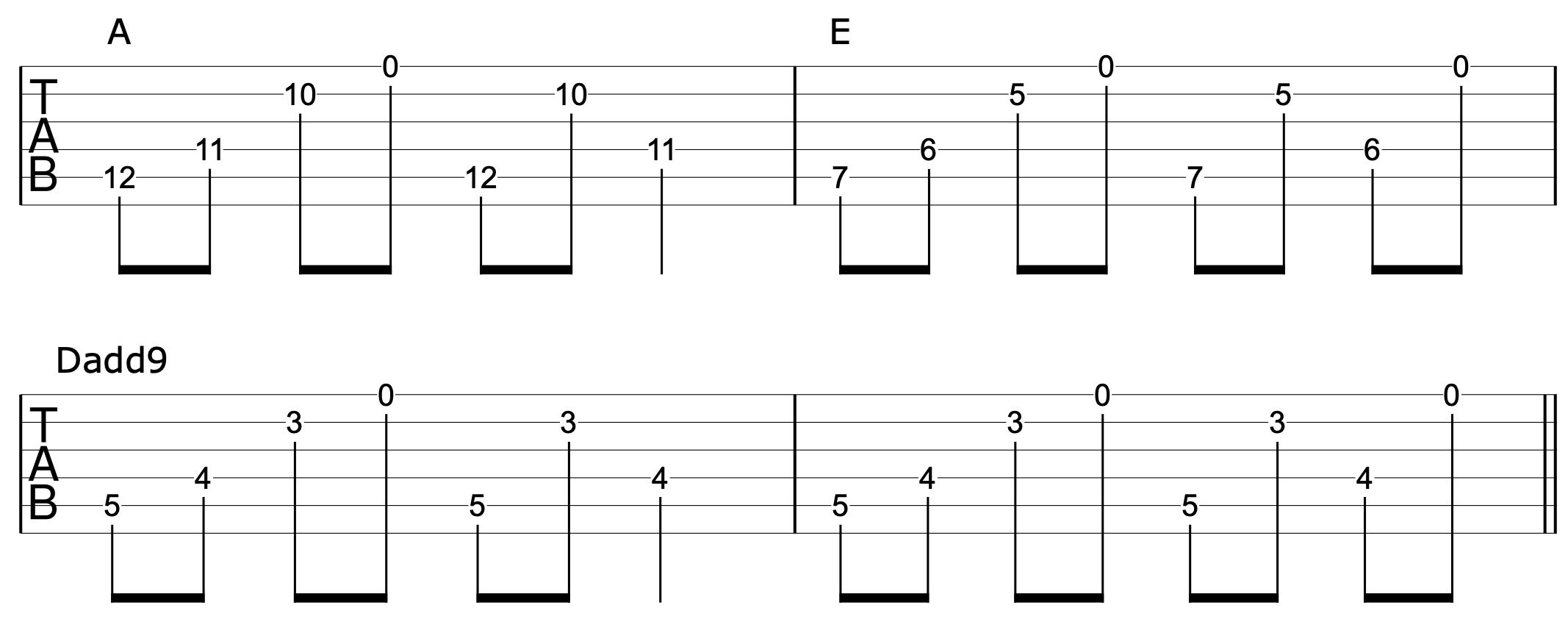
For example, a familiar C chord shape can be moved into different positions to create A, E and D chords. You can do something similar with your E and D shapes.
The real magic comes from combining these movable shapes with open strings.
Those ringing strings create a bigger, more spacious sound and can make an ordinary three-chord progression sound completely different.
You do need to be selective because not every open string will work with every chord.
Let your ears guide you. If an open string sounds good against the chord, use it.
Here is an example using the open C chord shape throughout our progression:
4. Strip Your Guitar Chords Back
We often assume a chord needs to contain five or six strings.
It doesn’t.
In fact, removing notes can sometimes make a chord progression sound more interesting.
With A, E and D, you already have the root notes available as open strings. Try playing one of those low notes along with just one higher note from the chord.
That can be enough to imply the harmony while creating a much more open and spacious sound than strumming full chord shapes.
Here is an example:
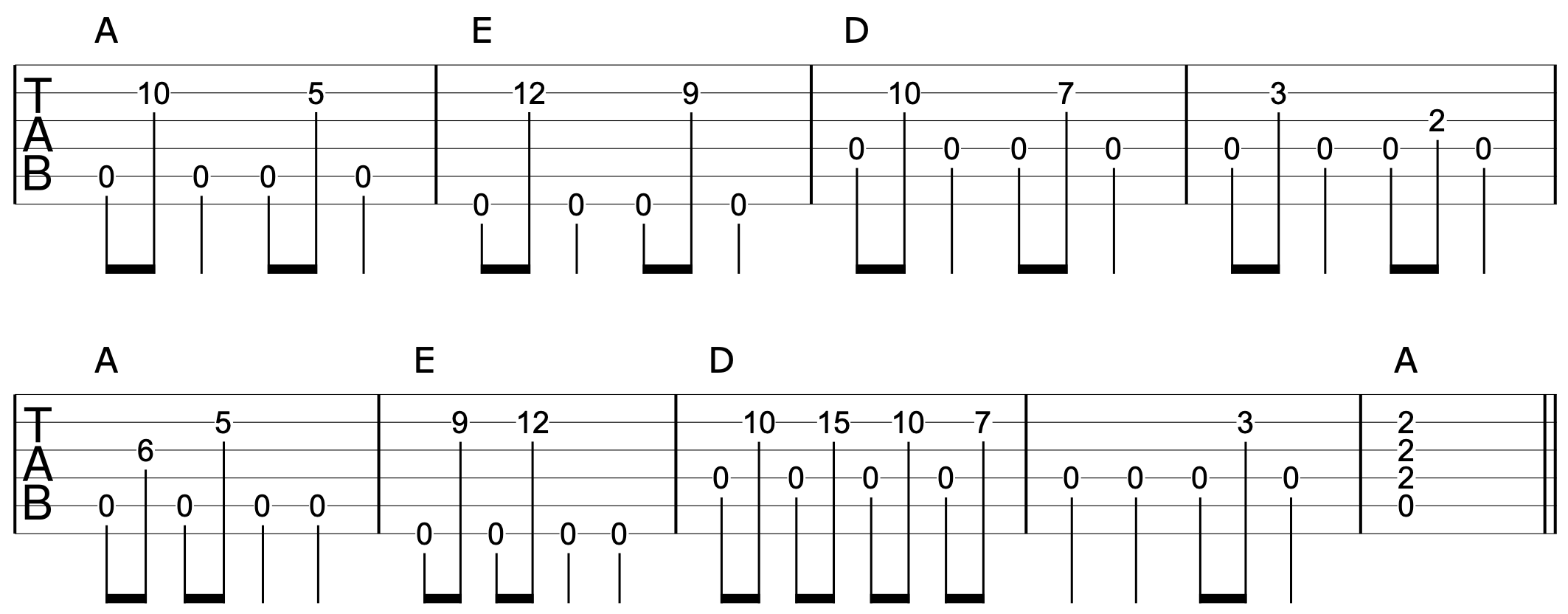
This is particularly useful when your rhythm playing feels too busy.
Rather than asking, “What else can I add?”, try asking, “What can I take away?”
5. Add Chord Fills Between Changes
Another way to make chords sound better on guitar is to use small melodic fills between your chord changes.
You hear this style of rhythm playing from players such as Jimi Hendrix, Stevie Ray Vaughan and John Mayer.
Instead of simply playing:
A... E... D...
you could outline each chord with a smaller shape, perhaps a triad, and use the available space between those chords for a short melodic fill.
Here is an example:
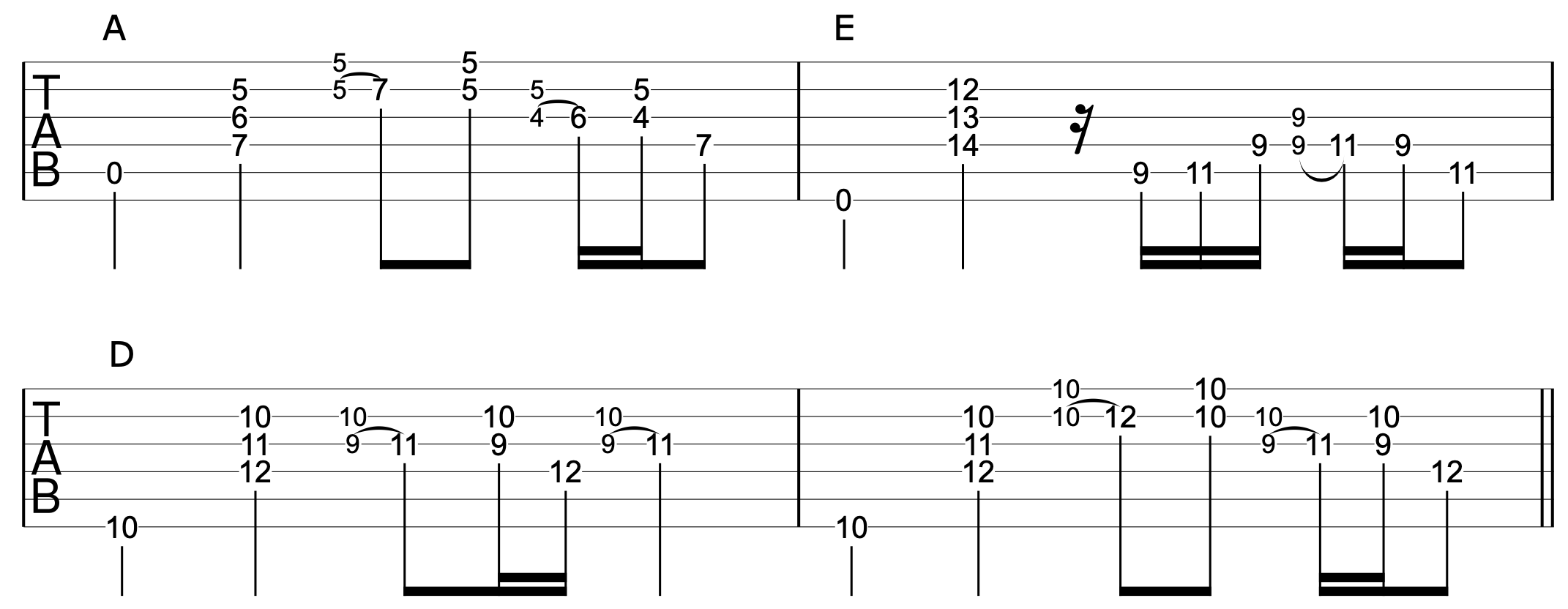
The important thing is that your chord fills support the progression rather than overwhelm it.
You don’t need a complicated lick every time you change chords. A few notes connecting one chord to the next can be enough to make the progression feel smoother, more fluid and more musical.
6. Play Bar Chords Without the Bar
Bar chord shapes can also give you some wonderful sounds when you remove the bar itself.
Take an A major root 6 bar chord, for example.
Instead of barring all six strings with your first finger, use that finger only for the root note and allow the top two strings to remain open.
Move the same idea to the E and D chords.
Those open strings can continue ringing across the progression, creating a beautiful droning effect that connects everything together.
Here is an example:
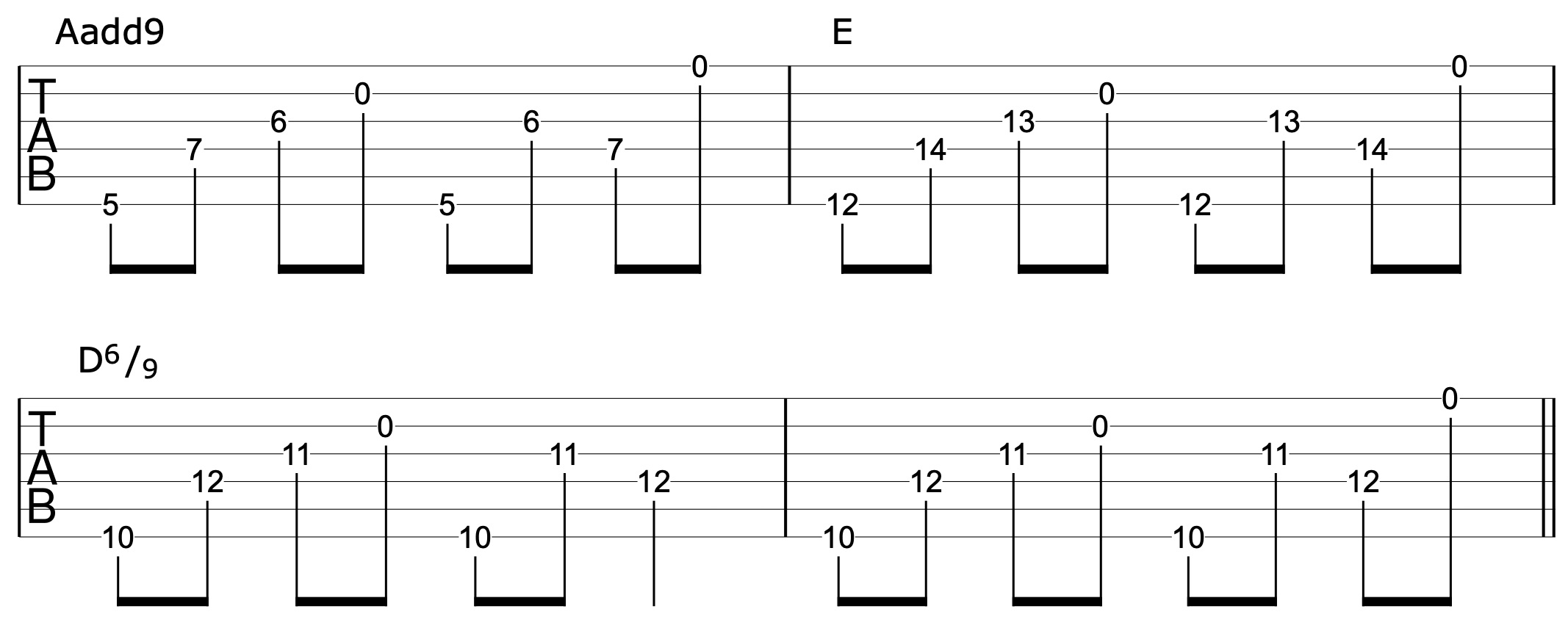
The same approach works with root 5 bar chord shapes too. Remove the bar, keep the useful fretted notes and allow appropriate open strings to ring.
You’re taking a familiar chord shape and opening it up.
Watch the video above for detailed examples of this.
7. Use Chord Fragments Instead of Full Chords
Finally, take the idea of stripping chords back even further by using only a small section of a bar chord.
Rather than playing the entire shape, take notes from the middle of it.
For example, you could use the middle portion of your A, E and D bar chord shapes and combine those notes with an open top string.
You can do something similar with fifth-string-root shapes by removing the root and playing only the remaining fretted notes.
These chord fragments work particularly well with fingerpicking because you can clearly hear each note and the open strings ringing around them.
Here is an example using a fragment of the root 6 bar chord form:
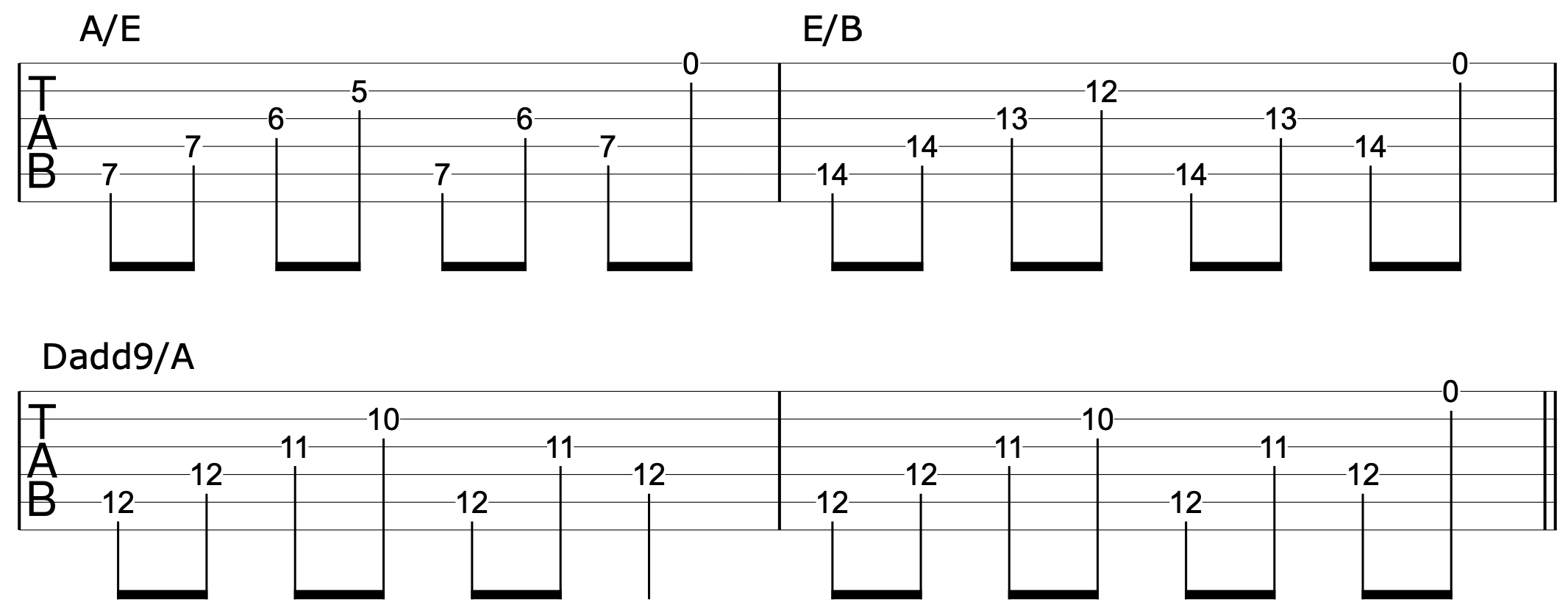
Again, you don’t need to worry too much about exactly what every variation is called.
Listen to the sound.
That’s what matters.
Start Seeing Chords as Possibilities
The big lesson here isn’t really about A, E and D.
It’s about changing the way you look at any chord progression.
A chord symbol doesn’t mean you have to play one particular shape in one particular position.
You can use harmony, guitar embellishments, open strings, chord fragments, fills and different areas of the fretboard to express the same progression in many different ways.
Start with the seven ideas above, but don’t stop there.
Take one approach and apply it to another progression you already know.
Move it to another key.
Combine two ideas.
Change the picking pattern or rhythm.
That experimentation is where these ideas really become part of your playing.
You’re no longer simply playing a series of chord shapes.
You’re using those chords to create music.
Frequently Asked Questions
How can I make basic guitar chords sound more interesting?
Try changing how you play the chords rather than immediately learning new ones. Add embellishments, let open strings ring, use smaller chord fragments or add short fills between chord changes.
How do I make chord progressions sound more musical?
Focus on how one chord connects to the next. Small melodic movements, two-note harmonies and fills can create smoother transitions and make a simple chord progression sound more musical.
What are guitar chord embellishments?
Chord embellishments are small changes you make to a chord by adding, removing or moving individual notes. Sus chords, hammer-ons and pull-offs are simple examples.
Can I use open strings with chords higher up the neck?
Yes. Combining movable chord shapes with open strings can create rich, spacious sounds. Just remember that not every open string will work with every chord, so use your ears to decide what sounds good.
Do I need to play full chords when playing rhythm guitar?
No. Two or three notes can often be enough to suggest a chord. Using smaller chord shapes can create more space and leave room for melodic fills and other musical ideas.
Other Lessons You Might Like
Explore these related lessons to continue building your guitar skills:
Create Rhythm Fills on Guitar
Learn how to fill the spaces between your chords with melodic ideas so your rhythm playing sounds more connected and musical.
How to Play 10th Harmony
Explore 10th harmonies in more detail and discover how these simple two-note shapes can add a beautiful melodic quality to your guitar playing.
The Open Chord Trick
Discover how open strings and movable chord shapes can create bigger, richer sounds without requiring lots of new chord shapes.
How to Play 6th Harmony
Learn how 6ths work on the guitar and how you can use them to add melodic movement to chords and progressions.
How to Play 3rd Harmony
Learn simple 3rd harmony shapes and how to use them to create melodic ideas across the fretboard.
 Easy Fingerpicking Chord Progressions
Learn how to turn simple chords into beautiful, flowing fingerpicking without making your playing complicated.