7 Ways to Make The Same Chord Progression Sound Different
by Simon Candy
 Have you ever played a chord progression and thought it sounded fine, but a little predictable?
You’re playing the right chords.
There’s nothing necessarily wrong with what you’re doing. But if you always reach for the same open chord shapes, you’re only hearing one version of what that progression could sound like.
Learning to play chords higher up the neck on guitar can completely change this.
Your chords don’t have to stay down in the open position. You can move them, reshape them and combine them with open strings, harmonics and different chord voicings to create fresh sounds from chords you already know.
And you don’t need a deep understanding of theory to do it.
Watch the video below to learn more:
To demonstrate, we’ll use one simple progression in A major throughout:

Here are seven different ways to play those same chords on guitar and give the progression a completely different character.
1. Use A Capo To Change Your Chord Shapes
One of the easiest ways to change the sound of a progression is to use a capo.
The key is that you’re not simply moving the same shapes higher. You’re using different chord shapes to create the same actual chords.
Put a capo at the second fret, for example, and you can play G, D and C shapes to produce our A, E and D progression:

Move the capo to the fifth fret, and you can use E, B7 and A shapes instead:

The progression hasn’t changed, but because the notes within those chords are arranged differently, the sound has.
Try moving your capo to several positions and playing the same progression.
Listen to how the character changes as you move higher up the neck.
2. Play Open Chords Higher Up The Neck
Here’s another simple way to get away from your usual open-position sound.
Take your familiar open chord shapes and move the fretted notes up an octave to around the 12th fret, while allowing the open strings to remain:

You immediately get a more spacious sound that is quite different from playing the same chords in open position.
This works particularly well with fingerpicking, where you can allow the individual notes and open strings to ring into each other.
You haven’t really added anything complicated. You’ve simply taken something you already know and moved it somewhere different.
3. Combine Chords With Natural Harmonics
Once you’re around the 12th fret, you have another sound available to you: natural harmonics.
Try combining the harmonics at the 12th fret with your fretted chord notes and open strings, like so:
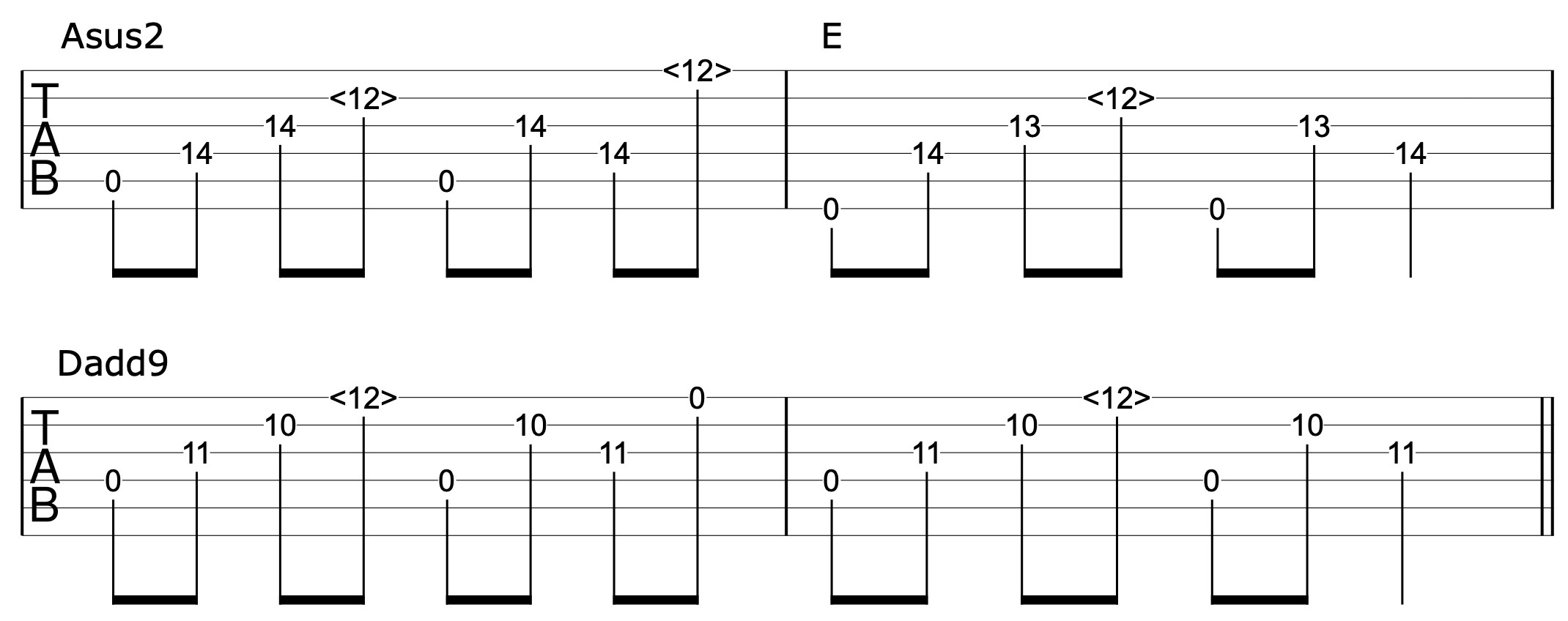
This can create a delicate, almost bell-like quality that works beautifully with fingerpicking.
You don’t need to fill every chord with harmonics.
Even one well-placed harmonic can add a completely different texture to a progression.
The idea is to experiment and listen rather than feeling you need to follow a fixed formula.
4. Open Things Up With Suspended Chords
Another way to transform a simple progression is to move away from straightforward major chords and create more open-sounding suspended shapes.
For our A, E and D progression, you can build shapes around simple power chords and add another note two frets higher.
Bring the top two open strings into the shapes, and suddenly you have something much richer and more spacious.
Fingerpick through the progression and allow those open strings to ring, like this:

It’s a great example of how a relatively small change can make familiar chords feel completely different.
5. Add Colour With Chord Extensions
You can also change the mood of a progression by extending the chords.
Instead of a regular A major, try an A major 7.
Instead of E major, use E7.
And rather than a standard D major, try D major 9.
These extra notes add colour without losing the underlying progression.
You can make the effect even stronger by including open strings and picking through the chords rather than simply strumming them, like this:
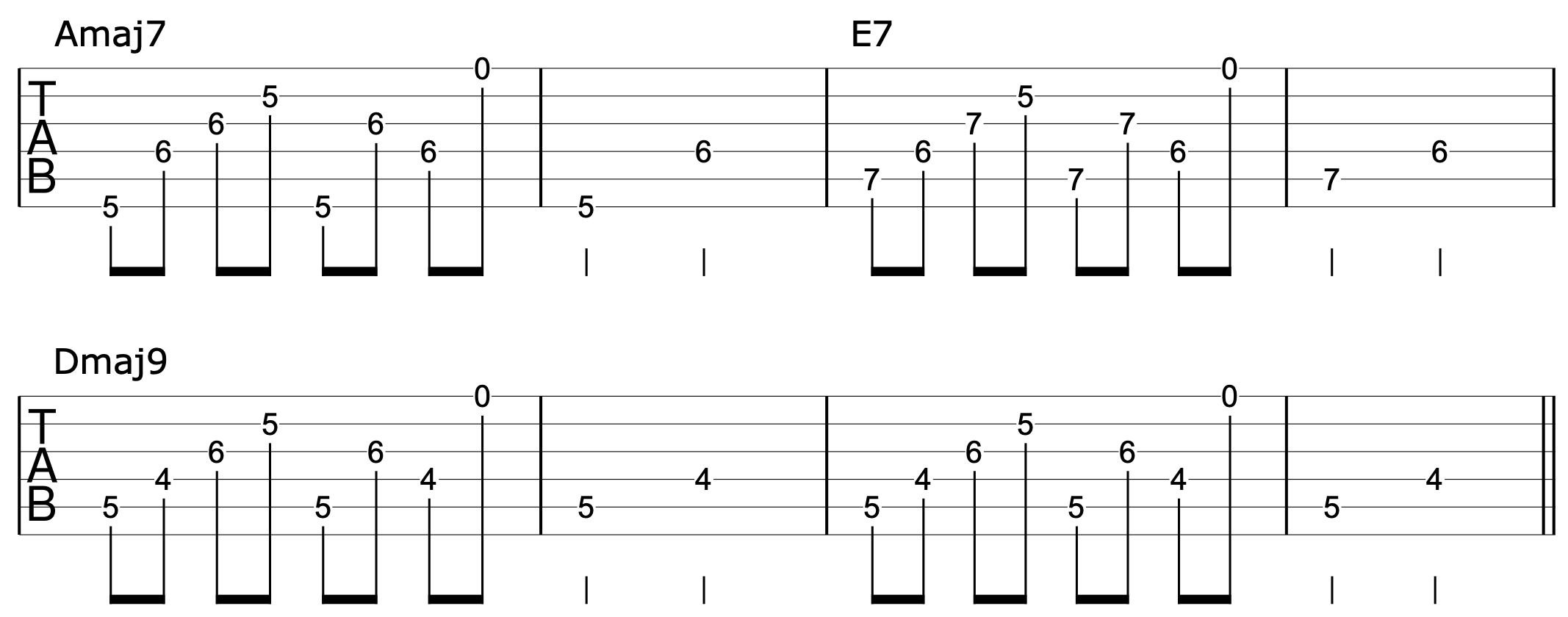
Don’t get buried in the theory behind every chord extension. Get the shapes under your fingers and, most importantly, listen to what those extra notes do to the music.
6. Use Triads And Partial Triads
You don’t always need six-string chord shapes.
Triads give you smaller three-note versions of your chords that you can move around the fretboard.
For example, you could play an A major triad on strings 4, 3 and 2 and combine it with the open A string underneath. Move to an E triad with the low open E, then use a D triad with the open D string.
You still have A, E and D, but the texture is completely different:
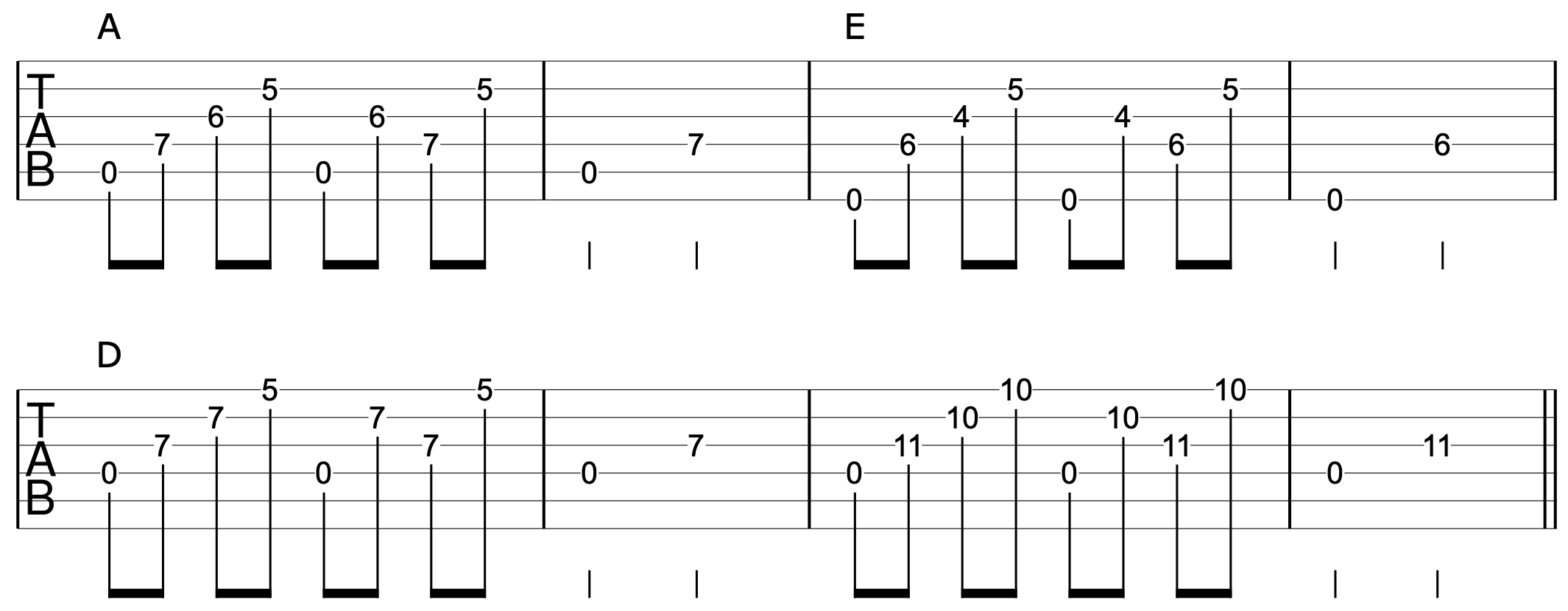
You can take this further with partial triads.
Instead of playing the complete three-note shape, remove one note and allow an open string to ring alongside the remaining notes:
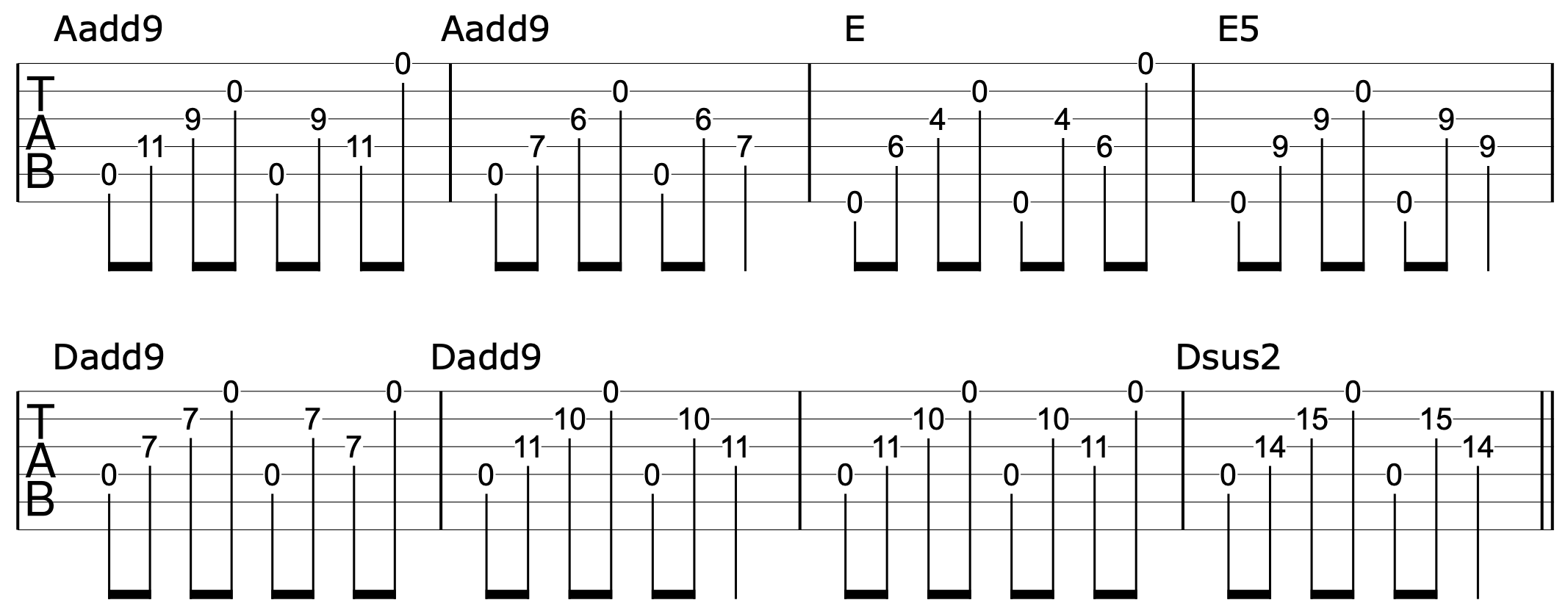
These open strings against the fretted notes can create some beautiful colours, while keeping the actual shapes relatively simple.
7. Create a Bigger Sound With Spread Triads
Finally, try spreading the notes of your triads further apart.
With a regular triad, the notes sit relatively close together. With a spread triad, you take the middle note and drop it down an octave while leaving the other two notes where they are.
The result is a much bigger, more open sound:
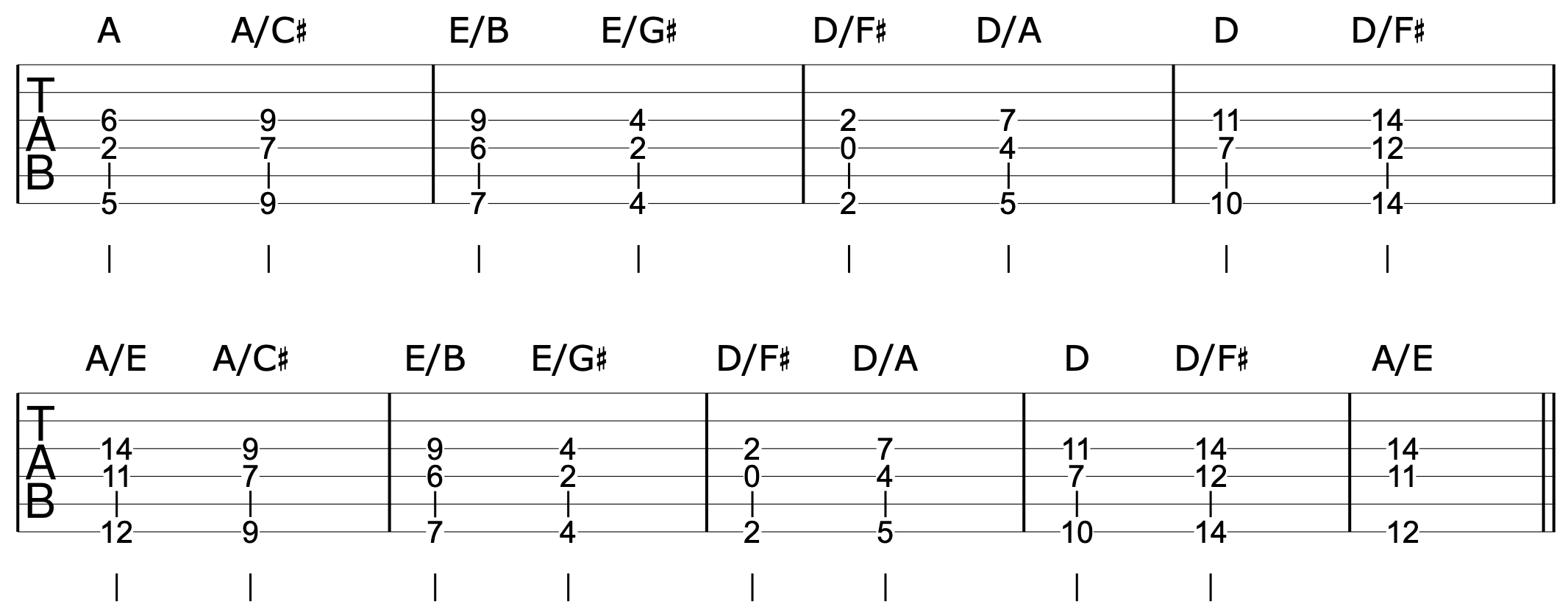
Some spread triad shapes can initially look like they require enormous stretches, but don’t assume there’s only one way to play them.
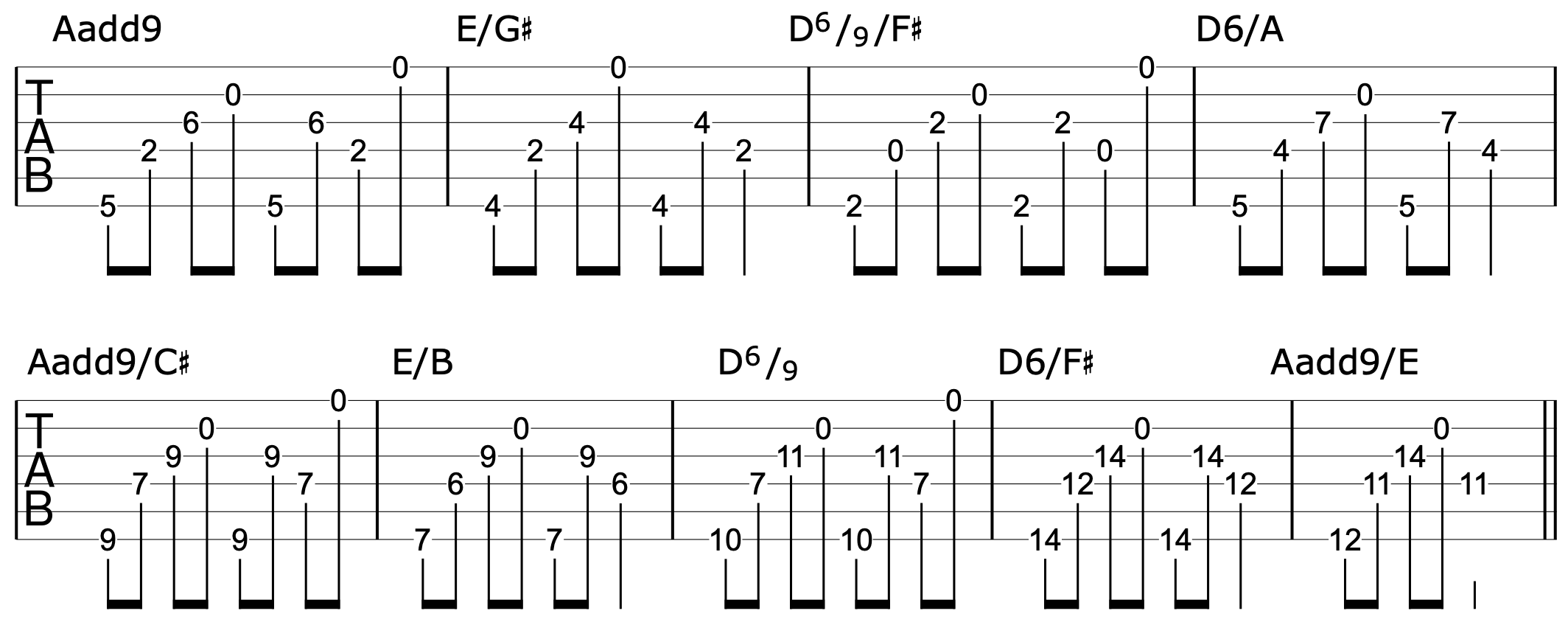
Often you can move one of the notes to another string and get exactly the same sound with a much more comfortable fingering.
Try arpeggiating these shapes and combining them with open strings too. This can open the sound up even further, for example:
Get More From the Chords You Already Know
The important lesson here isn’t that you need seven new things to memorise.
It’s almost the opposite.
A simple A–E–D progression can give you an enormous amount of music when you stop thinking of each chord as one fixed shape.
- Use a capo.
- Move familiar shapes higher up the neck.
- Add open strings and natural harmonics.
- Experiment with chord extensions.
- Break your chords into triads and partial triads.
- Spread the notes out.
Most importantly, listen.
Take one simple progression you already know and experiment with just one of these ideas at a time.
You may find you don’t need more chords at all.
You simply need more ways to play the ones you already have.
Frequently Asaked Questions
Can you play the same guitar chord in different positions?
Yes. The same chord can be played in many different places on the guitar. Changing the position and arrangement of the notes changes the sound while the underlying chord remains the same.
How do I play chords higher up the guitar neck?
You can use movable chord shapes, triads, partial triads or familiar shapes moved up an octave. A capo can also help you use different open chord shapes higher on the neck while staying in the same key.
Why do the same guitar chords sound different in different positions?
The notes within the chord are arranged differently and may be played in different octaves. You may also have different open strings or bass notes present. This changes the character of the chord even though its basic harmony remains the same.
What are triads on guitar?
Triads are three-note chords. On guitar, their smaller shapes make it easier to play chords in different areas of the fretboard and create smoother movement between chords.
What are spread triads on guitar?
Spread triads contain the same basic notes as regular triads but arrange them further apart. This creates a bigger, more open sound and gives you another way to play familiar chords.
Other Lessons You Might Like
Explore these related lessons to continue building your guitar skills:
Learn Natural Harmonics on Guitar
Learn how to create the clear, bell-like harmonics used in the second idea above and incorporate them naturally into your guitar playing.
Learn Triad Chord Shapes On Guitar
If triads are new to you, this lesson will help you understand the basic shapes and start using them across the fretboard.
Explore Spread Triads On Guitar
Take the final idea further and discover how spreading the notes of a triad can create bigger, more spacious chord sounds.
Discover How To Use Open Chords Creatively
Explore more ways to combine fretted notes with open strings and get richer, more interesting sounds from familiar chords.
Understand The Guitar Capo
Learn how the capo works so you can confidently move familiar chord shapes around the neck while keeping your progression in the key you need.
 Create Beautiful Fingerpicking Progressions
Discover simple chord progressions and practical ideas for turning them into flowing, musical fingerpicking pieces.